IMF Approves $1.2 Billion Financial Support for Pakistan
Synopsis
In a significant development, the IMF has reached a staff-level agreement with Pakistan, potentially unlocking $1.2 billion in funding. This agreement aims to support the country's efforts in fiscal tightening and economic reforms while stabilizing inflation.
Key Takeaways
The IMF has reached a staff-level agreement with Pakistan for $1.2 billion in funding.
This funding aims to aid in fiscal tightening and structural reforms.
Pakistan targets a primary budget surplus of 1.6% in FY26 and 2% in FY27.
The economic outlook remains cautious due to external risks, including Middle East tensions.
Revenue mobilization and energy sector reforms are key priorities.
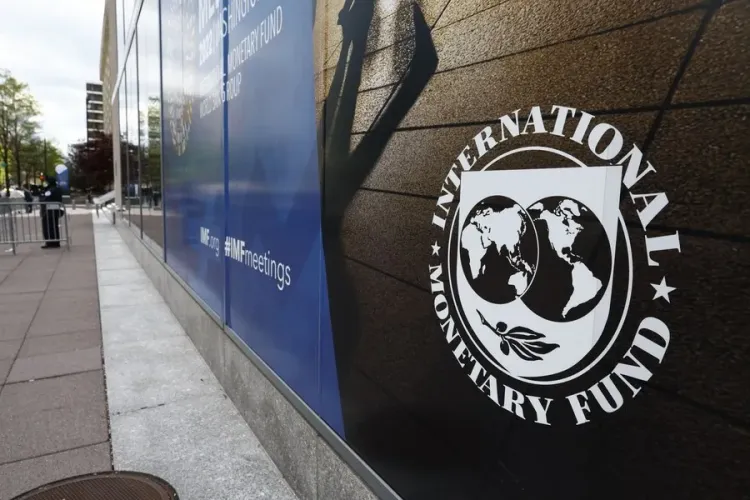
Washington, March 28 (NationPress) The International Monetary Fund has finalized a staff-level agreement with Pakistan that could potentially release approximately $1.2 billion in new funding, as the nation advances towards fiscal tightening, structural reforms, and initiatives aimed at stabilizing both inflation and economic growth.
This agreement is the result of discussions held between an IMF delegation and Pakistani officials regarding the third review under the Extended Fund Facility (EFF) and the second review under the Resilience and Sustainability Facility (RSF).
According to the IMF's statement, “the team has successfully reached a staff-level agreement with Pakistani authorities,” emphasizing that the deal is pending approval from its Executive Board.
Upon receiving approval, Pakistan would be entitled to about $1.0 billion under the EFF along with approximately $210 million from the RSF, bringing the total disbursements from these programs to around $4.5 billion.
The IMF noted that Pakistan's program implementation “has remained largely in line” with its objectives to enhance public finances, control inflation, and drive structural reforms.
There are indications of an economic rebound. The statement highlighted that “following the recovery in FY25, economic activity has gained additional momentum,” while inflation and the current account balance have remained stable, and external buffers have seen improvement.
Nonetheless, challenges persist. The IMF cautioned that the ongoing conflict in the Middle East could adversely affect Pakistan's outlook through fluctuating energy prices and stricter global financial conditions.
The authorities have pledged to uphold a “prudent fiscal stance” aimed at diminishing public debt, with a goal of achieving a primary surplus of 1.6 percent of GDP in FY26 and 2 percent in FY27.
Enhancing revenue mobilization is critical. The Federal Board of Revenue is undertaking reforms such as more rigorous taxpayer audits and broader digital monitoring systems, while a new Tax Policy Office is formulating a medium-term reform strategy.
In terms of monetary policy, the State Bank of Pakistan is expected to maintain vigilance. The IMF has indicated it “is prepared to increase interest rates” should inflationary pressures escalate, while a flexible exchange rate is anticipated to serve as a buffer against shocks.
Reforms in the energy sector remain essential to the program. The authorities are focused on averting a resurgence of circular debt, ensuring cost recovery through tariff adjustments, and advancing privatization and efficiency improvements.
Point of View
It is evident that the IMF's agreement with Pakistan represents a critical step towards stabilizing the country’s economic landscape. The commitment to fiscal discipline and structural reforms will be imperative for sustainable growth, although external risks remain a concern.
NationPress
20 Sept 2026
Frequently Asked Questions
What is the total amount of funding Pakistan could receive?
Pakistan could potentially receive about $1.2 billion through the IMF's agreement.
What are the key focuses of the IMF agreement?
The agreement emphasizes fiscal tightening, structural reforms, and stabilizing inflation and economic growth.
What should Pakistan achieve in terms of GDP surplus?
Pakistan targets a primary surplus of 1.6% of GDP in FY26 and 2% in FY27.
How does the IMF view Pakistan's economic reforms?
The IMF indicated that Pakistan's program implementation has remained broadly aligned with its goals.
What risks does the IMF highlight for Pakistan?
The IMF warned that geopolitical tensions, particularly in the Middle East, could impact Pakistan's economic outlook.