IMF vs Pakistan military: Power struggle over economic control intensifies
Synopsis
Behind Pakistan's IMF bailout talks lies a less-reported power struggle: the Pakistani military is reportedly consolidating control over state enterprises, mines, ports, and energy assets through the SIFC, sidelining civilian institutions. The IMF sees this opacity as a structural threat to the very governance reforms it is trying to enforce — making this a confrontation about Pakistan's institutional future, not just its finances.
Key Takeaways
A power struggle between the IMF and Pakistan's military over economic governance is reportedly intensifying behind ongoing bailout negotiations.
The Special Investment Facilitation Council (SIFC) has evolved into a military-controlled body granting fast-track approvals and regulatory exemptions, bypassing civilian institutions.
Army chief General Asim Munir has been directly negotiating with foreign governments, including the US , on mining of precious metals and critical minerals .
China and Gulf states are the principal investors in sectors including energy, logistics, mining, and infrastructure under SIFC-supervised agreements.
The IMF views military-influenced economic systems as lacking the transparency and accountability required for long-term fiscal sustainability.
Critics warn that civilian institutions and parliamentary oversight are being rendered increasingly marginal in Pakistan's economic decision-making.
A deepening confrontation between the International Monetary Fund (IMF) and Pakistan's military establishment over control of the country's key economic structures is reportedly unfolding behind the scenes of Islamabad's ongoing bailout negotiations, according to an analysis published by Pressenza International Press Agency. The report, authored by Dimitra Staiku, describes the contest as one of the most consequential — and least visible — power struggles shaping Pakistan's economic future.
Two Competing Models of Governance
At the centre of the dispute are state-owned enterprises, energy facilities, mines, ports, and banks — assets over which two fundamentally different governance philosophies are now competing. The Pakistani military, according to the report, favours a model of speed and centralised control, prioritising rapid investment agreements. The IMF, by contrast, insists on institutional accountability, transparency, and rules-based oversight as conditions for sustained financial support.
This is not merely a technical disagreement over economic policy. Critics argue it reflects a structural shift in how Pakistan's state itself is organised — and who, ultimately, holds decision-making power.
The SIFC: Fast-Track Tool or Military Instrument?
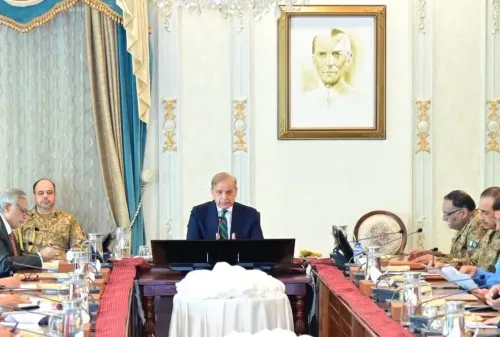
The Special Investment Facilitation Council (SIFC) lies at the heart of this contest. Officially positioned as a mechanism to cut bureaucratic red tape and attract foreign investment, the SIFC has, in practice, evolved into what the report describes as a powerful economic instrument of the Pakistani military. Senior military officials reportedly act as key intermediaries between the state and foreign investors through this body.
Fast-track approvals, regulatory exemptions, and special investment privileges granted under the SIFC frequently bypass Pakistan's traditional political and administrative institutions, the analysis notes. This pattern has drawn concern from international observers and segments of Pakistan's own opposition, who argue it is creating a system of limited political accountability in which civilian institutions and parliamentary bodies play an increasingly marginal role.
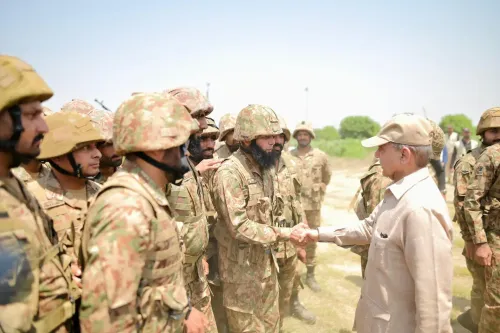
Notably, Pakistan Army chief General Asim Munir has been openly conducting negotiations with foreign governments — including the United States — on matters such as the mining of precious metals and critical minerals, a role that critics say underscores the military's expanding economic footprint.
China, Gulf States, and Geopolitical Stakes
China and the Gulf states have emerged as the principal investors behind many of the planned partnerships, strengthening their strategic presence in sectors including energy, logistics, mining, and infrastructure. The geopolitical dimension of these arrangements amplifies the significance of who controls their implementation — and on what terms.
The growing military role in economic management is not new to Pakistan, but analysts cited in the report suggest that 2025 and 2026 mark a qualitatively different phase. The military has promoted the narrative that only a centralised, 'disciplined' mechanism can ensure rapid investment implementation and preserve economic stability. For many critics, however, this logic entrenches a model in which military influence extends far beyond its traditional remit.
IMF's Core Concern: Transparency and Institutional Stability
For the IMF, the central issue is not the volume of investment Pakistan attracts but the manner in which those investments are governed. The fund views military-controlled or military-influenced economic systems as structurally deficient in transparency, political oversight, and institutional accountability. Repeated bypassing of civilian institutions, concentration of authority in unelected centres of power, and the use of opaque fast-track mechanisms raise serious concerns about the long-term sustainability of Pakistan's economic governance, the report states.
From the IMF's standpoint, a state that chronically depends on international bailout packages cannot sustain parallel, non-transparent authority structures without eroding its own institutional credibility.
What Hangs in the Balance
The confrontation, the report concludes, is ultimately about more than economics — it is about the future character of the Pakistani state. The outcome may determine not only whether Pakistan achieves economic stabilisation but also whether it can reconcile the immediate pressure of financial survival with the longer-term imperative of building credible, accountable institutions. How that balance is struck will shape Pakistan's standing with international lenders and investors for years to come.
Point of View
But the SIFC dynamic reveals something more structural: the Pakistani military is not merely advising on economic policy — it is, reportedly, executing it. That distinction matters enormously for the IMF, whose reform conditionalities are premised on civilian institutional capacity that is being systematically hollowed out. What mainstream coverage often misses is the geopolitical layering: China and Gulf capital flowing through military-brokered channels creates dependencies that outlast any single IMF programme. If Islamabad's civilian government cannot reclaim economic decision-making authority, successive bailouts may stabilise the balance sheet while deepening the governance deficit that makes crises inevitable.
NationPress
22 Sept 2026
Frequently Asked Questions
What is the power struggle between the IMF and Pakistan's military about?
It is a contest over who controls Pakistan's key economic assets — including state enterprises, energy facilities, mines, ports, and banks. The Pakistani military, operating through the Special Investment Facilitation Council (SIFC), has been granting fast-track investment approvals that bypass civilian institutions, while the IMF insists on transparent, accountable governance as a condition for continued financial support.
What is the Special Investment Facilitation Council (SIFC)?
The SIFC is a body officially created to reduce bureaucracy and attract foreign investment into Pakistan. In practice, according to the report, it has become a powerful instrument of the Pakistani military, through which senior military officials act as intermediaries between the state and foreign investors, often bypassing traditional political and administrative oversight.
What role is Pakistan Army chief General Asim Munir playing in economic matters?
General Asim Munir has reportedly been directly conducting negotiations with foreign governments, including the United States, on matters such as the mining of precious metals and critical minerals. Critics say this openly demonstrates the extent to which the military has expanded its role beyond traditional security functions into core economic decision-making.
Why is the IMF concerned about military involvement in Pakistan's economy?
The IMF views military-controlled or military-influenced economic systems as lacking sufficient transparency, political oversight, and institutional accountability. It argues that a state reliant on repeated international bailouts cannot sustainably operate through opaque, parallel authority structures that circumvent civilian institutions.
Which countries are investing in Pakistan through these military-brokered arrangements?
China and the Gulf states have emerged as the principal investors behind many of the planned partnerships, with their presence concentrated in sectors of strategic importance including energy, logistics, mining, and infrastructure — all advancing through SIFC-supervised fast-track procedures.