What Are the Implications of the Modi–Putin Summit for Washington?
Synopsis
The Modi-Putin summit in New Delhi has ignited significant interest in Washington, where experts assess the implications of this high-profile meeting. As geopolitical tensions rise, how will the US respond to India's close ties with Russia, particularly amid ongoing conflicts?
Key Takeaways
Modi–Putin summit draws US scrutiny.
US analysts await details on defense agreements.
India emphasizes its strategic autonomy.
Trump's unpredictable reactions complicate the landscape.
Concerns linger over India's Russian oil imports.
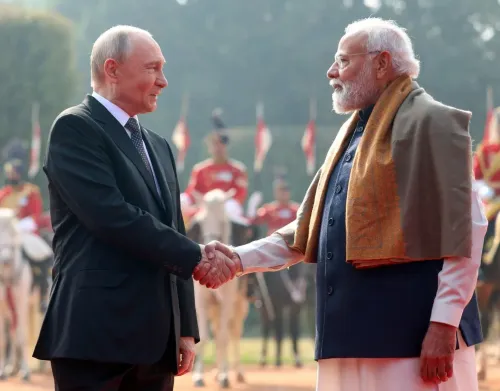
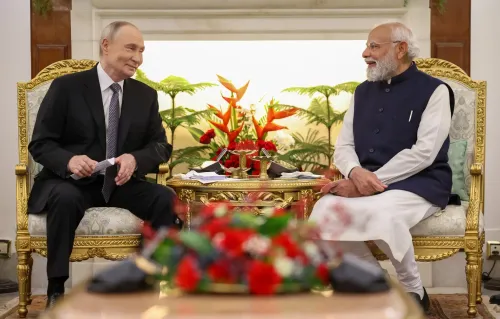
Washington, Dec 4 (NationPress) The Modi–Putin summit in New Delhi on Thursday and Friday is drawing significant attention from Washington, where foreign-policy analysts are closely examining both the visuals and the results of this prominent meeting.
Several top experts informed IANS on Wednesday that the wider US national-security establishment will be particularly observant regarding the tone of the discussions, the depth of any agreements, and the political response from the White House.
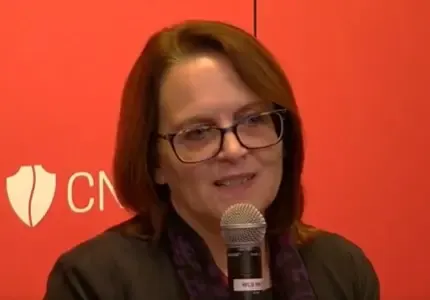
Lisa Curtis, former Senior Fellow and Director of the Indo-Pacific Security Program at the Centre for New American Security during the first Trump Administration, stated unequivocally that "the United States will not regard this meeting as advantageous," especially as it unfolds during a period when "President Putin is intensifying his aggression in Ukraine and even threatening Europe with drone incursions and cyber-attacks."
Curtis emphasized that the summit conveys a diplomatic message to Washington. India "will not be intimidated," she remarked, highlighting recent pressures from the US, including "implementing 50 percent tariffs on India" and engaging with Pakistan's military leadership.
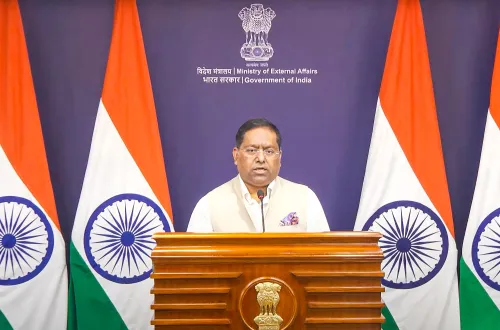
She contended that PM Modi's choice to host Putin — marking the Russian leader's inaugural visit to India since the Ukraine invasion — signifies that New Delhi "is unwilling to compromise its strategic autonomy or yield to US demands."
On the potential reactions from President Trump, Curtis advised caution. His responses, she noted, "can be somewhat unpredictable," pointing out that while he "reacted negatively" to PM Modi's earlier engagement with Chinese President Xi, the administration is currently involved in "delicate negotiations between the United States and Russia."
She suggested avoiding an "overreaction," underscoring that "India and Russia have historically maintained robust ties."
At the Brookings Institution, Senior Fellow Tanvi Madan indicated that Washington will focus on two main aspects of the summit: the level of ceremonial welcome extended to Putin and the tangible results regarding defense and energy.
"What kind of red carpet will be presented… and what is the substance? What deals will emerge?" she queried, adding that US analysts will scrutinize "what defense pacts are signed," even if they occur on the periphery.
Madan also pointed out the renewed focus on India's acquisition of Russian oil. "Observers will be monitoring the data related to oil imports," she noted.
Regarding the Trump administration's potential reaction, Madan expressed considerable uncertainty. She remarked that President Trump "has himself interacted with President Putin," referring to the recent visit of Jared Kushner and developer Steven Witkoff to Moscow for discussions concerning the Ukraine conflict. Nevertheless, she highlighted that the administration's tariffs — or what India perceives as "sanctions" — on Russian oil imports remain active. Trump has described these imports, including those from India, as obstacles to "ending this war." Her assessment indicated that the reaction would partly depend on the "deals actually established between India and Russia."
Richard Fontaine, a former senior State Department official and current CEO of the Centre for a New American Security, noted that the US government's response is challenging to predict. He mentioned that Washington will closely observe the visit due to Russia's ongoing hostility in Ukraine, as well as some hopes that New Delhi may further distance itself from Moscow.
"One can envision a sharp reaction if a lavish welcome is extended to Vladimir Putin," Fontaine remarked. "Conversely, the president recently had his special envoy and son-in-law in Moscow discussing matters directly with Putin."
Whether the administration interprets PM Modi's meeting as provocative or merely a diplomatic engagement remains to be seen, he added, "we'll have to wait and see."
Lindsey Ford, who served on the Biden Administration's National Security Council and is now a Senior Fellow at ORF America, highlighted that US officials are looking beyond mere symbolism and are focused on specific areas of collaboration.
She noted that Washington has "appreciated" the reductions in Russian energy trade to India and is aware of the "existing relationships" and ongoing cooperation between New Delhi and Moscow.
However, concerns linger, particularly regarding sectors such as "technology and defense," which she described as "critical to the US–India relationship."
Ford refrained from speculating on the White House's immediate response, stating simply: "We should all wait and see what emerges from the summit and proceed from there."
PM Modi's meeting with Putin arrives at a time when Washington's Russia policy has entered a more dynamic phase.
With Trump positioning himself as a potential mediator in the Ukraine situation, and senior US officials directly engaging with Moscow, the administration must balance its intent to apply pressure on Russia with its need to maintain strong relations with India — a vital ally in the Indo-Pacific and a cornerstone of US strategy concerning China.
Currently, analysts assert that the US response will likely hinge on two factors: how warmly New Delhi publicly embraces Putin, and what substantive defense, energy, or technology agreements arise from behind closed doors. Both elements will influence whether Washington reacts sharply, remains measured, or opts for strategic silence.
Point of View
It’s crucial to emphasize that geopolitical dynamics are evolving, and the Modi-Putin summit highlights India's strategic autonomy. Navigating these complex relationships is vital for national interests, and understanding the nuances in international diplomacy is essential for the public.
NationPress
30 Sept 2026
Frequently Asked Questions
What is the significance of the Modi-Putin summit?
The Modi-Putin summit is significant as it underscores India's strategic autonomy amid ongoing US-Russia tensions and highlights India's commitment to maintaining strong ties with Russia.
How will the US react to the summit?
The US reaction to the summit will depend on the ceremonial treatment of Putin and the substantive agreements reached, focusing on defense and energy.
What are the main concerns for the US regarding this meeting?
The main concerns for the US include potential defense agreements between India and Russia and India's ongoing energy trade with Russia amidst geopolitical tensions.
Why is this meeting critical now?
This meeting is critical as it occurs during heightened global tensions due to Russia's actions in Ukraine, impacting international alliances and security policies.
What does this mean for US-India relations?
The summit could test US-India relations as India balances its historical ties with Russia against the backdrop of US strategic interests in the Indo-Pacific.