How is Trump Connecting China to Tariffs, Chip Controls, and 'Trillions' in US Gains?
Synopsis
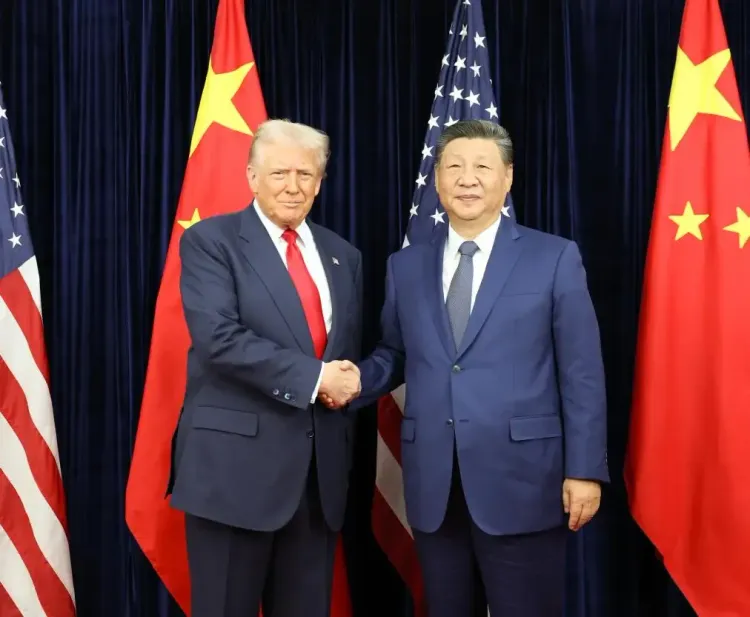
In a recent address, President Trump emphasized China's role in shaping US economic strategies, touting tariffs and tech regulations as key drivers of national growth. Discover how these policies are positioned as crucial to reclaiming US industrial strength and national security in a competitive global landscape.
Key Takeaways
China is a focal point of Trump's economic strategy.
Tariffs are viewed as a tool for both economic gain and national security.
The US aims to lead in technology sectors like AI and semiconductors.
Legal challenges to tariffs are seen as threats to economic progress.
Domestic manufacturing is being prioritized to reduce reliance on foreign production.
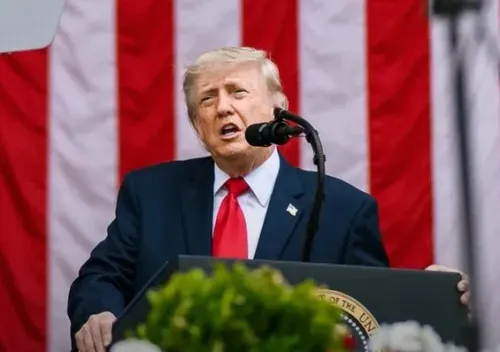
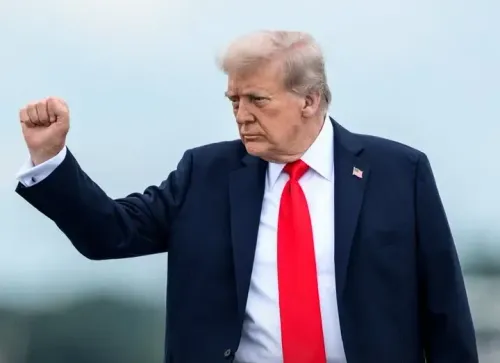
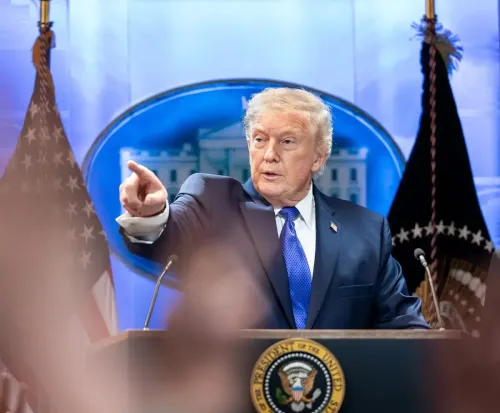
Washington, Dec 4 (NationPress) President Donald Trump portrayed China as a pivotal element in his administration's economic and national security framework, asserting that tariffs, stringent technology regulations, and fresh domestic manufacturing incentives had positioned the United States as the "hottest nation" globally.
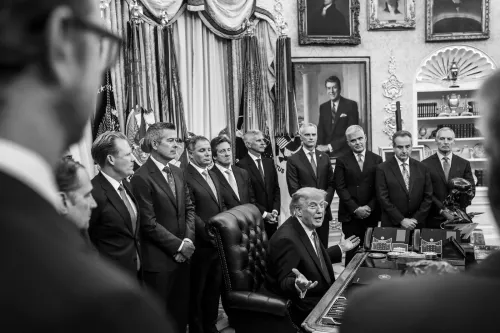
During an Oval Office event where he rolled back Biden-era auto-efficiency standards, Trump consistently referenced China concerning trade, artificial intelligence, semiconductor regulations, and legal challenges to his tariff policies.
Trump informed lawmakers and industry stakeholders that the United States had surpassed Beijing in key technologies. "In AI, we're leading China. We're ahead of everyone in AI. We're ahead in every sector," he stated.
This claim was tied to his broader assertion that the United States was experiencing a surge in industrial investment. "We have the hottest country anywhere in the world. A year ago, we had a stagnant economy, and now we have the most vibrant economy globally," he emphasized.
He presented tariffs as the key driver of this transformation. "It's generating trillions of dollars in wealth. It's enhancing our national security," Trump mentioned. He described the utilization of tariffs as a geopolitical strategy, claiming, "I've halted eight wars, five of which were due to tariffs and trade policies."
Trump again highlighted China as he criticized a legal challenge aimed at limiting his tariff authority. "The individuals behind that lawsuit are detrimental to our interests," he said. "They represent foreign nations, including China, and people who harbor negative sentiments towards our country. I know some of them, and they’re despicable. That's my view."
The president also reflected on what he labeled as confusion among officials regarding the revenue produced by the tariff system. "Recently $30 billion came in, where did it originate? I suggested they check the tariff shelf," he remarked.
When aides initially claimed the tariff had not yet been implemented, Trump corrected them, saying, "No, it commenced two months ago." He added, "They later confirmed, sir, you're correct. It was from tariffs."
Semiconductors—an essential battleground in US-China rivalry—emerged during a brief discussion about export controls and NVIDIA's operations in China. When asked if he had communicated with NVIDIA CEO Jensen Huang regarding export controls on chips for China, Trump replied, "He is fully aware."
He continued to assert that the United States was swiftly enhancing its domestic chip production capabilities. "We're on track to capture a significant share of the chip market," he stated. "About a year or two ago, we had none, and now we're poised to hold a substantial portion."
Trump connected that growth to his tariff policies, insisting that chip manufacturers would be obligated to establish operations in the United States. "They must manufacture here; otherwise, they will face tariffs. They won't be able to operate within the United States," he remarked.
China was also mentioned during a discussion about a "mileage blocker" device affecting vehicle-leasing markets, which auto dealers claimed was being distributed through China via online distributors from Great Britain. National Automobile Dealers Association chairman Tom Castriota informed Trump about the situation, to which he responded, "Wow. That's remarkable… I was unaware of that."
Trump characterized tariffs on China and other nations as the cornerstone of his industrial policy. "We're generating trillions of dollars," he stated. "We're preventing conflicts. Our national security is bolstered by tariffs."
He also connected China's competition to the prior outsourcing of US auto production, asserting that this trend was now reversing. "They were constructing their plants in Mexico and elsewhere. They're departing Mexico and Canada," he remarked, adding that his tariff strategies were responsible for the return of automakers.
US-China economic tensions have escalated over tariffs, technology transfers, supply chain security, and semiconductor export regulations. The Trump administration initiated extensive tariffs on Chinese products beginning in 2018, leading to retaliatory actions and prompting multinational companies to reevaluate their production strategies.
The Trump Administration has tightened restrictions on advanced chips and AI-related hardware destined for China, citing security concerns and competitive issues, while also accelerating domestic chip production through incentives and reshoring policies supported by both political factions.
Point of View
It's critical to recognize the ongoing economic rivalry between the US and China. Trump's strategies, emphasizing tariffs and domestic production, reflect broader national priorities. This approach seeks to bolster US competitiveness while navigating the complexities of global trade. The ramifications of these policies will be pivotal in shaping future economic landscapes.
NationPress
11 Oct 2026
Frequently Asked Questions
What are the main points of Trump's recent remarks?
Trump highlighted tariffs, technology regulations, and domestic manufacturing as key strategies to enhance US economic growth and security, emphasizing the role of China in this context.
How have US-China relations been affected by tariffs?
US-China relations have become strained due to tariffs imposed by the Trump administration, which have led to retaliatory measures from China and a reevaluation of global manufacturing strategies.
What is the significance of semiconductor production in this context?
Semiconductor production is crucial in the US-China competition, with Trump asserting that the US is increasing its domestic chip manufacturing capabilities to reduce reliance on China .
How does Trump view the legal challenges to his tariff authority?
Trump views the legal challenges against his tariff authority as detrimental, claiming they are backed by foreign interests, including those from China .
What are the expected outcomes of these economic policies?
The expected outcomes include increased domestic manufacturing, enhanced national security, and a significant shift in the economic landscape as a result of the tariffs and trade policies.