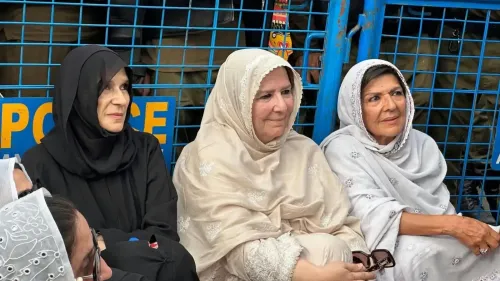
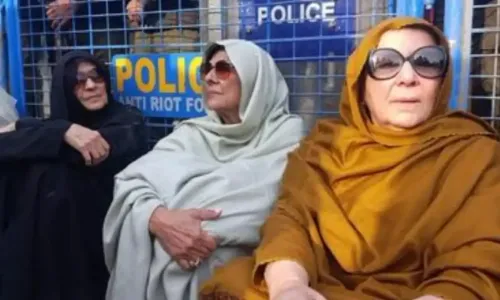
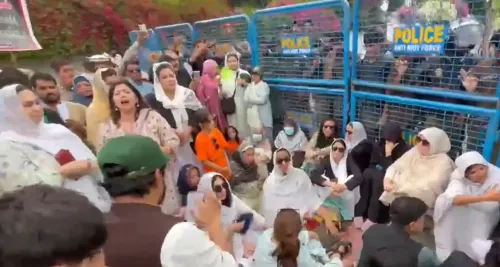
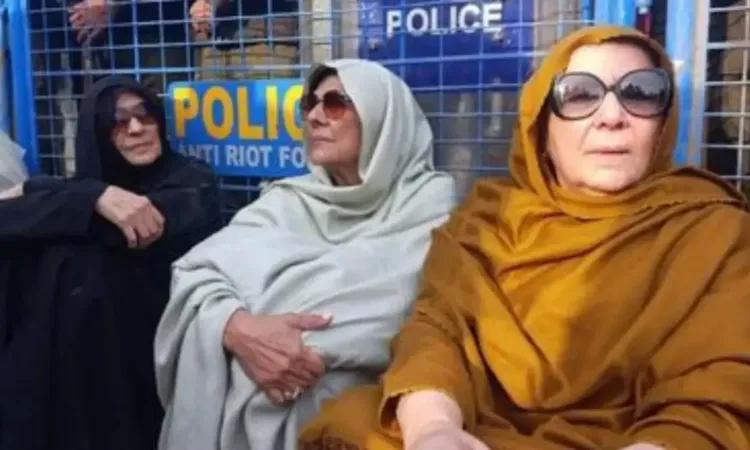
Imran Khan's sisters arrested: Aurat March calls crackdown unconstitutional
Synopsis
Pakistan's Aurat March has called the state's detention of Imran Khan's sisters, nieces, nephews, and minors 'unconstitutional and inhumane' — a sweeping condemnation that ties together PTI suppression, jailed human rights lawyers, and Baloch activists into a single damning picture of civil society under siege, just days before PTI's 27 September protest.
Key Takeaways
Aurat March condemned the arrests of Imran Khan's sisters, nieces, nephews, and minors on 22 September .
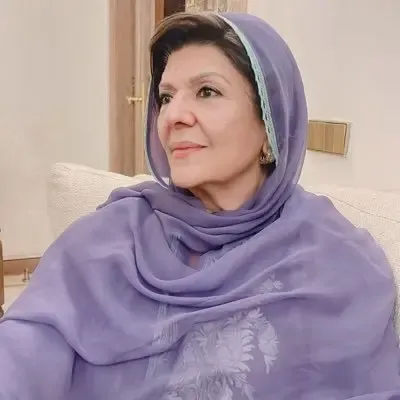
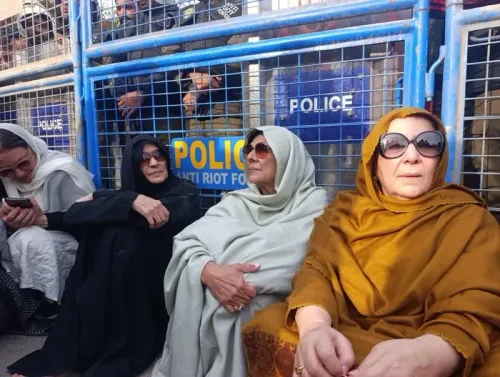
Khan's sisters — Uzma Khan , Noreen Niazi , and Aleema Khan — were detained under a 30-day detention order by the Lahore Deputy Commissioner .
The arrests occurred days before the PTI protest long march planned for 27 September .
Aurat March described the crackdown as part of 'establishment-backed violent measures' against PTI and other protest movements.
The group also cited the re-arrest of lawyers Imaan Zainab Mazari-Hazir and Hadi Ali Chattha , and life imprisonment of Baloch Yakjehti Committee leaders including Mahrang Baloch .
A prominent Pakistani women's rights movement, Aurat March, on Tuesday, 22 September strongly condemned the arrests of family members of former Prime Minister Imran Khan — including his sisters, nieces, nephews, and minors — calling the state's actions a 'horrific' attempt to crush dissent ahead of a planned nationwide protest.
The Arrests and Their Context
Imran Khan's three sisters — Uzma Khan, Noreen Niazi, and Aleema Khan — were detained on the orders of the Lahore Deputy Commissioner, who authorised a 30-day detention, according to Pakistani daily Dawn. The detentions took place just days before the Pakistan Tehreek-e-Insaf (PTI) protest and long march scheduled for 27 September, which PTI leaders had announced on 13 September to demand Imran Khan's release and the restoration of democratic norms and constitutional supremacy in Pakistan.
What Aurat March Said
In a post on X, Aurat March described the arrests as part of a 'long line of establishment-backed violent measures' targeting PTI and other political movements and organisations protesting across Pakistan. The group was careful to note that it does not ally with any political party and has disagreed with some of PTI's positions over the years.
'While we don't ally with any political party and have also disagreed with some of PTI's policies over the years, however, we believe the state's horrific efforts to crush any form of dissent, and intimidation and picking up of Imran Khan's relatives and preventing PTI supporters from marching on the streets of Islamabad is unconstitutional and inhumane, and should be condemned by all citizens,' Aurat March said.
The group also affirmed: 'Every Pakistani has the right to peacefully protest and present their demands to the state.'
A Wider Pattern of Crackdowns
Aurat March's statement linked the arrests to broader repression, citing the re-arrest of human rights lawyers Imaan Zainab Mazari-Hazir and Hadi Ali Chattha, as well as the life imprisonment of Baloch Yakjehti Committee (BYC) leaders including Mahrang Baloch and Gulzadi Baloch. The group further pointed to reported atrocities in Balochistan, Khyber Pakhtunkhwa, and Pakistan-occupied Kashmir as evidence of a systematic effort to silence those challenging the establishment's narrative.
Pakistan's Democracy Under Scrutiny
Calling the current period 'dark times for democracy, constitution, and resistance', Aurat March appealed to all Pakistanis regardless of political affiliation to speak out. The condemnation adds to a growing chorus of civil society voices questioning the legality of detaining family members — including minors — of a political leader. Pakistan's government has not publicly responded to the specific allegations raised by Aurat March.
All eyes now turn to 27 September, when the PTI long march is expected to test whether security forces will allow the demonstration to proceed and how broadly civil society rallies behind the opposition's demands.
Point of View
It shifts the frame from political rivalry to constitutional principle. Pakistan's establishment has deployed similar pre-emptive detention tactics before, and each cycle has widened civil society's mistrust of state institutions. The question is whether the 27 September march, if it proceeds, will mark a tipping point — or whether the arrests will succeed in suppressing turnout and deflecting accountability once again.
NationPress
22 Sept 2026
Frequently Asked Questions
Why were Imran Khan's sisters arrested in Pakistan?
Imran Khan's sisters — Uzma Khan, Noreen Niazi, and Aleema Khan — were detained under a 30-day order issued by the Lahore Deputy Commissioner, according to Pakistani daily Dawn. The arrests came days ahead of the PTI protest long march scheduled for 27 September, which the party announced to demand Imran Khan's release and restoration of democratic norms.
What is Aurat March and why did it condemn the arrests?
Aurat March is a leading Pakistani women's rights movement known for its independent stance on civil liberties. It condemned the arrests as 'unconstitutional and inhumane', arguing that detaining family members — including minors — and blocking PTI supporters from marching violates citizens' fundamental right to peaceful protest, even while noting it does not align with any political party.
What is the PTI protest long march planned for 27 September?
The PTI announced on 13 September that it would hold a protest and long march on 27 September to demand Imran Khan's release from custody, restoration of democracy, and supremacy of the constitution and rule of law in Pakistan.
Who else has been cited as part of Pakistan's broader crackdown?
Aurat March cited the re-arrest of human rights lawyers Imaan Zainab Mazari-Hazir and Hadi Ali Chattha, the life imprisonment of Baloch Yakjehti Committee leaders Mahrang Baloch and Gulzadi Baloch, and atrocities reported in Balochistan, Khyber Pakhtunkhwa, and Pakistan-occupied Kashmir as part of the same pattern of suppression.
Has Pakistan's government responded to Aurat March's condemnation?
Pakistan's government had not publicly responded to the specific allegations raised by Aurat March as of the time of reporting. The detentions were carried out under an administrative order by the Lahore Deputy Commissioner.