CM Himanta Chairs ABSU Meet on Bodo Accord Implementation
Synopsis
Assam CM Himanta Biswa Sarma met ABSU's central committee on 6 November 2026, directing officials to complete BKWC elections by December 2026 and hold a Bodo-medium education stakeholder meeting by 20 November, as part of ongoing Bodo Peace Accord implementation efforts.
Key Takeaways
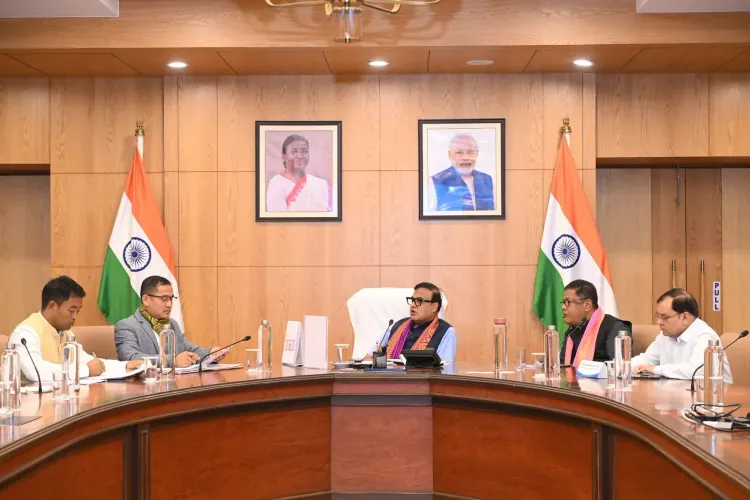
Himanta Biswa Sarma chaired a meeting with the central committee of the All Bodo Students' Union (ABSU) on 6 November 2026 .
The agenda covered implementation of the Bodo Peace Accord , reactivation of the BTR Boundary Commission , community rights, and welfare issues.
CM directed officials to complete Bodo-Kachari Welfare Council (BKWC) elections by December 2026 .
The Education Department was instructed to hold a multi-stakeholder meeting on Bodo-medium education by 20 November 2026 .
The Bodo Peace Accord was originally signed on 27 January 2020 , replacing the 2003 BTC Accord and establishing the Bodoland Territorial Region with expanded autonomy.
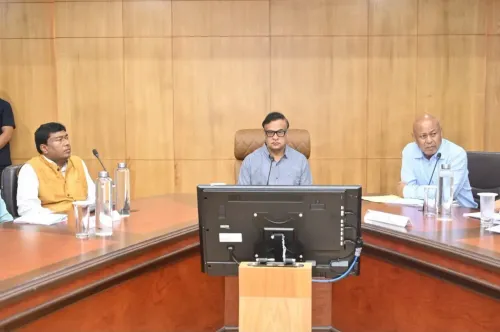
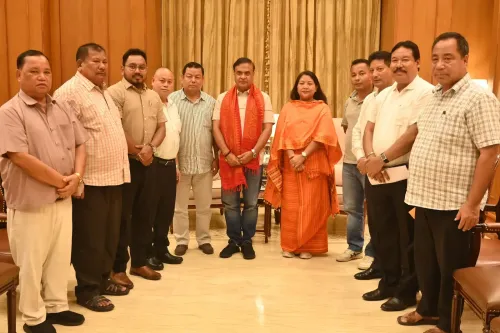
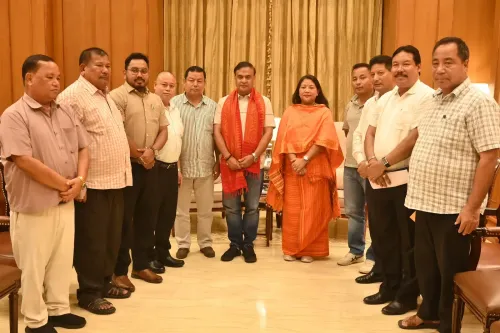
Six years after the Bodo Peace Accord was inked, the promises written into it are being measured against the calendar — and Assam Chief Minister Dr. Himanta Biswa Sarma moved that clock forward on Friday, 6 November 2026, chairing a direct meeting with the central committee of the All Bodo Students' Union (ABSU) in Guwahati to take stock of what has been done and what still must be.
The Chief Minister's Office confirmed the sit-down covered a broad agenda: the status of Accord implementation, the reactivation of the BTR Boundary Commission, community rights, and welfare measures. Dr. Sarma assured the delegation that legitimate demands would receive timely action — and then gave officials concrete deadlines to hold that promise to.
Two Hard Deadlines the CM Set in the Room
The most specific outcomes of the meeting were two firm directives. First, Dr. Sarma instructed officials to complete elections to the Bodo-Kachari Welfare Council (BKWC) by December 2026. The BKWC is the statutory body responsible for the socio-economic welfare of Bodo and allied communities living outside the Bodoland Territorial Region (BTR) — communities that often fall through the cracks of autonomous-council governance.
Second, the Education Department was directed to convene a meeting with ABSU and other stakeholders by 20 November to address concerns around Bodo-medium education. Language rights have been among the most persistent flash-points since the Accord was signed, and a government-convened multi-stakeholder session signals a shift from ad-hoc responses to a structured resolution track.
What the 2020 Bodo Peace Accord Actually Promised
The Bodo Peace Accord was signed on 27 January 2020, replacing the earlier 2003 BTC Accord and creating the expanded Bodoland Territorial Region with enhanced autonomy. It also committed the central and state governments to a boundary review, development packages, and cultural safeguards — a sweeping set of commitments that the Assam government has been working through in periodic review meetings with ABSU ever since.
The reactivation of the BTR Boundary Commission — raised again in Friday's meeting — speaks to one of the Accord's most complex unfinished chapters. Boundary demarcation directly determines which villages fall under BTR administration and which communities access its welfare programmes. Its status remains a live concern for the Bodo community.
ABSU's Role as Negotiating Bridge
Founded as a student body, ABSU has long served as the most organised civic voice for Bodo aspirations, channelling demands that once drove insurgency into institutional dialogue. Its continued engagement with the state government — from the 2020 signing through to today's meeting — reflects the broader pattern Assam has relied on: converting community grievances into agenda items rather than armed campaigns.
The two upcoming milestones — the 20 November education meeting and December 2026 BKWC elections — will now serve as the first real test of whether Friday's assurances translate into action on the ground.
Point of View
While the 20 November education meeting signals that language rights — historically the most emotionally charged demand — are being treated as solvable, not symbolic. The real test will come after those dates. If officials miss either deadline, ABSU's patient institutional engagement could face internal pressure from more assertive voices within the Bodo community. For the CM, delivering on both before the year closes is as much about credibility with a key constituency as it is about the letter of the 2020 Accord.
NationPress
6 Nov 2026
Frequently Asked Questions
What is the Bodo Peace Accord and when was it signed?
The Bodo Peace Accord was signed on 27 January 2020 between the Government of India, the Assam state government, and Bodo groups. It replaced the 2003 BTC Accord and created the Bodoland Territorial Region with enhanced autonomy, along with commitments on boundary review and cultural safeguards.
What is the Bodo-Kachari Welfare Council (BKWC)?
The Bodo-Kachari Welfare Council (BKWC) is a statutory body in Assam responsible for the socio-economic welfare of Bodo and allied communities living outside the Bodoland Territorial Region. CM Sarma has directed that its elections be completed by December 2026.
Why is the BTR Boundary Commission important?
The BTR Boundary Commission determines which villages and areas fall under the administration of the Bodoland Territorial Region. Its reactivation is crucial because boundary demarcation decides which communities can access BTR's welfare programmes and governance structures.
What did CM Himanta Biswa Sarma direct regarding Bodo-medium education?
CM Dr. Himanta Biswa Sarma directed the Education Department to convene a meeting with ABSU and other stakeholders by 20 November 2026 to specifically address concerns relating to Bodo-medium education in Assam.
Who is ABSU and what is its role in Bodo affairs?
The All Bodo Students' Union (ABSU) is the most prominent civic organisation of the Bodo community, advocating for autonomy, language rights, and Accord implementation. It has been a key negotiating body in government dialogues since the 2020 peace process.