Amit Shah Attacks Congress on Border Roads, Credits Modi
Synopsis
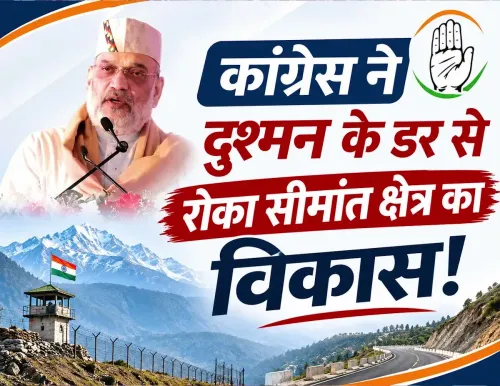
Home Minister Amit Shah accused Congress-led governments of blocking border-area roads under the pretext of enemy infiltration, leaving frontier villages underdeveloped. He credited PM Modi with reversing the policy and building a secure, connected border.
Key Takeaways
Union Home Minister Amit Shah posted on November 6, 2026 accusing Congress governments of halting border road construction citing enemy-infiltration fears.
Shah credited PM Narendra Modi with building roads in border regions and creating what he called an India whose borders no adversary dares approach.
The Border Roads Organisation (BRO) , set up in 1960 , has seen markedly higher approvals and funding since 2014 .
The BJP's Vibrant Villages Programme specifically targets northern frontier settlements with road and livelihood investment.
The claim that Congress 'deliberately' stopped roads is a political characterisation; the documented shift is in BRO funding and completion rates post-2014.
Shah's combative language and attached video suggest the post is part of a coordinated political outreach, not a standalone comment.
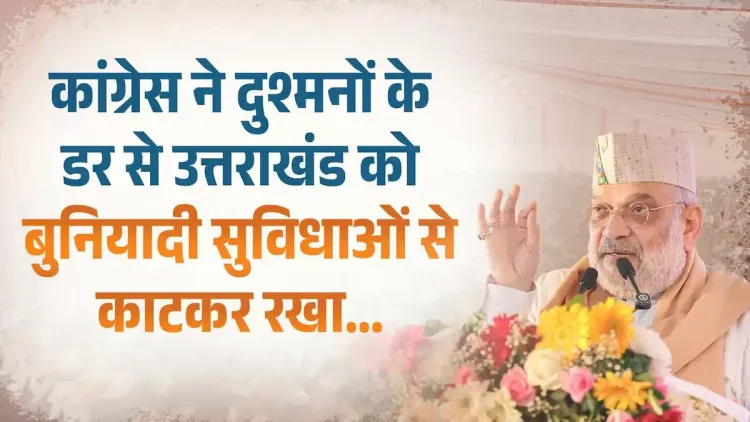
Using blunt, unambiguous language, Union Home Minister Amit Shah on Friday, November 6, 2026, accused Congress-led governments of deliberately stalling road construction in border areas, arguing that fear of enemy infiltration was used as a pretext to keep frontier villages underdeveloped — and declared that Prime Minister Narendra Modi had reversed that legacy entirely.
Shah's post in Hindi stated: 'Dushman ke ghus aane ka bahana banakar Congress sarkaarein seemavarti kshetron mein sadkein rokti raheen aur gaanv pichharte gaye.' ('Using the excuse of enemy intrusion, Congress governments kept blocking roads in border areas and villages kept falling behind.') He then credited Modi with not only building those roads but creating a 'secure India where no one dares to touch our borders.'
The infrastructure-security doctrine Shah is invoking
At the heart of the charge is a long-running policy debate. The Border Roads Organisation (BRO), established in 1960, historically operated under a doctrine that deliberately kept roads away from the frontier to slow any adversary's advance — a Cold War-era logic that critics argue left communities in Ladakh, Arunachal Pradesh, and the Northeast cut off from markets, schools, and emergency services for decades.
Since 2014, the Modi government has sharply accelerated approvals and funding for strategic border roads, framing connectivity as inseparable from both development and military mobility. Construction of all-weather roads, tunnels, and bridges in high-altitude zones has been a recurring budget and parliamentary headline. Shah's post positions that acceleration as a deliberate reversal of what he frames as Congress-era neglect.
Border villages at the centre of the argument
The 'border village' question is not merely symbolic. Communities stranded without road access have historically faced outmigration, economic stagnation, and reduced strategic depth for the armed forces. The BJP's Vibrant Villages Programme, launched in recent years, specifically targets settlements along the northern frontier, pairing connectivity investment with livelihood schemes — a package Shah's statement implicitly references when he says villages 'fell behind' under earlier governments.
The claim that Congress governments deliberately blocked roads, as opposed to under-investing in them, is a contested political characterisation — one the research record flags as unverified. What is documented is the pace differential: BRO project completion rates and budgetary allocations rose substantially after 2014, a point the opposition has at times disputed by citing legacy constraints, terrain difficulty, and funding gaps that pre-date any single government's tenure.
The political moment behind the post
Shah's choice of language — 'kisi Mai ke laal ki himmat nahin' ('no son of his mother dares') — is characteristically combative and directed at both domestic and foreign audiences. The post comes with an attached video, suggesting it is part of a coordinated outreach, likely timed to a campaign cycle or a specific infrastructure milestone. The broader BJP messaging arc consistently pairs security achievement with governance critique of the Congress, and Shah, as the party's former national president, remains its most aggressive front-line communicator on that theme.
Border infrastructure is now firmly bipartisan political terrain — every party claims credit for roads built and assigns blame for roads delayed. But the BJP's sustained emphasis on the narrative, amplified at the cabinet level by the Home Minister himself, signals that the connectivity-security message is expected to carry significant electoral weight heading into coming assembly contests.
Point of View
Designed to draw a sharp before-and-after line at 2014. By attributing underdevelopment in border villages specifically to Congress intent rather than resource constraints or strategic doctrine, he escalates a policy disagreement into a moral indictment — a framing that resonates strongly in states with large border or ex-servicemen constituencies. The attachment of a video signals this is campaign-grade content, not a spontaneous reaction. With assembly elections perennially on the horizon, the border-roads message simultaneously attacks the opposition, claims a defence credential, and speaks directly to marginalised frontier communities — making it one of the BJP's most versatile political instruments.
NationPress
6 Nov 2026
Frequently Asked Questions
Why did earlier governments avoid building roads near India's borders?
The historical rationale was strategic: keeping roads away from the frontier was believed to slow any adversary's advance into Indian territory. Critics, including the current BJP leadership, argue this logic left border villages economically isolated for decades.
What has the Modi government done differently on border roads?
Since 2014, the government has sharply increased funding and project approvals for the Border Roads Organisation, prioritising all-weather connectivity in Ladakh, Arunachal Pradesh, and the Northeast, framing it as essential for both development and military mobility.
What is the Vibrant Villages Programme?
The Vibrant Villages Programme is a government scheme targeting sparsely populated villages along India's northern frontier, combining road connectivity with livelihood support to reduce outmigration and strengthen strategic depth.
Is Amit Shah's claim that Congress deliberately blocked border roads verified?
The claim that Congress governments actively and deliberately stopped road construction is a contested political characterisation. What is documented is a substantial increase in BRO funding and completion rates after 2014 compared to earlier periods.
What did Amit Shah say exactly about India's borders?
Shah said, in Hindi, that Congress governments used the fear of enemy infiltration as an excuse to block roads in border areas, leaving villages behind, while Modi built those roads and secured India so thoroughly that 'no one dares to touch our borders.'