What Did INA Veteran Jeyaraj Raja Rao Say About PM Modi After Their Meeting in Malaysia?
Synopsis
In a heartfelt meeting, INA veteran Jeyaraj Raja Rao praises PM Modi for his contributions to India. He reflects on Netaji's legacy and the importance of the Indian National Army. Discover how this encounter sheds light on the historical significance of the INA in India's fight for independence.
Key Takeaways
Meeting between Jeyaraj Raja Rao and PM Modi highlights the importance of acknowledging historical contributions.
Netaji Subhas Chandra Bose's legacy continues to inspire unity and empowerment.
The Rani of Jhansi Regiment symbolizes women's vital role in India's freedom movement.
The conversation emphasizes the ongoing relevance of the INA in contemporary India.
Recognition of INA's sacrifices is essential for understanding India's struggle for independence.
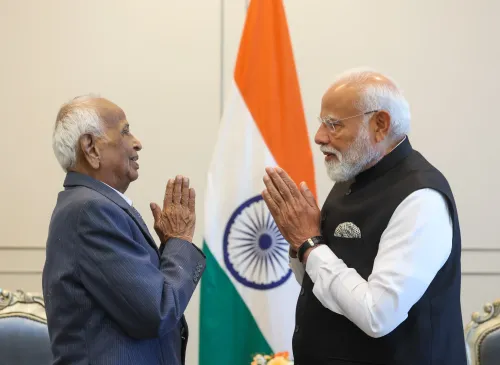
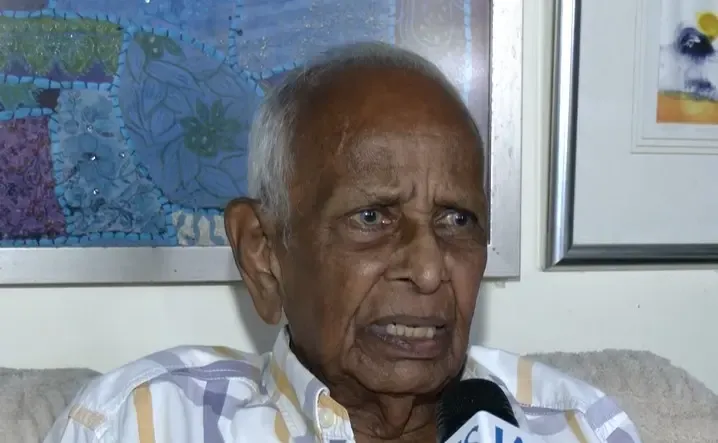
Kuala Lumpur, Feb 9 (NationPress) Jeyaraj Raja Rao, a seasoned veteran of the Azad Hind Fauj, commonly referred to as the Indian National Army (INA), shared his memorable encounter with Prime Minister Narendra Modi in Kuala Lumpur and commended him for enhancing India's reputation across various fields.
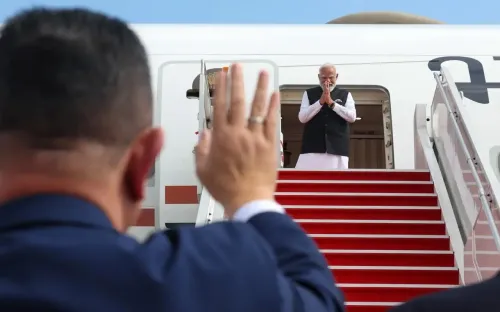
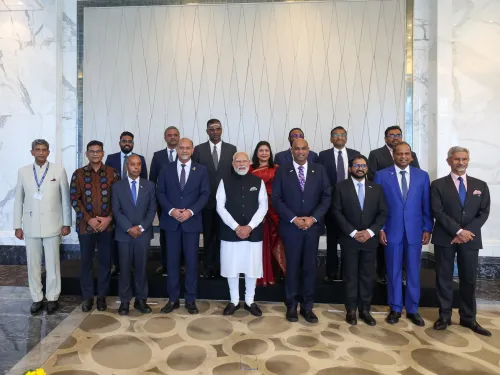
During his two-day official visit to Malaysia, Prime Minister Modi engaged with veterans of the Azad Hind Fauj on Sunday, highlighting the force's historical importance and lasting legacy among the Indian community in Southeast Asia.
In his meeting with INA veteran Jeyaraj Raja Rao, the Prime Minister found the interaction to be profoundly motivating.
In an exclusive interview with IANS, Jeyaraj Raja Rao expressed, "As a sentimental individual, I feel incredibly honored to have met another remarkable Prime Minister of India. In my view, PM Modi embodies vigor and compassion. He has accomplished so much for rural India, including constructing toilets, improving water systems, and ensuring their sustainability, all while boosting the economy."
"He has upheld equality by refraining from granting special privileges to any specific community, treating all -- Muslims, Hindus, and Christians -- with fairness, and showing strength against the occasional aggressiveness of Pakistan," he elaborated.
"Simultaneously, India is experiencing economic growth, maintaining neutrality, and wisely avoiding the exploitation of nations, particularly the United States, which I view as aggressive, imperialistic, and domineering. Therefore, I wish to congratulate him quietly while expressing my gratitude. Meeting such a great man has been a blessing," he added.
Reflecting on the interaction, the INA veteran characterized the meeting as emotionally impactful, especially as it was significant for him that the Prime Minister took time to meet an "ordinary person".
"The common thread was Netaji Subhash Chandra Bose. I was honored by Netaji when I was merely 12 or 13 years old, and the Prime Minister is deeply fond of Netaji. He truly was a remarkable leader," he noted.
"He was delighted to meet someone who had encountered Netaji at such a young age. I clearly conveyed that I identify as an Indian Malaysian, not a Malaysian Indian. I unabashedly acknowledge my Indian identity first. I also commended him on his ability to unify numerous ethnic Indians within a democratic framework, which is an impressive feat," Jeyaraj Raja Rao told IANS.
While reminiscing about Netaji Subhas Chandra Bose, the INA veteran highlighted three key aspects of the freedom fighter's personality and leadership that left a lasting impression on him.
"Firstly, through his eloquence, charm, and cosmic energy, he united all Indians. Before his time, during the periods of both the Japanese and British, people primarily identified as Tamilians, Malayalis, Telugus, Jaffnas, etc. Netaji introduced the notion that we must consider ourselves Indians first to unite for India's liberation from colonialism. That was my first strong impression," he shared.
"Secondly, he stressed the importance of liberating India from the British through militant action, the military, and revolutionary means. This contrasted sharply with Gandhiji's principle of non-violence, and even Nehruji had reservations at that time. Netaji led this movement with unwavering conviction," he added.
"Lastly, he firmly believed in gender equality. He encouraged women's active participation and even formed a Rani of Jhansi force in Malaysia. He is a figure I admire in many respects," Jeyaraj Raja Rao concluded.
The INA veteran also voiced his concern regarding the lack of recognition and understanding of the contributions made by the Indian National Army, both in India and among the diaspora.
"Regrettably, I believe not many people, whether in India or in our nation (Malaysia), fully comprehend the significant role the Indian National Army played in India's independence. They not only organized resistance but also ventured to Burma with the intention of marching towards Jammu to liberate India. Very few are aware of their sacrifices. While I may not remember all the details now, I recognize they were exceptional soldiers," he remarked.
Earlier on Sunday, Prime Minister Modi shared photographs of his meeting on X, stating, "It was truly special to meet INA veteran Shri Jeyaraj Raja Rao. His life exemplifies immense courage and sacrifice. Listening to his experiences was incredibly inspiring."
The Prime Minister also honored Netaji Subhas Chandra Bose and the INA soldiers, declaring, "We will forever be indebted to Netaji Subhas Chandra Bose and the brave women and men of the INA, whose valor helped shape India's destiny."
Netaji Subhas Chandra Bose took charge of the Indian National Army in Southeast Asia in 1943 and revitalized the force after arriving from Germany.
From bases in Singapore and Malaya, now recognized as Malaysia, he reorganized and expanded the INA by mobilizing Indian civilians and Prisoners of War captured during World War II.
Bose also established the Provisional Government of Azad Hind on October 21, 1943, which played a symbolic role in India's freedom struggle.
The historical relevance of the INA remains closely tied to the Indian diaspora in modern-day Malaysia and Singapore, as the force was largely organized and built in these regions.
Initially, the trained core of the army consisted of Prisoners of War, but it was the Indian civilian population in Southeast Asia that provided a significant number of volunteers to bolster the movement.
Among the notable units within the INA was the Rani of Jhansi Regiment, an all-female unit comprising Indian women living in Southeast Asia.
Many of these women had never traveled to India but retained a robust connection to Indian heritage, culture, and values passed down through generations.
The regiment became a symbol of women's engagement and empowerment in India's freedom struggle and continues to be historically significant in the legacy of the INA.
Frequently Asked Questions
Who is Jeyaraj Raja Rao?
Jeyaraj Raja Rao is a veteran of the Azad Hind Fauj, also known as the Indian National Army, who recently met Prime Minister Narendra Modi in Kuala Lumpur.
What did PM Modi discuss with the INA veterans?
During his visit to Malaysia, PM Modi engaged with INA veterans, emphasizing the historical significance of their contributions to India's freedom.
What is the legacy of Netaji Subhas Chandra Bose?
Netaji Subhas Chandra Bose is remembered for his leadership of the Indian National Army and his efforts to unite Indians against colonial rule.
What was the significance of the Rani of Jhansi Regiment?
The Rani of Jhansi Regiment was an all-women unit in the INA, symbolizing women's empowerment and participation in India's freedom struggle.
How did the INA contribute to India's independence?
The INA played a vital role in organizing resistance against colonial rule and mobilizing support among Indian civilians and captured soldiers during World War II.