Doval meets Wang Yi at BRICS meet, India-China ties show gradual progress
Synopsis
India's NSA Ajit Doval and China's Foreign Minister Wang Yi sat down in New Delhi on the sidelines of the BRICS NSAs' summit — the latest signal that the two neighbours are cautiously rebuilding ties after the Galwan rupture. The language from both sides was measured but deliberate: 'stable, predictable and constructive' is diplomatic shorthand for a relationship still fragile enough to need careful tending.
Key Takeaways
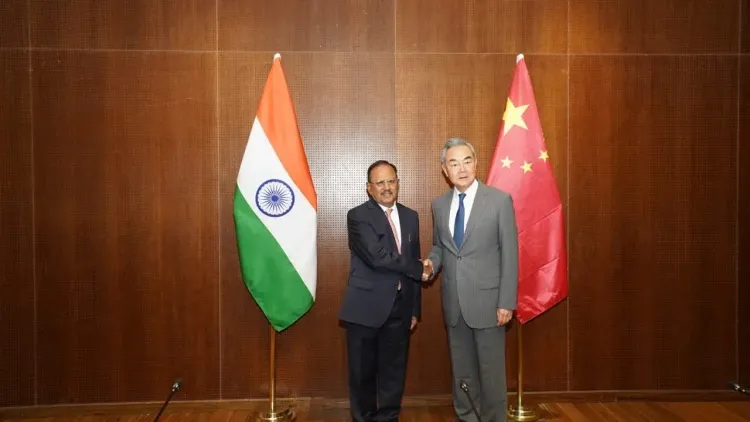
NSA Ajit Doval met Chinese FM Wang Yi on 22 June 2026 on the sidelines of the BRICS NSAs' Meeting in New Delhi .
Both sides reviewed bilateral developments and noted progress towards gradual normalisation of India-China ties.
The MEA described the discussions as 'constructive and forward-looking.' Doval also met Brazil's Carlos Cozendey , reviewing India-Brazil relations and BRICS cooperation.
The two-day BRICS NSAs' Meeting is being held under India's chairship , focused on non-traditional security challenges and new technology threats.
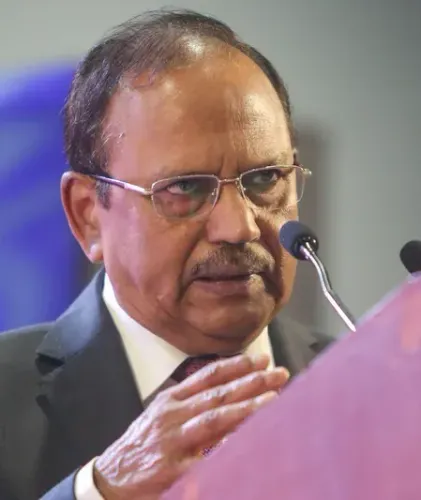
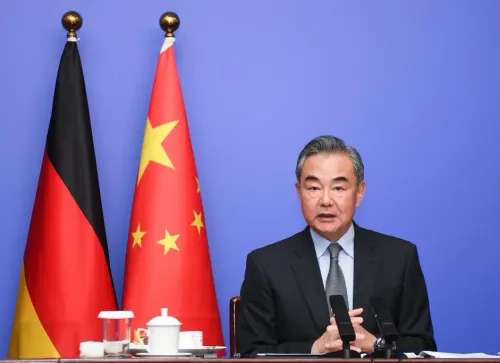
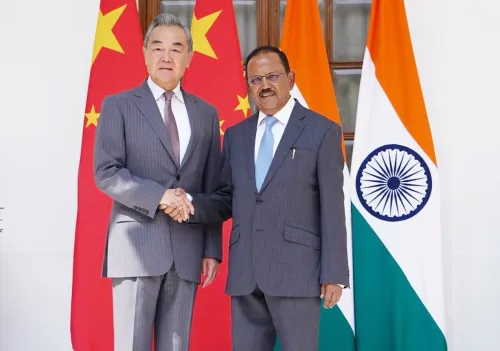
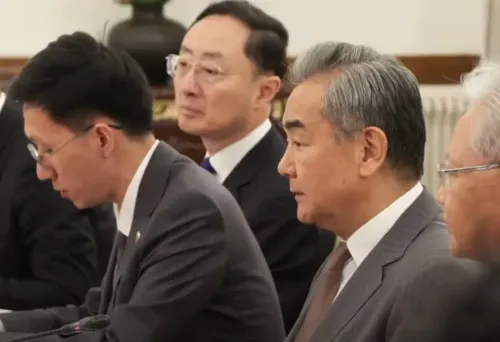
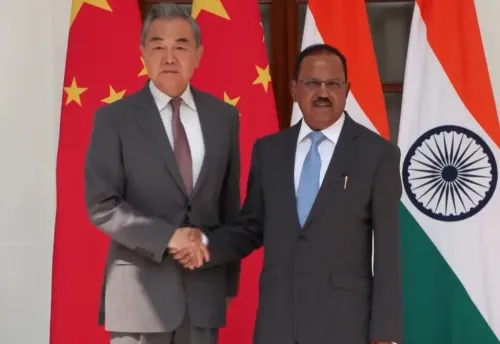
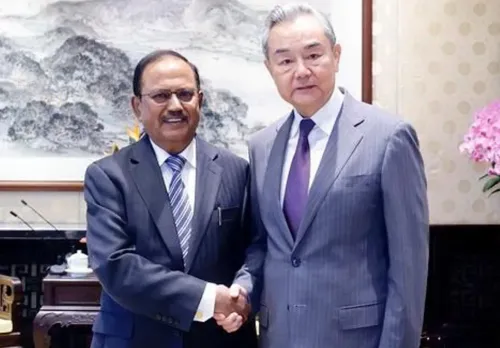
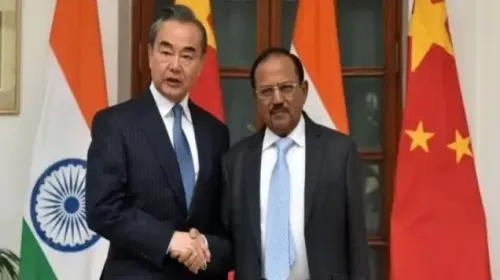
National Security Advisor Ajit Doval held a bilateral meeting with Chinese Foreign Minister Wang Yi on 22 June 2026 on the sidelines of the BRICS National Security Advisors' Meeting in New Delhi, with both sides acknowledging forward movement in the long-strained relationship between the two nations.
What Was Discussed
The Ministry of External Affairs (MEA) confirmed that the two officials reviewed recent developments in bilateral relations and noted progress towards gradual normalisation. According to the MEA's post on X, Doval 'underlined that stable, predictable and constructive bilateral relations contribute to building of trust and better understanding between the two sides.' The MEA described the discussions as 'constructive and forward-looking.'
Context: A Relationship Still Being Rebuilt
India-China ties deteriorated sharply following the Galwan Valley clash of June 2020, which resulted in casualties on both sides and triggered a prolonged military standoff along the Line of Actual Control (LAC) in eastern Ladakh. The two countries have since pursued a phased disengagement, with diplomatic contacts resuming cautiously over the past year. This meeting marks one of the more senior-level engagements since that reset began, underscoring the incremental but deliberate pace at which both governments are managing the thaw.
India-Brazil Bilateral Also on Agenda
On the sidelines of the same gathering, Doval also met Carlos Cozendey, Secretary of Multilateral and Political Affairs of Brazil. The MEA noted that both sides welcomed cooperation between India and Brazil under the BRICS framework and reviewed the state of bilateral relations between the two countries.
About the BRICS NSAs' Meeting
The two-day BRICS National Security Advisors' Meeting is being hosted in New Delhi under India's chairship, bringing together top security officials from all member countries. The theme for this year's deliberations is 'Non-traditional security challenges confronting the world today', with discussions expected to cover rapidly evolving national security threats, the role of new technologies, and outcomes from the recently concluded BRICS Joint Working Groups on Counter-Terrorism and on Security in the use of Information and Communication Technologies.
What Comes Next
The Doval-Wang Yi meeting adds diplomatic momentum to a relationship that remains sensitive. Analysts will watch whether this engagement translates into further concrete steps — such as the full restoration of visa normalisation, resumption of direct flights, or progress on remaining LAC friction points. Both governments have signalled a preference for stability, but the pace of normalisation will depend on trust-building measures that go beyond meeting-room language.
Point of View
India and China are still measuring normalisation in careful increments — and for good reason. The structural tensions along the LAC have not disappeared; they have been managed. What is notable here is the forum: using a multilateral BRICS platform to host a bilateral reset signals that both sides prefer the cover of a larger gathering over the optics of a standalone summit, which would invite greater domestic scrutiny. The real test of this engagement will be whether it produces anything verifiable — resumed direct flights, eased visa queues, or a timetable for remaining disengagement points — rather than another round of constructive language that leaves the underlying friction intact.
NationPress
22 Jun 2026
Frequently Asked Questions
What did NSA Ajit Doval and Chinese FM Wang Yi discuss at the BRICS meeting?
The two officials reviewed recent developments in India-China bilateral relations and noted progress towards gradual normalisation, according to the MEA. Doval emphasised that stable, predictable, and constructive ties contribute to building trust between the two sides.
Where and when did the Doval-Wang Yi meeting take place?
The meeting was held on 22 June 2026 in New Delhi, on the sidelines of the two-day BRICS National Security Advisors' Meeting being hosted by India under its chairship.
What is the BRICS NSAs' Meeting and what is its theme this year?
The BRICS National Security Advisors' Meeting is a gathering of top security officials from BRICS member countries. This year's theme is 'Non-traditional security challenges confronting the world today,' covering evolving security threats, new technologies, counter-terrorism, and cybersecurity.
Why does the India-China meeting matter in the current context?
India-China relations have been under strain since the Galwan Valley clash of June 2020, which triggered a prolonged military standoff along the Line of Actual Control. Diplomatic engagement at this level signals continued efforts to rebuild trust, though full normalisation remains a work in progress.
Who else did NSA Doval meet at the BRICS NSAs' Meeting?
Doval also met Carlos Cozendey, Secretary of Multilateral and Political Affairs of Brazil. Both sides welcomed India-Brazil cooperation under the BRICS framework and reviewed the state of their bilateral relations.