BRICS NSA Meeting in New Delhi on June 22-23: Doval to chair, Wang Yi to attend
Synopsis
India's BRICS chairship takes a strategic turn as NSA Ajit Doval hosts security chiefs from member nations on June 22-23 to tackle cyber threats and AI-driven risks — and Chinese FM Wang Yi's first India visit since August 2025 makes this far more than a routine multilateral huddle.
Key Takeaways
India will host the BRICS National Security Advisers' Meeting on 22-23 June in New Delhi under its BRICS chairship.
NSA Ajit Doval will chair the two-day meeting, with NSAs and heads of delegation from all BRICS member states participating.
The agenda focuses on non-traditional security challenges , including cybersecurity, digital vulnerabilities, and AI-driven threats.
Delegates will review outcomes of BRICS Joint Working Groups on Counter-Terrorism and ICT Security.
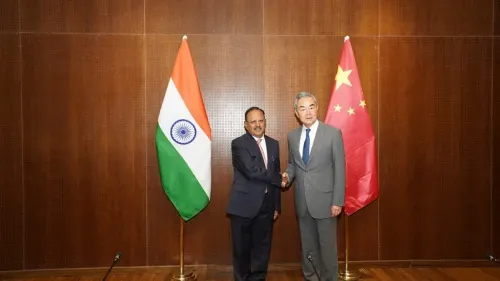
Chinese FM Wang Yi will attend on 22-23 June — his first India visit since August 2025 — at NSA Doval's invitation.
Wang had skipped last month's BRICS Foreign Ministers' Meeting in India due to a scheduling conflict with US President Donald Trump's Beijing visit.
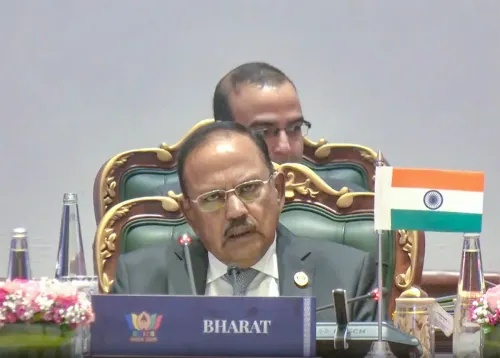
India will host the BRICS National Security Advisers' Meeting on 22-23 June in New Delhi, bringing together top security officials from member nations to deliberate on evolving global threats and deepen strategic cooperation under India's BRICS chairship. The two-day conclave will be chaired by National Security Adviser Ajit Doval, according to a Ministry of External Affairs (MEA) statement.
Agenda and Key Themes
Delegates from all BRICS member states — including National Security Advisers and heads of delegation — will exchange views on the theme 'Non-traditional security challenges confronting the world today.' Discussions are expected to centre on the rapidly shifting security landscape, with particular attention to cybersecurity, digital vulnerabilities, and artificial intelligence-driven risks.
The MEA noted that participants will specifically address 'the rapidly evolving nature of national security challenges, as well as the role of new technologies in emerging security threats.' This signals a clear pivot within BRICS from its traditionally economic-first agenda toward strategic and technological security concerns.
Counter-Terrorism and ICT Security Under Review
The National Security Advisers will also review outcomes from the recently concluded BRICS Joint Working Groups on Counter-Terrorism and on Security in the Use of Information and Communication Technologies (ICT). The review is intended to shape future multilateral cooperation on transnational threats and reinforce collective security frameworks among member nations.
Wang Yi's India Visit: A Closely Watched Moment
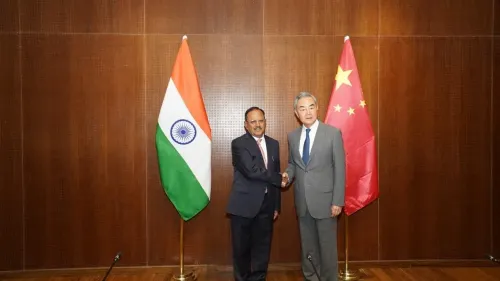
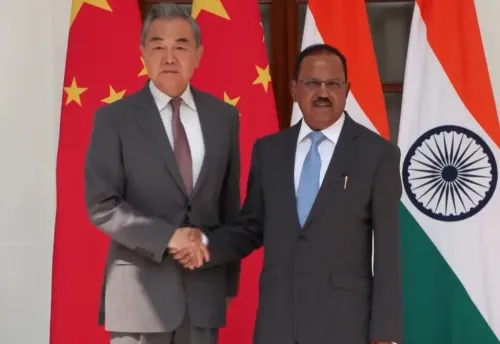
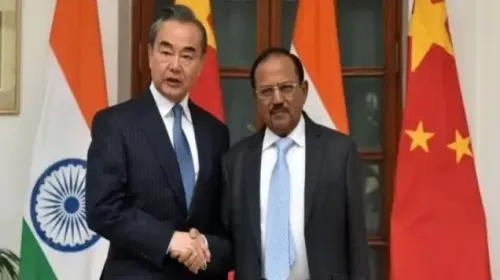
Chinese Foreign Minister Wang Yi — who also serves as Director of the Office of the Central Commission for Foreign Affairs, effectively functioning as China's national security interlocutor — is scheduled to visit India on 22-23 June at the invitation of NSA Doval. This marks Wang Yi's first visit to India since August 2025, and it is being closely tracked amid continuing India-China efforts to sustain dialogue on bilateral and regional matters.
Notably, Wang had skipped the BRICS Foreign Ministers' Meeting hosted by India last month, citing a scheduling conflict with US President Donald Trump's visit to Beijing. His presence at this meeting is therefore seen as a signal of renewed diplomatic engagement between the two neighbours.
India's Strategic Role in BRICS
The meeting underscores India's growing effort to steer the BRICS grouping beyond economic cooperation into the domain of global governance and security. As chair, India has consistently pushed for BRICS to address non-conventional threats — a priority that aligns with its broader foreign policy posture of multi-alignment and strategic autonomy.
With the grouping's expanded membership and evolving geopolitical dynamics, the outcomes of this conclave could shape BRICS's security cooperation architecture for the near term.
Point of View
His first India visit in nearly a year, is the real story. Beijing's decision to send its top foreign policy official after skipping last month's Foreign Ministers' Meeting suggests a calibrated signal: China wants to keep the India channel open without making overt concessions. For India, chairing a security-focused BRICS agenda on AI risks and counter-terrorism is a smart framing — it positions New Delhi as a rule-setter on emerging threats rather than a reactive player. What mainstream coverage underplays is that the ICT security working group review could quietly set norms that matter far more than any joint communiqué.
NationPress
19 Sept 2026
Frequently Asked Questions
What is the BRICS National Security Advisers' Meeting scheduled for June 22-23?
It is a two-day conclave hosted by India in New Delhi under its BRICS chairship, bringing together National Security Advisers and heads of delegation from BRICS member states to discuss non-traditional security challenges, cybersecurity, AI-driven threats, and counter-terrorism cooperation. NSA Ajit Doval will chair the meeting.
Why is Wang Yi's visit to India significant?
Chinese Foreign Minister Wang Yi's attendance on June 22-23 marks his first visit to India since August 2025, making it a closely watched diplomatic moment amid ongoing India-China efforts to maintain dialogue. Wang had also skipped India's BRICS Foreign Ministers' Meeting last month due to a scheduling conflict with US President Donald Trump's Beijing visit.
What topics will be discussed at the BRICS NSA Meeting?
The meeting's central theme is 'Non-traditional security challenges confronting the world today,' covering cybersecurity, digital vulnerabilities, artificial intelligence-driven risks, and the role of emerging technologies in national security. Delegates will also review the outcomes of BRICS Joint Working Groups on Counter-Terrorism and ICT Security.
What is India's role in this BRICS meeting?
India holds the BRICS chairship and is hosting the meeting, with NSA Ajit Doval presiding. India has used its chairship to push the grouping's agenda beyond economics into global governance, security cooperation, and technological challenges.
What are the BRICS Joint Working Groups being reviewed at this meeting?
The National Security Advisers will review outcomes from two working groups: the BRICS Joint Working Group on Counter-Terrorism and the Joint Working Group on Security in the Use of Information and Communication Technologies. The reviews are expected to guide future multilateral cooperation on transnational threats.