Doval, Wang Yi meet at BRICS NSA summit: India-China ties on path to normalisation
Synopsis
NSA Ajit Doval and Chinese FM Wang Yi met on the sidelines of the BRICS NSA summit in New Delhi, with Doval pressing for mutual sensitivity on core concerns and both sides acknowledging 'gradual normalisation' of ties — a carefully calibrated signal that India is re-engaging China on its own terms, not on Beijing's timeline.
Key Takeaways
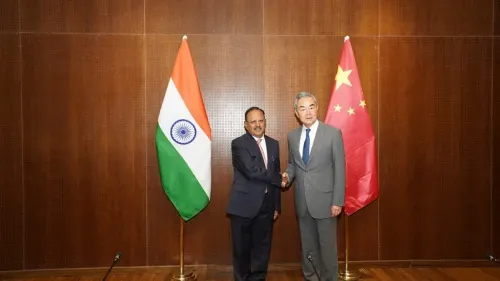
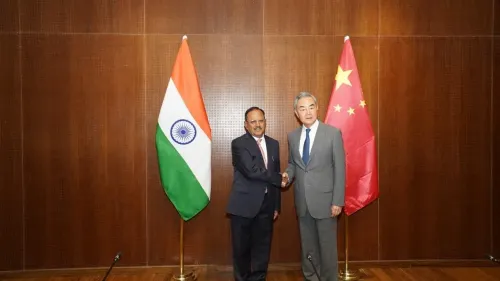
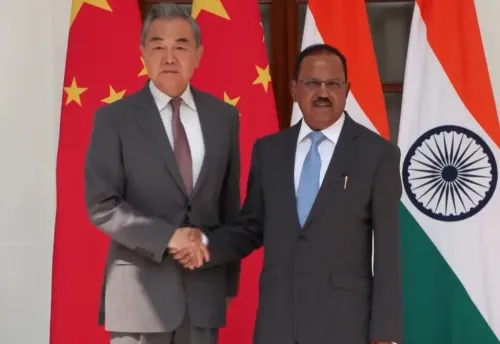
NSA Ajit Doval and Chinese Foreign Minister Wang Yi held talks in New Delhi on the sidelines of the BRICS NSA Meeting on 23 June 2025 .
Both sides acknowledged progress toward gradual normalisation of India-China bilateral ties.
Doval stressed India's approach of mutual sensitivity, mutual interests, and mutual respect on core concerns.
PM Modi met BRICS NSAs on Tuesday and reaffirmed India's intent to use its 2026 BRICS Chairmanship to advance Global South priorities.
The BRICS meeting addressed counter-terrorism, cyber security, energy security , and emerging technology threats.
BRICS delegations backed deeper cooperation through coordinated law-enforcement action against terrorism and cyber risks.
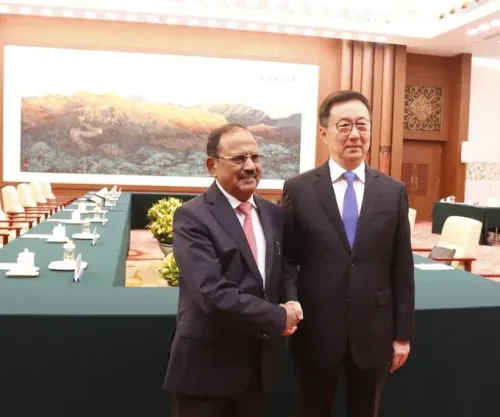
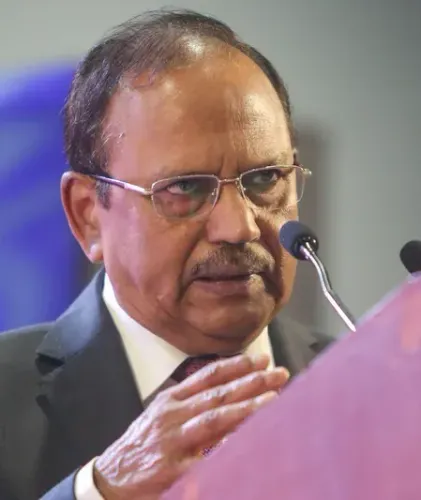
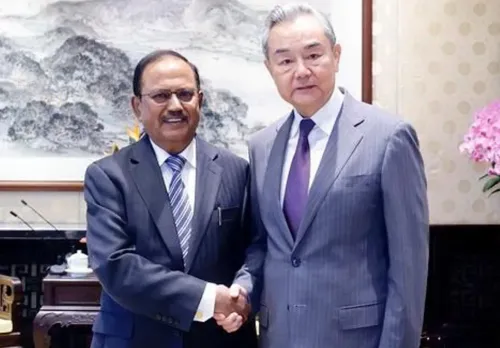
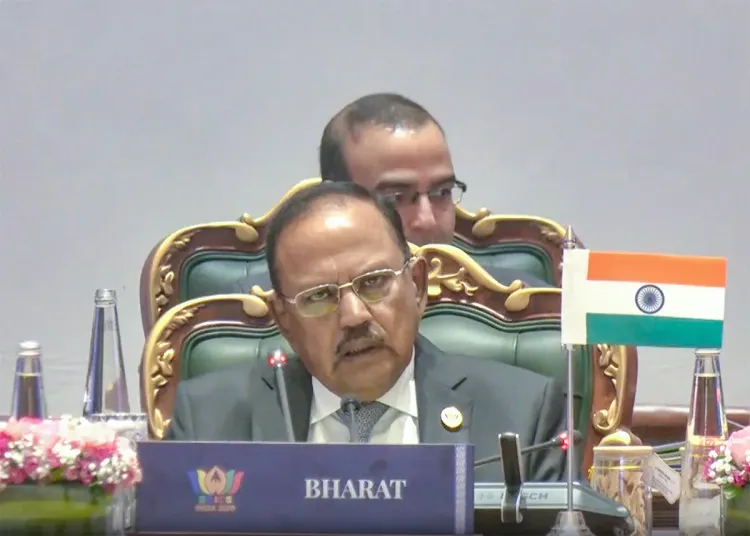
National Security Advisor (NSA) Ajit Doval and visiting Chinese Foreign Minister Wang Yi held talks on the sidelines of the BRICS National Security Advisors' Meeting in New Delhi on Monday, 23 June 2025, with Doval stressing that stable, predictable, and constructive bilateral relations are essential for building enhanced trust and deeper understanding between India and China. The meeting marked a significant diplomatic touchpoint as both sides acknowledged progress toward the gradual normalisation of ties.
What Was Discussed
During the bilateral meeting, both sides reviewed recent developments in India-China relations and noted forward movement on the normalisation front. NSA Doval also emphasised the importance of each side consistently demonstrating sensitivity to the other's core concerns.
Ministry of External Affairs (MEA) spokesperson Randhir Jaiswal said on Tuesday that this approach was in keeping with India's 'overall approach of mutual sensitivity, mutual interests and mutual respect.' Foreign Secretary Vikram Misri, Chinese Ambassador to India Xu Feihong, and other senior officials were also present at the meeting.
BRICS NSA Meeting: Key Outcomes
India hosted the two-day BRICS National Security Advisors' Meeting in New Delhi, bringing together top security officials from member states to deliberate on evolving global security challenges. The agenda covered both traditional and non-traditional security domains.
According to an MEA statement, discussions in the non-traditional security realm addressed energy security, food security, supply chain security, emerging technologies exploited by terrorist networks, cyber security, and climate-induced instability. The NSAs also reviewed the outcomes of the BRICS Joint Working Group on Counter-Terrorism, held on 21-22 May 2025, and the working group on security in the use of Information and Communication Technologies, convened earlier this month.
Commitment to Counter-Terrorism and Cyber Security
The participating delegations expressed support for deepening BRICS cooperation — particularly in strengthening member capacities, enhancing information sharing, and coordinating among BRICS law-enforcement agencies to collectively counter terrorism and cyber risks.
'They reaffirmed their commitment to combating terrorism in all its forms and manifestations, including through countering the use of new technologies being utilized by them,' the MEA statement noted. The leaders also extended full backing to India's BRICS Chairmanship in 2026 under the theme: 'Building for Resilience, Innovation, Cooperation and Sustainability.'
PM Modi's Call with BRICS Security Chiefs
The NSAs and heads of delegation from BRICS member states called on Prime Minister Narendra Modi on Tuesday following the conclusion of the meeting. PM Modi posted on X that he was 'pleased to meet the visiting security advisors and senior security officials.'
'In a changing global landscape, BRICS has a vital role in deepening security cooperation and addressing shared challenges, from terrorism and cyber security to emerging technologies. India's Chairmanship will seek to advance practical cooperation, support the priorities of the Global South and contribute to a safer, more secure and inclusive world,' he wrote.
What This Signals for India-China Relations
The Doval-Wang Yi meeting comes amid a broader, carefully managed thaw in India-China relations following the disengagement along the Line of Actual Control (LAC) in eastern Ladakh. The language of 'gradual normalisation' signals that both capitals are managing expectations — progress is acknowledged, but full restoration of pre-2020 ties remains a work in progress. Notably, the meeting on the sidelines of a multilateral forum, rather than a standalone bilateral, reflects the measured pace at which New Delhi is choosing to re-engage Beijing.
Point of View
But the subtext is significant: India is willing to engage China, but only on the basis of demonstrated reciprocity on core concerns — a reference that almost certainly points to the LAC. The use of 'gradual normalisation' rather than 'restored relations' is deliberate and tells its own story. New Delhi is managing the optics carefully — the meeting was bilateral in substance but multilateral in setting, giving both sides deniability if the other overreads it. The real test of this thaw will come not at summits, but in how China handles the next border flashpoint.
NationPress
22 Sept 2026
Frequently Asked Questions
What did NSA Ajit Doval and Wang Yi discuss at the BRICS meeting?
NSA Ajit Doval and Chinese Foreign Minister Wang Yi reviewed recent developments in India-China bilateral relations and noted progress toward gradual normalisation of ties. Doval emphasised the importance of both sides consistently displaying sensitivity to each other's core concerns, in line with India's approach of mutual sensitivity, mutual interests, and mutual respect.
Where and when did the Doval-Wang Yi meeting take place?
The meeting took place on Monday, 23 June 2025, in New Delhi, on the sidelines of the BRICS National Security Advisors' Meeting hosted by India. Foreign Secretary Vikram Misri and Chinese Ambassador Xu Feihong were also present.
What were the key outcomes of the BRICS NSA Meeting in New Delhi?
The BRICS NSA Meeting addressed counter-terrorism, cyber security, energy security, food security, supply chain security, and climate-induced instability. Delegations reaffirmed their commitment to combating terrorism in all forms and backed deeper cooperation among BRICS law-enforcement agencies.
What did PM Modi say after meeting the BRICS security advisors?
PM Modi posted on X that he was pleased to meet the visiting security advisors. He stated that BRICS has a vital role in deepening security cooperation on challenges ranging from terrorism and cyber security to emerging technologies, and that India's 2026 Chairmanship would seek to advance practical cooperation and support Global South priorities.
What is India's theme for its BRICS Chairmanship in 2026?
India's BRICS Chairmanship in 2026 is themed 'Building for Resilience, Innovation, Cooperation and Sustainability.' The BRICS NSAs expressed full support for India's chairmanship at the conclusion of the New Delhi meeting.