India-Singapore 4th Ministerial Roundtable: Semiconductors, digital and green economy on agenda
Synopsis
Four Indian ministers — Jaishankar, Sitharaman, Goyal, and Prasada — converged in Singapore for the 4th ISMR, putting semiconductors, fintech, and clean energy at the centre of a partnership that is visibly expanding beyond trade into strategic technology and green economy terrain. The laying of the foundation stone for India's new Chancery complex adds a symbolic dimension to what is increasingly a structural bilateral relationship.
Key Takeaways
Jaishankar called the 4th India-Singapore Ministerial Roundtable (ISMR) 'very productive' on 20 August in Singapore .
The Indian delegation included Finance Minister Nirmala Sitharaman , Commerce Minister Piyush Goyal , and MoS Jitin Prasada .
Discussions covered 8 domains : advanced manufacturing, semiconductors, connectivity, digital, fintech, skilling, green economy, and clean energy.
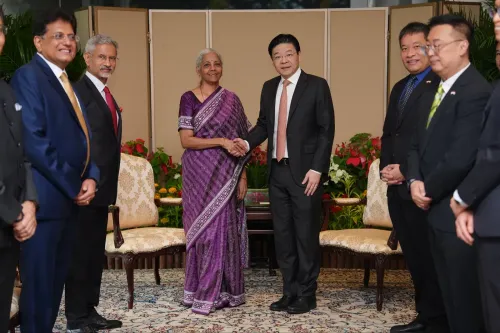
The delegation called on Singapore PM Lawrence Wong , covering economic cooperation, digitalisation, and sustainability.
Jaishankar and FM Vivian Balakrishnan laid the foundation stone of the new High Commission of India Chancery complex in Singapore.
The ISMR also engaged participants of the India-Singapore Business Roundtable (ISBR) , reflecting a private-sector dimension to the bilateral agenda.
External Affairs Minister S. Jaishankar on 20 August described the 4th India-Singapore Ministerial Roundtable (ISMR) in Singapore as 'very productive,' as a high-level Indian delegation deepened engagement across advanced manufacturing, semiconductors, digital infrastructure, fintech, skilling, and clean energy. The meeting marks a significant step in advancing the India-Singapore Comprehensive Strategic Partnership.
Key Developments at the Roundtable
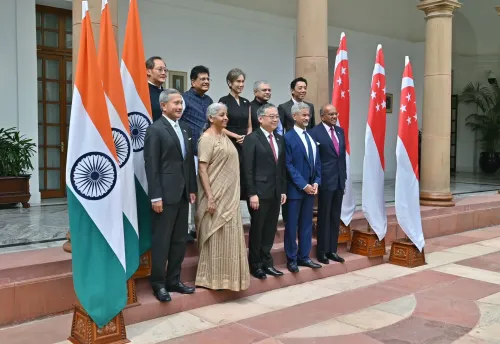
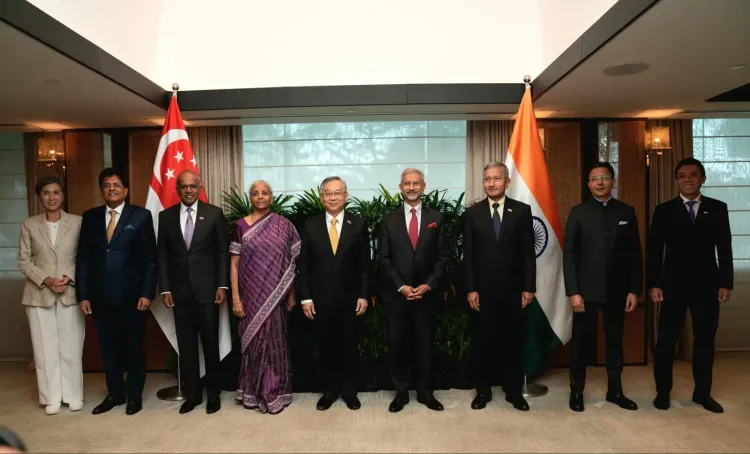
The Indian delegation included Finance Minister Nirmala Sitharaman, Commerce and Industry Minister Piyush Goyal, and Minister of State for Commerce and Industry and Electronics and Information Technology Jitin Prasada, alongside EAM Jaishankar. On the Singaporean side, Deputy Prime Minister Gan Kim Yong, Coordinating Minister for National Security and Home Affairs K. Shanmugam, Foreign Minister Vivian Balakrishnan, Digital Development and Information Minister Josephine Teo, and Minister for Transport Jeffrey Siow engaged with the visiting delegation.
'Our discussions explored deeper ties in advanced manufacturing, semiconductors, connectivity, digital, fintech, skilling, green economy and clean energy domains,' Jaishankar stated in a post on X. He added that the ISMR also held joint interactions with participants of the India-Singapore Business Roundtable (ISBR), underlining the private-sector dimension of the bilateral agenda.
Call on Singapore Prime Minister Lawrence Wong
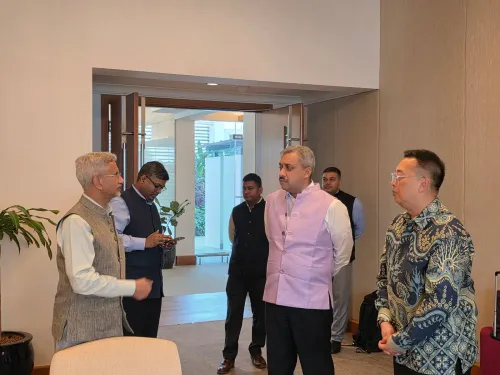
Earlier on 20 August, the Indian ministerial delegation called on Singapore Prime Minister Lawrence Wong, discussing progress across multiple dimensions of bilateral relations. 'A real pleasure to call on PM Lawrence Wong of Singapore, along with Ministers Nirmala Sitharaman, Piyush Goyal, and Jitin Prasada. Discussed the progress across various dimensions of India-Singapore relations. Value his thoughts on taking the partnership forward,' Jaishankar posted on X.
Prime Minister Wong reciprocated the sentiment, posting on X: 'It was a pleasure to catch up with India's Finance Minister Nirmala Sitharaman, External Affairs Minister Dr S Jaishankar, Commerce and Industry Minister Piyush Goyal, and Minister of State Jitin Prasada, ahead of the 4th India-Singapore Ministerial Roundtable (ISMR) in Singapore.' According to the Finance Ministry, the leaders also discussed ways to further strengthen bilateral cooperation across economic cooperation, digitalisation, connectivity, skills development, and sustainability.
Jaishankar-Balakrishnan Bilateral and New Chancery Foundation Stone
A day earlier, on Wednesday, EAM Jaishankar and Singaporean Foreign Minister Vivian Balakrishnan held a detailed bilateral discussion on deepening the Comprehensive Strategic Partnership and exchanged views on the current geopolitical landscape. 'Delighted to meet my friend FM Vivian Balakrishnan of Singapore. A detailed discussion on how to further deepen our Comprehensive Strategic Partnership. Also value his insights on the current geopolitical situation,' Jaishankar said.
The two ministers also jointly laid the foundation stone of the new Chancery complex of the High Commission of India in Singapore. Jaishankar expressed confidence that the complex would symbolise the new phase of the Comprehensive Strategic Partnership and strengthen support for the Indian community in Singapore.
What This Partnership Signals
The ISMR — now in its fourth edition — has become a structured mechanism for India and Singapore to coordinate on emerging technology sectors, financial connectivity, and green transition. Notably, the inclusion of semiconductors and advanced manufacturing on the agenda aligns with India's broader push to integrate into global supply chains. Singapore, as a regional financial and logistics hub, offers India critical connectivity to Southeast Asian markets. 'Shaping this contemporary and forward-looking India-Singapore partnership is truly a shared endeavour,' Jaishankar noted, framing the relationship as one built on mutual strategic interest rather than transactional diplomacy.
With sectoral discussions now spanning eight domains — from fintech to clean energy — the two countries appear set to formalise further cooperation frameworks in the months ahead.
Point of View
Four Indian ministers, five Singaporean counterparts — but for what it signals about India's strategic intent in Southeast Asia. Singapore is not merely a bilateral partner; it is a gateway, and India's focus on semiconductors and advanced manufacturing at this forum suggests New Delhi is serious about embedding itself in regional supply chains before the next technology cycle locks in alignments. The Chancery foundation stone, easy to overlook, is also telling: permanent diplomatic infrastructure signals long-term commitment in a way that joint statements do not. The question is whether the sectoral discussions translate into binding frameworks or remain aspirational — a pattern that has dogged several India-ASEAN engagement tracks in the past.
NationPress
20 Aug 2026
Frequently Asked Questions
What is the India-Singapore Ministerial Roundtable (ISMR)?
The ISMR is a high-level bilateral mechanism through which India and Singapore coordinate policy across strategic economic and technology sectors. The 4th edition, held on 20 August in Singapore, covered advanced manufacturing, semiconductors, digital infrastructure, fintech, skilling, green economy, and clean energy.
Which Indian ministers attended the 4th ISMR?
External Affairs Minister S. Jaishankar, Finance Minister Nirmala Sitharaman, Commerce and Industry Minister Piyush Goyal, and Minister of State for Commerce and Industry and Electronics and Information Technology Jitin Prasada represented India at the 4th ISMR.
What did EAM Jaishankar and FM Vivian Balakrishnan discuss?
On Wednesday, the two foreign ministers held a detailed bilateral meeting on deepening the India-Singapore Comprehensive Strategic Partnership and exchanged views on the current geopolitical situation. They also jointly laid the foundation stone of the new Chancery complex of the High Commission of India in Singapore.
Did the Indian delegation meet Singapore PM Lawrence Wong?
Yes. On 20 August, EAM Jaishankar, Finance Minister Sitharaman, Commerce Minister Goyal, and MoS Prasada called on Singapore Prime Minister Lawrence Wong. They discussed progress across bilateral relations, including economic cooperation, digitalisation, connectivity, skills development, and sustainability.
What is the significance of the new High Commission Chancery complex in Singapore?
The foundation stone of the new Chancery complex of the High Commission of India in Singapore was laid by EAM Jaishankar and FM Balakrishnan. Jaishankar said the complex would symbolise the new phase of the Comprehensive Strategic Partnership and strengthen support for the Indian community in Singapore.