India Raises Alarm on Hormuz Shipping Attacks, Remains Neutral on UNSC Veto
Synopsis
India has expressed worries about the assaults on commercial shipping in the Hormuz Strait while adopting a neutral stance on the veto by Russia and China against a Security Council resolution aimed at stopping Iran's aggressive actions.
Key Takeaways
India expresses concern over Hormuz Strait shipping attacks.
Neutral stance on UNSC resolution veto by Russia and China.
Importance of freedom of navigation highlighted by India.
Strait of Hormuz is critical for global energy security .
US imposed a naval blockade on Iran following attacks.
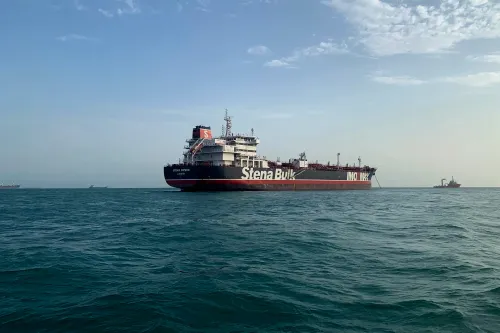
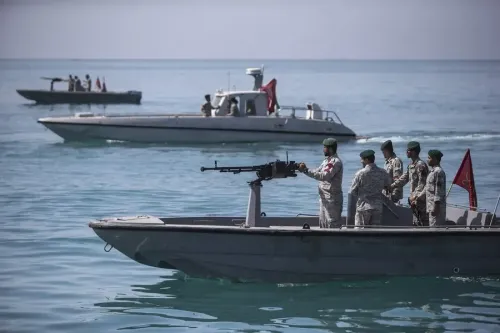
United Nations, April 17 (NationPress) India has raised its concerns regarding incidents involving commercial shipping in the Hormuz Strait. However, it has maintained a neutral position regarding the recent veto by Russia and China against a Security Council resolution aimed at urging Iran to cease its attacks.
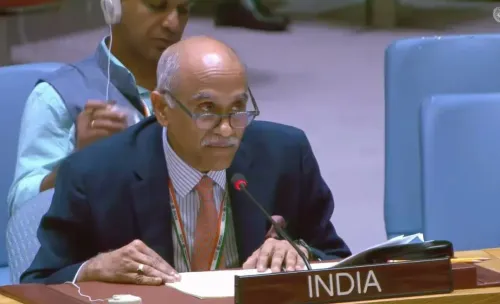
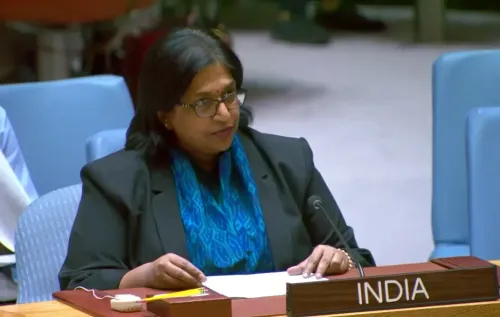
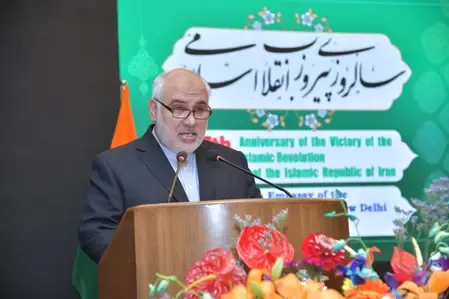
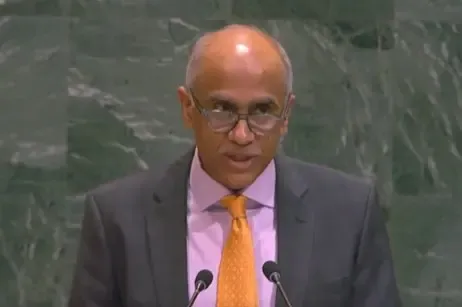
During a General Assembly meeting addressing the veto, India’s Permanent Representative emphasized the importance of fostering dialogue and diplomacy to reduce tensions and deal with foundational issues. He stated, “We have also called for the respect of the sovereignty and territorial integrity of all states.”
This Assembly meeting was convened as part of a procedural requirement that mandates permanent members who veto resolutions to provide an explanation within ten days.
On April 7, both Russia and China vetoed a resolution proposed by Bahrain, a member of the Council, which sought to demand that Iran halt its aggressive actions against commercial shipping and ensure freedom of navigation.
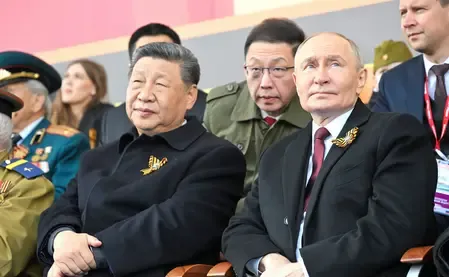
Both Moscow and Beijing defended their veto at the Assembly, while the US, Israel, and various Gulf States criticized the decision.
In a succinct 90-second, 198-word statement, Harish refrained from taking sides but clearly articulated India’s stance on the significance of freedom of navigation in the Strait. He remarked, “An aspect of particular concern for India, related to its energy and economic security, involves commercial shipping through the Strait of Hormuz.”
The Strait serves as a crucial chokepoint for 20% of global fossil fuel traffic, and any disruption significantly impacts India.
“India has condemned the targeting of commercial vessels in this conflict,” he added. “The precious lives of Indian seafarers aboard ships have been lost during this ongoing conflict.”
“We reiterate that the targeting of commercial vessels and jeopardizing innocent civilian crew members, or otherwise obstructing the freedom of navigation and trade in the Strait of Hormuz, is unacceptable. International law in this context must be fully upheld,” he stated.
Following Iran's attacks on vessels in the Strait after the Israel-US strikes on February 28, US President Donald Trump instituted a naval blockade on Iranian ports on Monday.
While India has taken a neutral position regarding the vetoes, it co-sponsored a resolution initiated by Bahrain on March 11, which condemned Iran’s attacks on its Middle Eastern neighbors in the strongest possible terms.
Russia and China abstained from voting on that resolution, allowing it to pass.
In justifying the veto of the recent resolution, Russia’s Deputy Permanent Representative Anna M Evstigneeva remarked that it was biased and “ignored” the actions of Israel and the US that led to the conflict.
She stated that it would have provided an unqualified endorsement for the continuation and escalation of the conflict.
China’s Permanent Representative Fu Cong noted that while Beijing recognized the significant concerns of Bahrain and the Gulf nations, it vetoed the resolution to prevent granting a “veneer of legitimacy for unauthorized military operations.”
Kuwait’s Permanent Representative Tareq M A M Albanai, addressing the Gulf States and Jordan, condemned the veto, stating that it dealt with “a clear and direct threat to international peace and security.”
He mentioned that Gulf nations would propose another resolution following extensive consultations to reach a consensus.
US Permanent Representative Mike Waltz accused China and Russia of “deliberately turning a blind eye—and worse, choosing to allow—Iran’s attacks on its neighbors, its terror against its own people, and its attempt to control the global economy.”
He charged that Iran was causing a food crisis by obstructing vital shipments, including fertilizers, from reaching South Asia in time for the planting season.
“It is clear who opted for obstruction instead of responsibility,” he concluded.
Point of View
India's cautious approach reflects a commitment to diplomatic resolution while safeguarding economic interests. This nuanced stance allows India to navigate complex geopolitical landscapes without alienating key global players.
NationPress
19 Sept 2026
Frequently Asked Questions
What was India's response to the UNSC resolution veto?
India expressed concern over the attacks on shipping but maintained a neutral position regarding the vetoes by Russia and China.
Why is the Strait of Hormuz significant?
The Strait of Hormuz is crucial as it is a chokepoint for 20% of global fossil fuel traffic, making its security vital for many nations, including India.
What actions did the US take following the conflict?
Following the conflict, the US imposed a naval blockade on Iranian ports to curb its military actions.
What did India co-sponsor regarding Iran's actions?
India co-sponsored a resolution condemning Iran's attacks on its neighbors in the Middle East.
How did Russia and China justify their veto?
Russia and China claimed the resolution was one-sided and ignored actions by Israel and the US that contributed to the conflict.