India Denounces Pakistani Army Chief Munir's Comments on Shia Minorities, Exposes Persecution in Pakistan
Synopsis
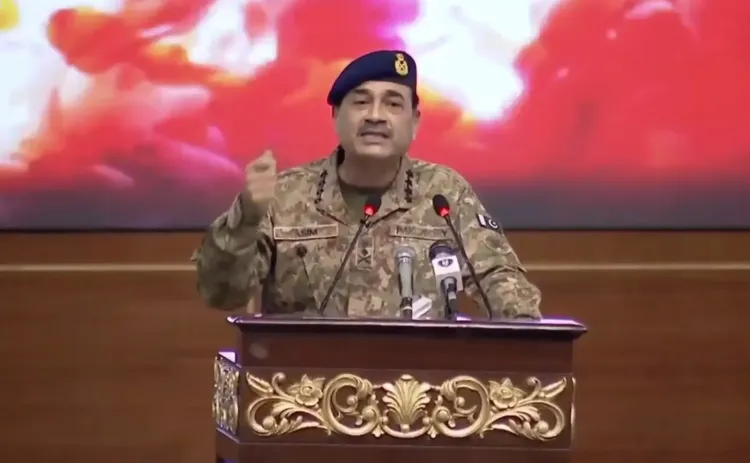
India has vehemently criticized Pakistani Army Chief Asim Munir's controversial remarks regarding the Shia community, underscoring the ongoing persecution faced by minorities in Pakistan. This situation raises significant questions about the country's credibility on the global stage.
Key Takeaways
Condemnation of remarks: India's sharp rebuke of Munir's comments reflects broader concerns about minority treatment in Pakistan.
Systemic persecution: The ongoing victimization of the Shia community highlights a troubling trend within Pakistan.
Contradictory stance: Pakistan's claims of advocating for Muslim rights globally clash with its domestic policies.
Ahmadiyya challenges: The legal and social discrimination faced by Ahmadis underscores severe human rights issues.
International implications: Pakistan's credibility on the global stage is questioned amid these human rights concerns.
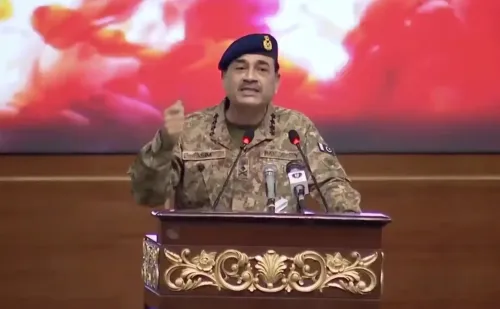
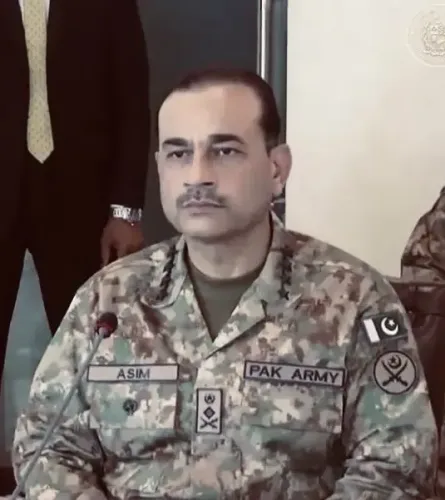
New Delhi, March 27 (NationPress) India has strongly condemned the recent statements made by Pakistani Army Chief Asim Munir during a conversation with senior Shia clerics, where he allegedly suggested that those who support Iran should consider relocating there.
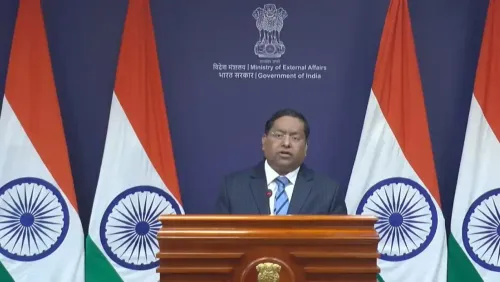
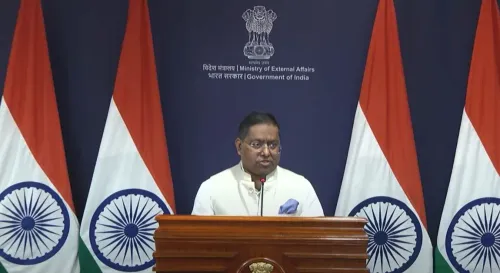
During a weekly press briefing in New Delhi, Ministry of External Affairs (MEA) spokesperson Randhir Jaiswal emphasized that such statements exemplify Pakistan's persistent pattern of persecution against minorities, particularly the Shia community.
"These remarks are not merely isolated events, but rather part of a broader strategy of systemic victimization targeting minorities, including the Shia population in Pakistan. The diminishing numbers of minorities over the years highlight the fear, oppression, and neglect they have faced from the Pakistani government. Pakistan's troubling record regarding the human rights of its minorities is well-documented and needs no further elaboration," stated Jaiswal.
A recent analysis pointed out that while Pakistan campaigns against 'Islamophobia' internationally, the prevailing conditions within its borders raise serious questions about its credibility.
It noted that the recurring assertions of Islamophobia by Islamabad on the global stage warrant closer examination rather than blind acceptance.
According to a report from the European Times, the narrative of victimhood has become a tool for diplomacy, aimed at diverting attention from Pakistan's concerning treatment of Muslim communities domestically and abroad.
"At the core of the issue is a contradiction that is increasingly hard to overlook. A nation that claims to defend Muslims globally simultaneously oversees systemic discrimination and violence against its own Muslim minorities. The ongoing persecution of Shia communities in Pakistan is neither an anomaly nor an isolated case. Sectarian violence against Shia mosques, gatherings, and neighborhoods has persisted for years, frequently with little accountability," the report elaborated.
"The plight of the Ahmadiyya community is even more severe. Officially recognized as non-Muslim, Ahmadis endure legal discrimination, social ostracization, and sporadic mob violence. Their mosques are assaulted, their religious expressions criminalized, and merely identifying as Muslim can lead to legal repercussions. These are systemic issues embedded within the framework of the state’s legal and political systems," the report added.
The analysis also pointed out that these contradictions extend beyond Pakistan's borders, with its military actions in Afghanistan, particularly during Ramadan, resulting in civilian casualties in a neighboring Muslim nation.
"Regardless of the stated security justifications, the optics and human cost are challenging to reconcile with claims of religious unity. Although the concept of a unified Muslim ummah often surfaces in diplomatic discussions, it seems to be applied selectively based on strategic interests," it highlighted.
The trend of "selective solidarity" is evident even in Pakistan’s interactions with major Muslim allies. Under General Asim Munir's leadership, the report claimed, Pakistan has shown reluctance to fulfill Saudi Arabia’s expectations despite longstanding security and defense agreements.
Point of View
Particularly the Shia and Ahmadiyya populations. It sheds light on the contradictions in Pakistan's international stance and its domestic policies, emphasizing the need for accountability and human rights protection.
NationPress
26 Sept 2026
Frequently Asked Questions
What did Pakistani Army Chief Asim Munir say?
He suggested that individuals sympathetic to Iran should consider relocating there during a meeting with Shia clerics.
Why did India criticize these remarks?
India views these statements as indicative of Pakistan's ongoing persecution of its minority communities, particularly the Shia population.
What is the situation of Shia communities in Pakistan?
Shia communities in Pakistan face systemic violence and discrimination, with a history of attacks and inadequate accountability for perpetrators.
How does Pakistan's treatment of minorities affect its global standing?
The contradictions between Pakistan's claims of defending Muslims globally and its treatment of minorities raise questions about its credibility.
What challenges do the Ahmadiyya community face in Pakistan?
The Ahmadiyya community is constitutionally declared non-Muslim, facing legal discrimination, social exclusion, and violence.