Could India and Jordan Collaborate on Nuclear Energy as a Clean Energy Source?
Synopsis
In a recent meeting, India and Jordan explored the potential of nuclear energy as a clean energy alternative. With PM Modi highlighting the significance of this partnership, both nations aim to deepen their ties while addressing climate challenges. This dialogue marks a pivotal step in fostering international cooperation in sustainable energy.
Key Takeaways
India and Jordan discussed nuclear energy as a clean energy source.
The meeting highlighted the importance of climate change discussions.
PM Modi emphasized enhancing bilateral trade to USD 5 billion .
MoUs were finalized in several strategic areas.
Both nations aim to deepen their cooperation and friendship.
Amman, Dec 16 (NationPress) The Ministry of External Affairs (MEA) announced on Tuesday that India and Jordan engaged in a "general discussion" regarding the potential of utilizing nuclear energy as a sustainable energy source.
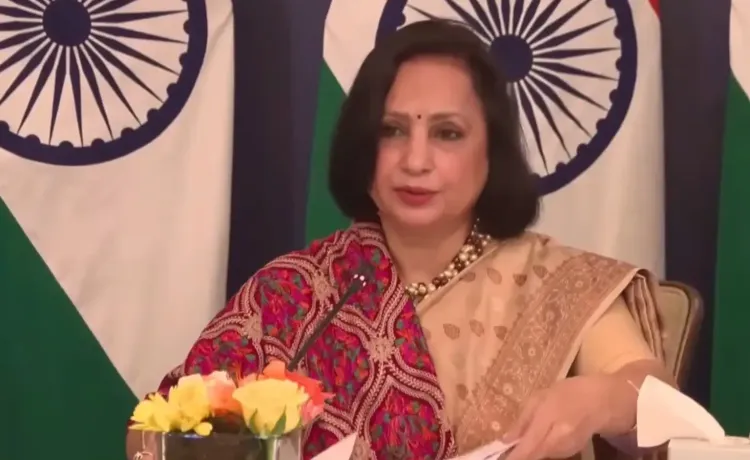
During a special briefing about Prime Minister Narendra Modi's visit to Jordan, Secretary (South) of MEA, Neena Malhotra, highlighted that both nations believe that nuclear energy could serve as a highly clean energy option, particularly in the context of climate change.
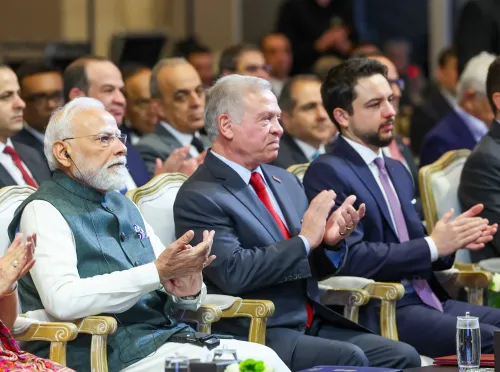
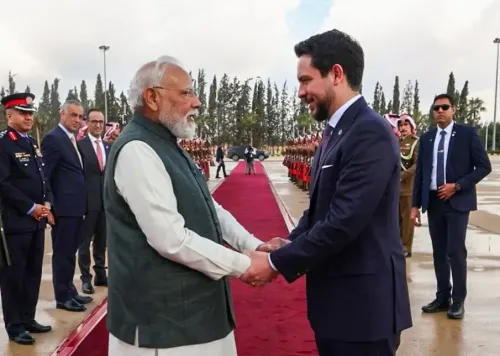
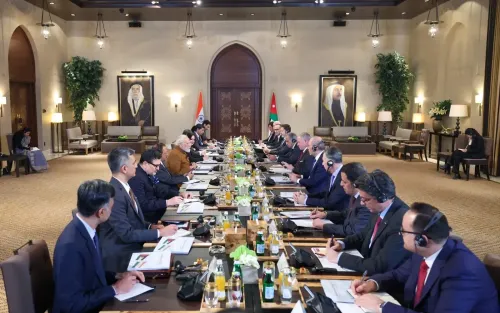
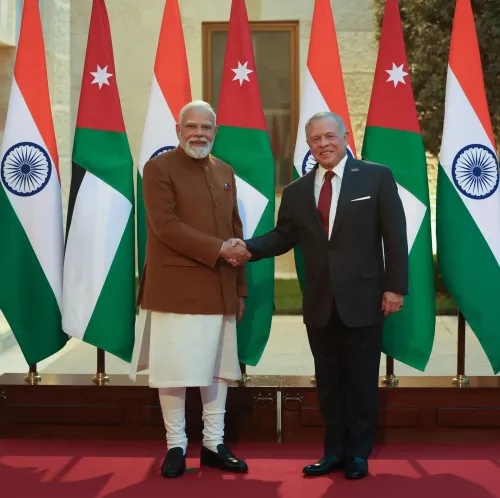
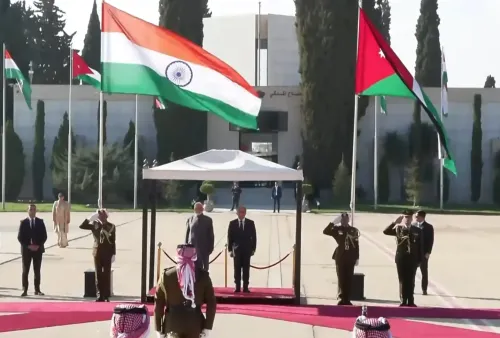
On Monday, PM Modi met with King Abdullah II of Jordan at the Al Husseiniya Palace. This trip marks Prime Minister Modi's inaugural extensive bilateral visit to Jordan; he had previously transited through the country in February 2018 on his way to Palestine.
When queried about the aspects of civil nuclear collaboration discussed in their meeting, Malhotra indicated, "Civil nuclear power is increasingly recognized as a very clean energy source, and there were broad discussions with the Jordanian representatives about the feasibility of nuclear energy as a clean energy alternative. While no specifics were defined, both parties view this energy source positively, especially in light of current climate discussions."
In a post on X, PM Modi expressed that he presented an eight-point vision to strengthen India's relationship with Jordan, encompassing areas like trade and economic collaboration, fertilizers and agriculture, Information Technology, healthcare, infrastructure, critical and strategic minerals, civil nuclear cooperation, and enhancing people-to-people connections.
Characterizing his conversations with King Abdullah II as "productive," PM Modi praised the King for his dedication to fostering robust relations between the two nations.
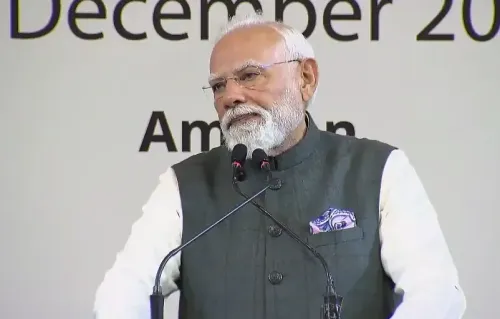
"I had fruitful discussions with His Majesty King Abdullah II in Amman. His personal commitment to invigorated India-Jordan relations is commendable. This year, we are commemorating the 75th anniversary of our diplomatic ties. This milestone will continue to inspire us to advance with renewed vigor in the future," PM Modi remarked on X.
PM Modi also outlined the results of his Jordan visit, indicating that these represent a "significant expansion" of the partnership between the two countries.
He suggested that both nations aspire to boost bilateral trade to USD 5 billion and emphasized the need for collaboration between Jordan's digital payment systems and India's United Payments Interface (UPI).
During this visit, both sides finalized several Memoranda of Understanding (MoUs) in areas including culture, renewable energy, water management, digital public infrastructure, and a twinning arrangement between Petra and Ellora.
On X, PM Modi stated, "These outcomes signify a meaningful expansion of the India-Jordan partnership. Our collaboration in new and renewable energy demonstrates a mutual commitment to clean growth, energy security, and climate responsibility."
He further remarked that joint efforts in water resource management would facilitate the sharing of best practices in conservation, efficiency, and technology, thus ensuring long-term water security.
The Prime Minister also noted that the Twinning Agreement between Petra and Ellora would unlock new opportunities for heritage preservation, tourism, and academic exchanges.
"The renewal of the Cultural Exchange Programme (2025-2029) will strengthen people-to-people connections. Sharing our digital innovations will aid in Jordan's digital transition and foster inclusive governance," PM Modi added.
These agreements are expected to significantly enhance the bilateral relations and friendship between India and Jordan.
Additionally, during their meeting, both leaders exchanged viewpoints on regional developments and other global matters, reiterating the necessity of restoring peace and stability in the area.
PM Modi reaffirmed India's support for initiatives aimed at establishing a lasting peace in the region.
Point of View
It is evident that this dialogue signifies a progressive step in international relations, particularly concerning sustainable energy. India's engagement with Jordan on nuclear energy could pave the way for collaborative efforts to combat climate change, thereby strengthening bilateral ties and fostering regional stability.
NationPress
1 Oct 2026
Frequently Asked Questions
What was the main topic of discussion between India and Jordan?
The primary focus of the discussions was the potential use of nuclear energy as a clean energy source.
Who represented India in the discussions?
Prime Minister Narendra Modi represented India in the discussions with King Abdullah II of Jordan.
What were the outcomes of the India-Jordan meeting?
The outcomes included finalizing several MoUs in areas such as renewable energy, water management, and cultural exchange.
How does nuclear energy fit into the climate change conversation?
Nuclear energy is viewed as a clean energy alternative that can contribute to reducing carbon emissions and addressing climate change.
What is the significance of the agreements made?
These agreements are expected to enhance bilateral relations and foster cooperation in critical sectors between India and Jordan.