Operation Amistad: India sends 2 IAF planes, 35+ tonnes of aid to quake-hit Venezuela
Synopsis
India's Operation Amistad is a hemisphere-spanning humanitarian push — two C-17s, 41 Army medics, two BHISHM Cube field hospitals, and 35+ tonnes of supplies flying 14,300 km to a Venezuela where twin magnitude-7.5 and 7.2 quakes have killed at least 235 people. It is one of the most logistically complex disaster-relief missions India has ever attempted.
Key Takeaways
India launched Operation Amistad on 26 June , dispatching two IAF C-17 Globemaster aircraft to earthquake-hit Venezuela .
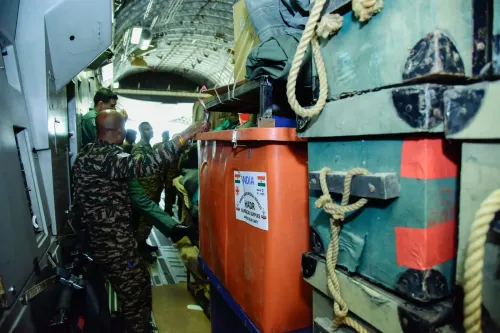
The aircraft carry over 35 tonnes of relief supplies, medicines, and medical equipment, including two BHISHM Cubes capable of treating up to 200 patients each.
A 41-person medical contingent from 60 Para Field Hospital , including nine medical officers , is on board.
Venezuela's twin earthquakes — magnitudes 7.2 and 7.5 , striking 40 seconds apart — have killed at least 235 people , with the toll expected to rise.
The 14,300 km flight requires ground refuelling stops at friendly nations, as India lacks compatible aerial refuelling tankers.
External Affairs Minister S.
Jaishankar and Prime Minister Narendra Modi both publicly reaffirmed India's commitment to supporting Venezuela.
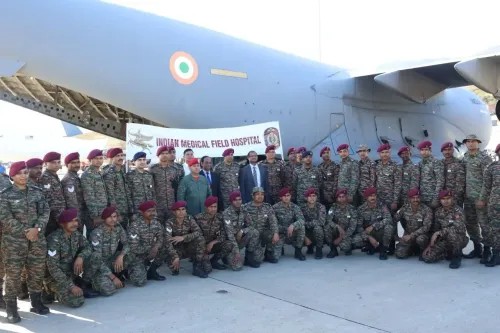
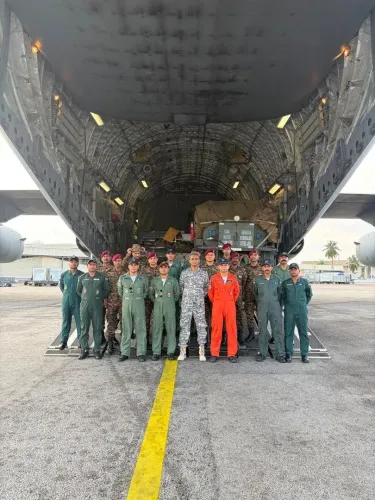
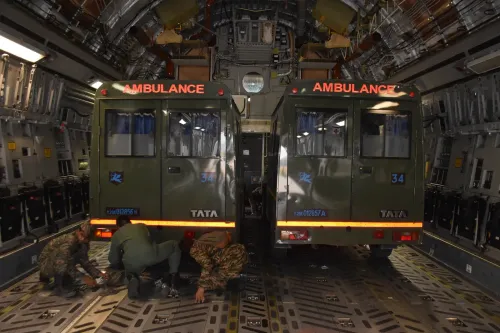
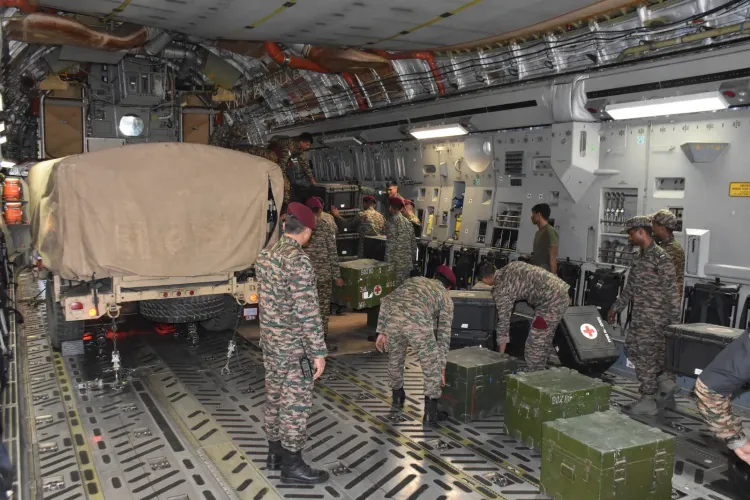
India on Friday, 26 June launched Operation Amistad, dispatching two Indian Air Force (IAF) C-17 Globemaster aircraft to earthquake-devastated Venezuela carrying an Indian Army Field Hospital Unit and over 35 tonnes of relief supplies, medicines, and medical equipment. The operation marks one of India's longest-range humanitarian airlifts, covering an aerial distance of approximately 14,300 km.
What India Is Sending
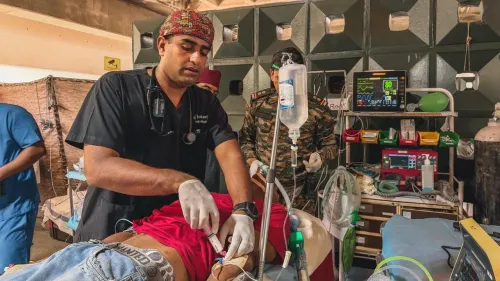
The relief consignment includes nearly six tonnes of medical stores and humanitarian supplies provided by the Ministry of External Affairs. Among the most significant items are two BHISHM Cubes — India's indigenous, rapidly deployable modular medical facilities designed for disaster response. Each BHISHM Cube can be assembled into a fully functional field hospital capable of treating up to 200 patients, equipped with portable ventilators, patient monitors, surgical instruments, diagnostic equipment, and oxygen support systems.
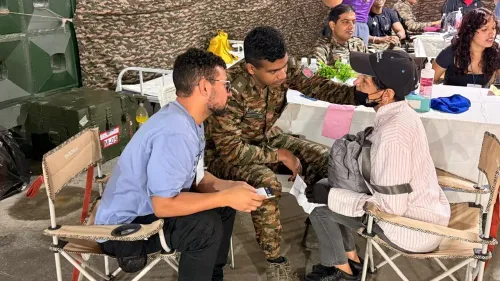
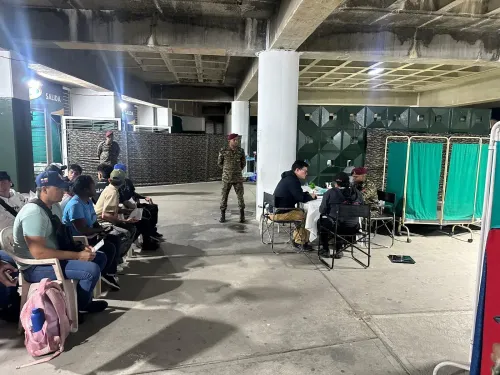
The medical contingent comprises 41 personnel, including nine medical officers, drawn from the 60 Para Field Hospital. The team departed from Hindon Air Force Station on the afternoon of 26 June and is equipped to provide emergency medical care, trauma management, and life-saving surgical support.
The Logistics Challenge
The C-17 Globemaster has an operational range of approximately 4,400 km — far short of the 14,300 km distance to Venezuela. Since India does not currently operate aerial refuelling tankers compatible with this mission, the aircraft are making planned stops at friendly nations en route for ground refuelling, according to official sources. The route underscores the operational complexity of projecting humanitarian assistance across hemispheres.
What India's Leadership Said
External Affairs Minister S. Jaishankar announced the operation on social media platform X, posting: 'Operation Amistad underway! Two IAF C17s took-off today for Venezuela with urgent assistance to support their post-earthquake relief efforts. The assistance contains an Indian Army Field Hospital Unit and over 35 tons of relief supplies, medicines and medical equipment, including two BHISHM Cubes. India is committed to support the Government and people of Venezuela in this difficult time.'
Prime Minister Narendra Modi had earlier, on Thursday, expressed distress over the devastation and reaffirmed that India 'stands ready to extend all possible assistance.'
The Scale of Venezuela's Crisis
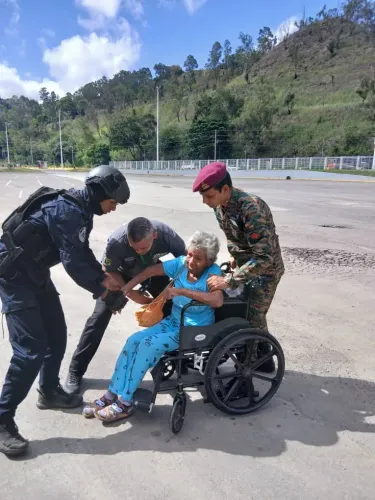
Venezuela is racing to rescue hundreds believed trapped under collapsed buildings after twin powerful earthquakes struck the country on Wednesday. The two shallow quakes — measuring magnitudes of 7.2 and 7.5 — struck just 40 seconds apart, making them the strongest to hit the South American nation in over a century and the deadliest in decades, according to reports. Venezuela's Health Ministry raised the confirmed death toll to at least 235 by Thursday evening, with authorities warning the figure could climb further as rescuers struggled to reach the worst-affected zones.
The earthquakes devastated parts of Venezuela's central coast and the capital Caracas, triggering widespread building collapses, power outages, and communications blackouts. Repeated aftershocks have compounded the risk of secondary structural failures, hampering rescue operations.
India's Broader Humanitarian Posture
Operation Amistad is consistent with India's 'First Responder' doctrine in its extended neighbourhood and beyond — a framework that has seen New Delhi deploy rapid relief to Turkey, Syria, Nepal, and Sri Lanka in recent years. The use of BHISHM Cubes signals a maturing of India's disaster-response capability, moving from supply drops to deployable medical infrastructure. As rescue operations in Venezuela enter a critical phase, the arrival of India's field hospital unit could provide meaningful surge capacity to an overwhelmed local health system.
Point of View
300 km route exposes a real capability gap: the absence of compatible aerial refuellers forces planned stops at third-country bases, adding hours and diplomatic dependencies to a time-sensitive mission. The deployment of BHISHM Cubes is notable; India is increasingly exporting not just supplies but deployable medical infrastructure, which is a qualitative step up. Yet the deeper question is whether India's 'First Responder' doctrine can be sustained at this range without dedicated strategic airlift and tanker assets — a procurement debate that has stalled for years.
NationPress
25 Sept 2026
Frequently Asked Questions
What is Operation Amistad?
Operation Amistad is India's humanitarian relief mission to earthquake-hit Venezuela, launched on 26 June. It involves two IAF C-17 Globemaster aircraft carrying an Indian Army Field Hospital Unit, over 35 tonnes of relief supplies, medicines, medical equipment, and two BHISHM Cube modular field hospitals.
What is a BHISHM Cube and why is it significant?
The BHISHM Cube is an indigenous, rapidly deployable modular medical facility developed in India for disaster and humanitarian response. It can be assembled into a fully functional field hospital capable of treating up to 200 patients, offering trauma care, emergency surgeries, intensive care, and essential medical services — making it a significant upgrade over traditional supply-only relief missions.
How severe is the Venezuela earthquake disaster?
Two shallow earthquakes measuring magnitudes 7.2 and 7.5 struck Venezuela just 40 seconds apart on Wednesday, devastating the central coast and capital Caracas. Venezuela's Health Ministry confirmed at least 235 deaths by Thursday evening, with hundreds more believed trapped under collapsed buildings and the toll expected to rise.
Who is part of India's medical contingent to Venezuela?
The contingent comprises 41 personnel from the 60 Para Field Hospital, including nine medical officers. They are equipped to provide emergency medical care, trauma management, life-saving surgical support, and other essential healthcare services to those affected by the earthquake.
How is India managing the 14,300 km flight to Venezuela?
The IAF C-17 Globemasters have an operational range of approximately 4,400 km, far less than the 14,300 km distance to Venezuela. Since India does not currently operate compatible aerial refuelling tankers, the aircraft are making planned ground refuelling stops at friendly nations en route.