Operation Amistad: Indian Army dispatches 41-member medical team to earthquake-hit Venezuela
Synopsis
India has launched Operation Amistad — sending 41 Army medics and a BHISHM Cube modular field hospital across 14,300 km to earthquake-hit Venezuela. The mission is one of India's longest-range humanitarian deployments and a showcase for its indigenous disaster-response technology on the global stage.
Key Takeaways
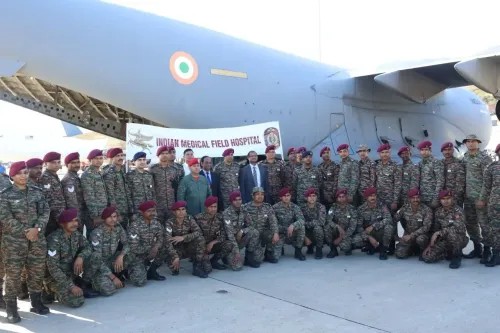
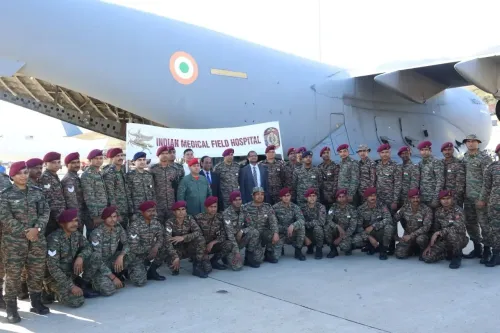
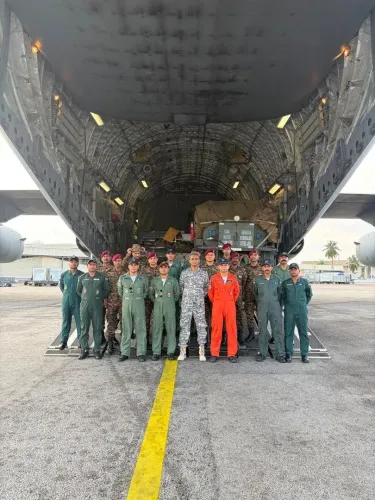
Indian Army dispatched a 41-member medical contingent from 60 Para Field Hospital to Venezuela on 26 June under Operation Amistad .
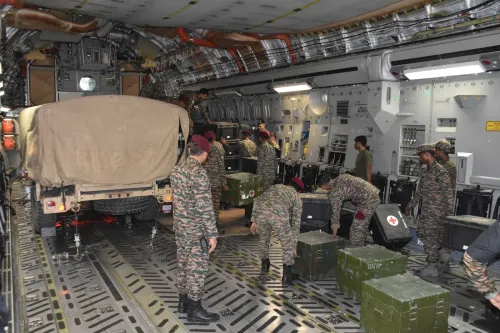
The team includes nine medical officers and carries nearly six tonnes of medical stores and relief supplies.
Two C-17 Globemaster aircraft are being used; stopovers at friendly nations are required due to the 14,300 km distance exceeding the aircraft's 4,400 km range.
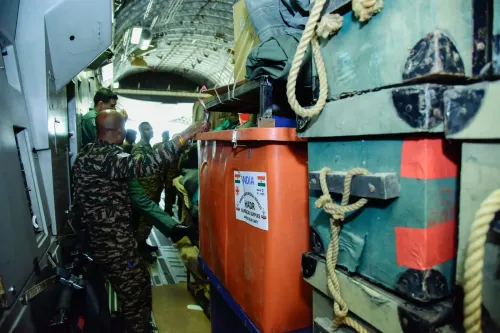
One aircraft carries a BHISHM Cube — a modular field hospital under India's Aarogya Maitri Project — capable of treating up to 200 patients .
The deployment reflects India's expanding HADR posture and growing diplomatic engagement with Latin America .
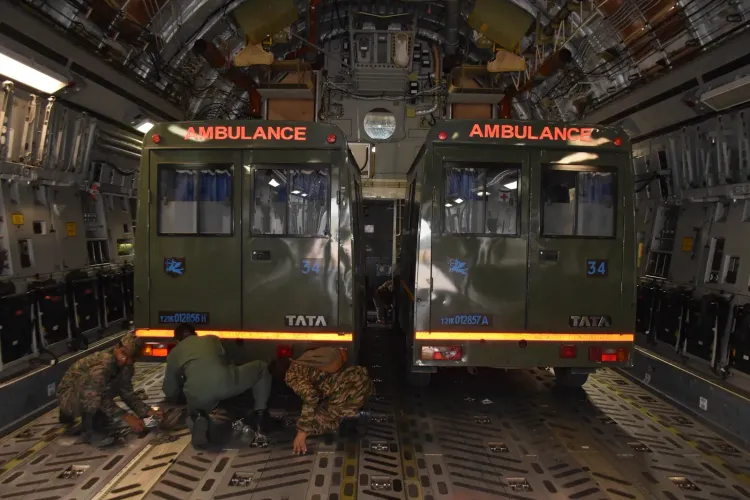
The Indian Army has dispatched a specialised 41-member medical contingent to Venezuela under Operation Amistad, responding to the devastating earthquake that struck the country's northern region on Thursday. The team departed from Hindon Air Force Station on the afternoon of 26 June aboard two Indian Air Force C-17 Globemaster aircraft, currently en route to the South American nation.
The Medical Contingent
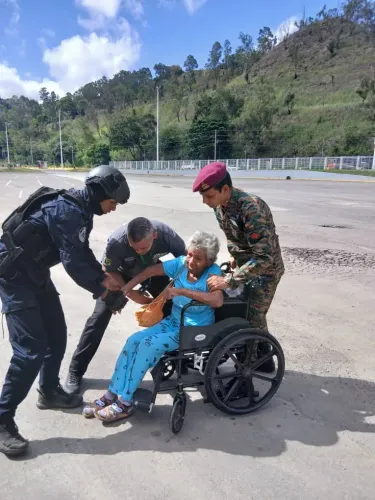
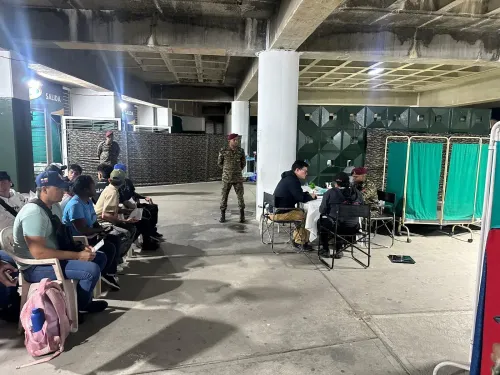
The team of 41 personnel — including nine medical officers — is drawn from the 60 Para Field Hospital and is equipped to deliver emergency medical care, trauma management, life-saving surgical support, and essential healthcare services to earthquake survivors. The contingent carries nearly six tonnes of medical stores and humanitarian relief supplies sourced through the Ministry of External Affairs.
The BHISHM Cube: India's Deployable Field Hospital
One of the two C-17s is transporting a BHISHM Cube — an acronym for Bharat Health Initiative for Sahyog, Hita and Maitri — deployed under India's Aarogya Maitri Project. The BHISHM Cube is an indigenous, rapidly deployable modular medical facility designed for disaster response. Its compact, self-contained modules can be assembled into a fully functional field hospital capable of treating up to 200 patients. The unit is equipped with portable ventilators, patient monitors, diagnostic equipment, surgical instruments, power generation systems, and oxygen support — making it one of India's most capable humanitarian response assets.
Logistics and the Long Haul
The aerial distance between India and Venezuela spans approximately 14,300 km — well beyond the C-17 Globemaster's operational range of around 4,400 km. Since India currently lacks airborne refuelling tankers compatible with the mission, the aircraft will make stops in friendly countries along the route for ground refuelling, according to official sources. This underscores both the logistical complexity and the strategic resolve behind the deployment.
What the Government Said
'The dispatch of the medical contingent under Operation Amistad reflects India's enduring commitment to humanitarian assistance and disaster relief and its readiness to extend timely support to friendly nations in times of crisis,' a Ministry of Defence spokesperson said. The operation's name — Amistad, meaning 'friendship' in Spanish — signals the diplomatic intent alongside the humanitarian mission.
India's Broader HADR Posture
This is not India's first rapid humanitarian deployment abroad. The country has previously sent HADR (Humanitarian Assistance and Disaster Relief) teams to Turkey, Nepal, and Sri Lanka following natural disasters. The BHISHM Cube, however, represents a newer, more capable generation of India's disaster-response toolkit — one that the government has been keen to showcase on the global stage. Notably, this deployment also reinforces India's diplomatic outreach to Latin America, a region where New Delhi has been steadily expanding bilateral ties.
Point of View
Deploy the BHISHM Cube publicly, and cover 14,300 km by air signals that India is investing in its image as a first-responder nation beyond its immediate neighbourhood. What mainstream coverage underplays is the logistical gap this mission exposes: India still lacks airborne refuelling capability for its C-17 fleet, forcing dependence on third-country stopovers for long-range HADR missions. As India's global ambitions grow, that gap will need closing.
NationPress
25 Sept 2026
Frequently Asked Questions
What is Operation Amistad?
Operation Amistad is an Indian humanitarian mission dispatching a 41-member Army medical team to earthquake-hit Venezuela. The contingent departed Hindon Air Force Station on 26 June aboard two Indian Air Force C-17 Globemaster aircraft.
What is the BHISHM Cube being sent to Venezuela?
The BHISHM Cube — Bharat Health Initiative for Sahyog, Hita and Maitri — is an indigenous modular field hospital deployed under India's Aarogya Maitri Project. It can be rapidly assembled into a fully functional medical facility capable of treating up to 200 patients, with ventilators, surgical equipment, and oxygen support.
Why are the aircraft making stopovers en route to Venezuela?
The aerial distance between India and Venezuela is approximately 14,300 km, which exceeds the C-17 Globemaster's range of around 4,400 km. Since India does not currently possess compatible airborne refuelling tankers, the aircraft are stopping at friendly countries for ground refuelling.
How many personnel are part of the Indian Army medical contingent?
The contingent comprises 41 personnel, including nine medical officers from the 60 Para Field Hospital. They are equipped to provide trauma care, emergency surgery, and intensive medical support to earthquake survivors.
Why is India sending aid to Venezuela?
A devastating earthquake struck the northern part of Venezuela on Thursday, prompting India to activate its Humanitarian Assistance and Disaster Relief (HADR) response. The mission also reinforces India's diplomatic ties with Latin America and showcases its Aarogya Maitri humanitarian framework.