Mitra Shakti 2026: India, Sri Lanka train against terrorism
Synopsis
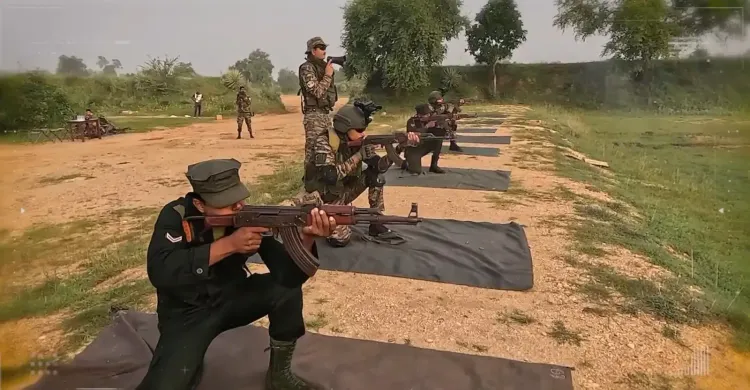
A 170-member Indian contingent is joining Sri Lankan troops for Mitra Shakti 2026, practising counter-terrorism drills in Maduru Oya. The 14-day exercise ends on 26 November with a planned joint validation of the techniques rehearsed.
Key Takeaways
Mitra Shakti 2026 , the 12th edition of the India-Sri Lanka exercise, runs from 13 to 26 November 2026 .
The exercise is being held at the Army Training School in Maduru Oya, Sri Lanka .
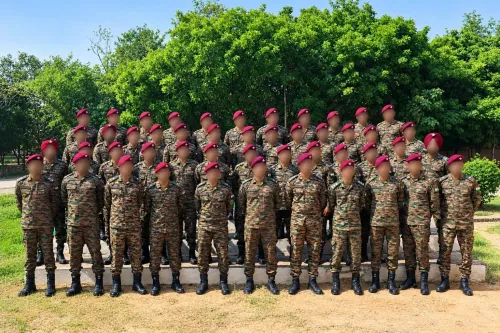
A 170-member Indian Defence Forces contingent is participating, drawn mainly from a Rajputana Rifles battalion.
Training includes patrolling, ambushes, convoy protection and roadblock operations.
India's Ministry of Defence says a joint validation exercise will conclude the programme.
The Indian Army and Sri Lanka Army are training together in Maduru Oya, Sri Lanka, during Mitra Shakti 2026, an exercise aimed at improving their ability to conduct counter-terrorism operations in a semi-urban environment. The 12th edition runs from 13 to 26 November 2026 at the Army Training School.
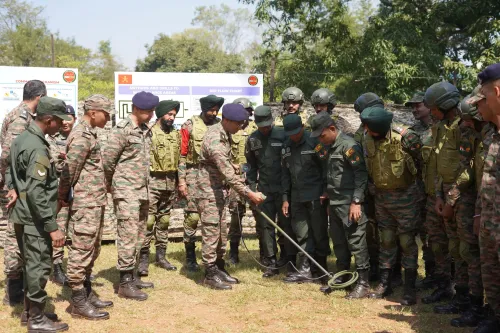
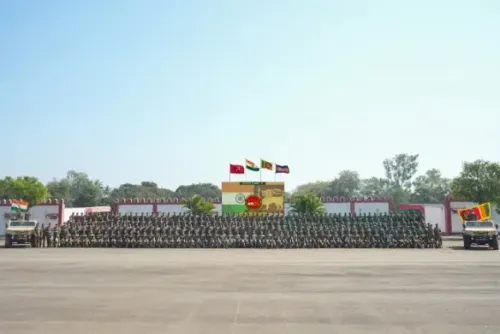
The 14-day exercise brings together a 170-member Indian Defence Forces contingent and Sri Lankan troops for joint planning, tactical drills and specialised combat training. According to India's Ministry of Defence, the aim is to enhance the armies' joint capability to undertake counter-terrorism operations under a United Nations mandate.
Training in semi-urban operations
The Indian Army's Additional Directorate General of Public Information said in a post on X that the training includes patrolling, ambushes, convoy protection and roadblock operations in an urban area. The drills also cover joint planning and tactical procedures.
According to the defence ministry, the programme includes urban patrolling, vehicle convoy protection, area ambush, crowd dispersal and combined arms operations against fortified positions. It is also intended to improve physical fitness and coordination between the participating contingents.
The range of activities covers both planning and practical rehearsals. That gives the two armies an opportunity to practise how their personnel coordinate during operations, rather than limiting the exercise to discussions of procedure.
Indian contingent and bilateral format
The 170-member Indian contingent is drawn mainly from a battalion of the Rajputana Rifles, alongside troops from other arms and services and personnel from the Indian Air Force. The source did not specify the size or composition of the Sri Lankan contingent.
The defence ministry described Mitra Shakti as an annual bilateral exercise held alternately in India and Sri Lanka. It said the exercise allows the armies to exchange operational experiences and best practices while strengthening interoperability and mutual understanding.
Interoperability is relevant to the stated goal of joint operations: participating forces must be able to plan and work together when applying their respective procedures. The ministry linked this edition specifically to counter-terrorism operations in a semi-urban setting under a United Nations mandate.
Final validation exercise
The training is scheduled to culminate in a comprehensive validation exercise, according to the ministry. This will allow both contingents to apply jointly the tactics, techniques and procedures practised during the programme.
The closing exercise is the planned test of the training conducted during the 14-day programme. The source did not provide details of its results or identify any operational deployment following the drills.
The ministry said the exercise would strengthen defence cooperation and contribute to regional peace, stability and security. With training scheduled to conclude on 26 November 2026, attention will turn to the final validation and the lessons the two armies draw from it.
Point of View
But the available account does not disclose how performance will be measured. Greater clarity on lessons learnt would help the public understand what the exercise delivers without compromising operational security.
NationPress
23 Nov 2026
Frequently Asked Questions
What is Mitra Shakti 2026?
Mitra Shakti 2026 is the 12th edition of an annual bilateral military exercise involving the Indian and Sri Lankan armies. It focuses on joint counter-terrorism capabilities in a semi-urban environment.
Where and when is Mitra Shakti 2026 being held?
The exercise runs from 13 to 26 November 2026 at the Army Training School in Maduru Oya, Sri Lanka.
How many Indian personnel are taking part in Mitra Shakti 2026?
A 170-member Indian Defence Forces contingent is participating. It is drawn mainly from a Rajputana Rifles battalion and includes personnel from other arms and services and the Indian Air Force.
What training does Mitra Shakti 2026 include?
The exercise includes joint planning, patrolling, ambushes, convoy protection and roadblock operations. The defence ministry also listed crowd dispersal and combined arms operations against fortified positions.
What happens at the end of Mitra Shakti 2026?
A comprehensive validation exercise is planned at the end of the training. It is intended to let both contingents apply the tactics, techniques and procedures they have practised together.