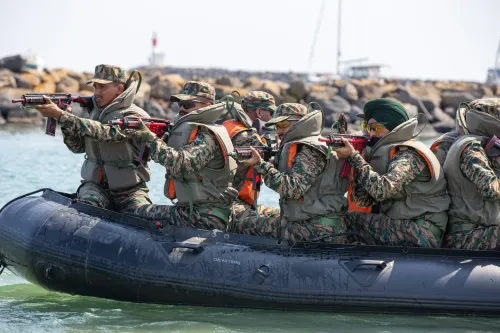
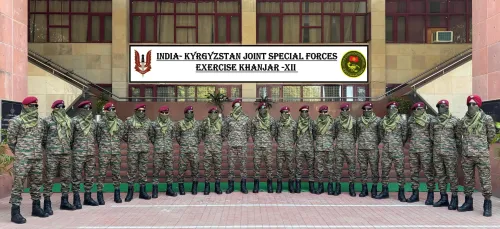
Garuda Shakti 2026: India-Indonesia Special Forces exercise begins in Banyuwangi
Synopsis
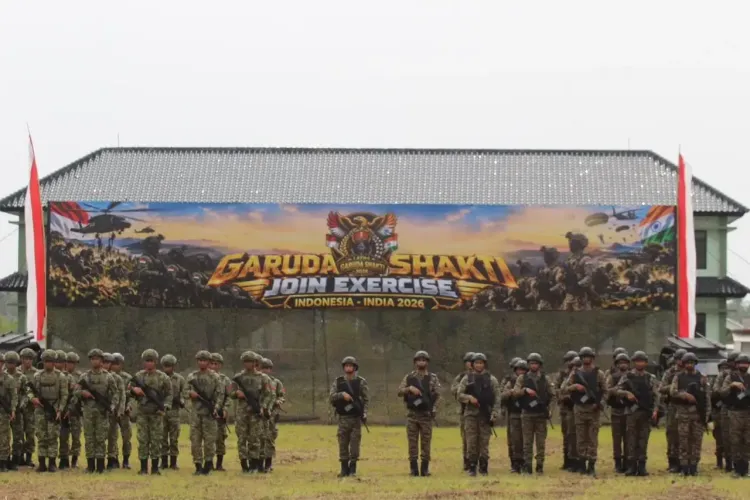
India and Indonesia have launched Garuda Shakti 2026 in Banyuwangi, bringing together elite Parachute Regiment (Special Forces) troops and Indonesian Special Forces for jungle warfare and counter-terrorism drills through 6 November. The exercise follows a renewed maritime MoU signed during PM Modi's July 2026 state visit — signalling that India's Indo-Pacific defence partnerships are moving well beyond symbolism.
Key Takeaways
Garuda Shakti 2026 commenced at Banyuwangi, Indonesia , on 27 October 2026 and runs until 6 November 2026 .
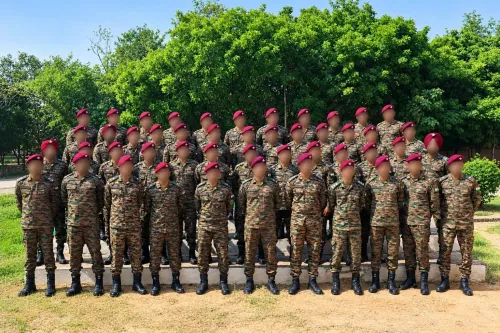
India is represented by the Parachute Regiment (Special Forces) ; Indonesia by the Indonesian Special Forces .
Training covers jungle warfare, obstacle crossing, combat marksmanship, mountaineering, air assault, and combat-hardening , with a focus on counter-terrorism scenarios.
A validation exercise will conclude the programme, assessing endurance, coordination, and combat readiness of both sides.
ICGS Shaunak visited Jakarta from 17–19 October , reinforcing maritime cooperation between the Indian Coast Guard and Indonesia's Bakamla .
The India-Indonesia Coast Guard MoU on Maritime Safety and Security was renewed during PM Modi's state visit to Indonesia in July 2026 .
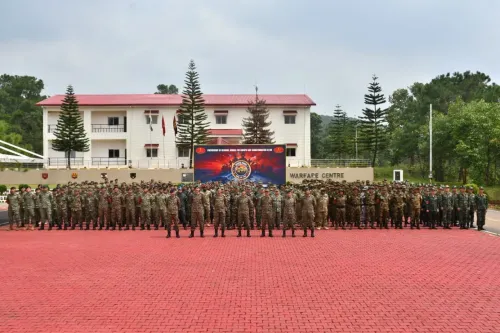
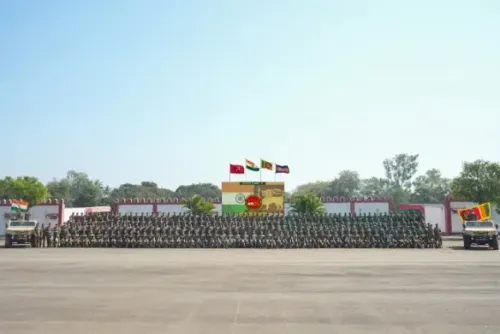
The India-Indonesia Joint Special Forces Exercise Garuda Shakti commenced at Banyuwangi, Indonesia, on Tuesday, 27 October 2026, with elite troops from both nations set to train together in jungle warfare operations through 6 November, the Ministry of Defence (MoD) confirmed. The exercise represents a deepening of defence ties between the two countries, coming months after Prime Minister Narendra Modi's state visit to Indonesia in July 2026.
Composition of Contingents
The Indian contingent is drawn from the Parachute Regiment (Special Forces), widely regarded as among the Indian Army's most battle-hardened units. Their Indonesian counterparts are represented by personnel from the Indonesian Special Forces, a formation trained extensively for jungle and counter-insurgency operations given Indonesia's diverse and heavily forested archipelago terrain.
Training Focus and Objectives
According to the MoD, the exercise is designed to strengthen mutual understanding, cooperation, and interoperability between the special forces of both nations. Training activities cover a broad operational spectrum: obstacle crossing, combat marksmanship, mountaineering, air assault training, and combat-hardening sessions. The programme also facilitates structured exchange of expertise on weapons, equipment, and operational practices.
'The exercise aims to strengthen mutual understanding, cooperation and interoperability between the Special Forces of the two nations,' the MoD stated. 'The training focuses on tactics, techniques and procedures for special operations in jungle environments.'
Notably, the Indian Army has specifically framed the exercise around counter-insurgency and counter-terrorism scenarios in jungle terrain — a practical focus that reflects real-world threat environments faced by both nations in their respective regions.
Validation Exercise to Cap Training
The joint training is set to conclude with a validation exercise that simulates realistic operational scenarios. The Ministry of Defence said the culminating drill is designed to assess the endurance, coordination, and combat readiness of both contingents. Such validation exercises are increasingly standard in bilateral military engagements, ensuring that interoperability gains from classroom and field sessions translate into measurable operational outcomes.
Broader Maritime Cooperation
The Garuda Shakti exercise is not the only strand of enhanced India-Indonesia engagement. Indian Coast Guard Ship (ICGS) Shaunak conducted a goodwill visit to Jakarta from 17 to 19 October, with the ship's Commanding Officer and the Defence Attaché calling on the Head of Bakamla — Indonesia's maritime security agency — to discuss bilateral Coast Guard cooperation.
This comes against the backdrop of a recently renewed Memorandum of Understanding (MoU) for Maritime Safety and Security Cooperation between the Indian Coast Guard and Bakamla, signed during Prime Minister Modi's state visit to Indonesia from 6 to 8 July 2026. The Indian Embassy in Indonesia described the MoU renewal as signifying the importance both maritime neighbours attach to regional maritime safety and security.
With Garuda Shakti underway and Coast Guard ties formalised, the next phase of India-Indonesia defence cooperation is expected to build on these frameworks as both nations deepen their strategic partnership in the Indo-Pacific.
Point of View
But its cadence and content tell a strategic story. India and Indonesia are not just running drills — they are institutionalising interoperability across land and maritime domains at a moment when Indo-Pacific alignments are hardening. The framing around counter-insurgency and counter-terrorism is deliberate: it signals operational intent, not just diplomatic goodwill. What mainstream coverage often misses is that exercises like this are the connective tissue of India's Act East policy — each iteration incrementally raises the floor for joint response capability. The July 2026 MoU renewal, tied directly to a PM-level state visit, suggests New Delhi is treating Jakarta as a tier-one partner, not just a periodic interlocutor.
NationPress
27 Oct 2026
Frequently Asked Questions
What is Exercise Garuda Shakti?
Garuda Shakti is a bilateral joint special forces exercise between India and Indonesia, focused on jungle warfare, counter-insurgency, and counter-terrorism operations. The 2026 edition commenced at Banyuwangi, Indonesia, on 27 October and runs through 6 November.
Which units are participating in Garuda Shakti 2026?
India's contingent comprises troops from the Parachute Regiment (Special Forces), while Indonesia is represented by personnel from the Indonesian Special Forces. Both are elite formations with specialised jungle and counter-terrorism training.
What is the training focus of Garuda Shakti 2026?
The exercise focuses on special operations tactics in jungle terrain, including obstacle crossing, combat marksmanship, mountaineering, air assault training, and combat-hardening sessions. It also involves the exchange of expertise on weapons, equipment, and operational procedures under counter-insurgency and counter-terrorism scenarios.
How does Garuda Shakti fit into broader India-Indonesia defence ties?
The exercise is part of a deepening bilateral defence partnership that also includes maritime cooperation. The Indian Coast Guard and Indonesia's Bakamla renewed an MoU on Maritime Safety and Security during PM Narendra Modi's state visit to Indonesia in July 2026, reflecting growing strategic alignment between the two Indo-Pacific neighbours.
What happens at the end of the Garuda Shakti exercise?
The joint training culminates in a validation exercise designed to simulate realistic operational scenarios and assess the endurance, coordination, and combat readiness of both contingents, according to the Ministry of Defence.