India Suspends Indus Waters Treaty Until Pakistan Addresses Terrorism Issues
Synopsis
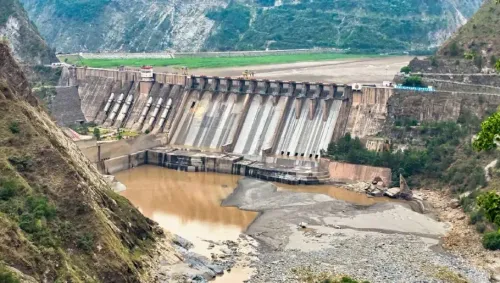
India has declared the Indus Waters Treaty will remain suspended until Pakistan, identified as a global terrorism hub, takes significant steps to address its policies. This statement comes amid discussions on World Water Day, emphasizing the importance of mutual responsibility in treaty obligations.
Key Takeaways
Indus Waters Treaty suspended until Pakistan addresses terrorism.
India emphasizes mutual responsibility in treaty obligations.
Jal Jeevan Mission aims to provide piped water to rural households.
Community involvement is vital for local water management.
International cooperation is crucial in addressing water security issues.
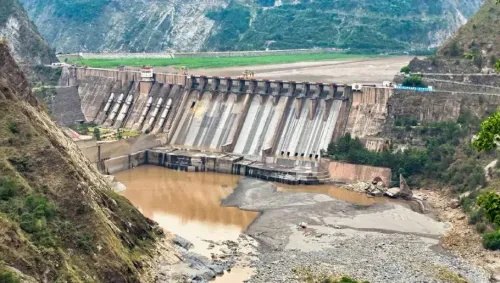
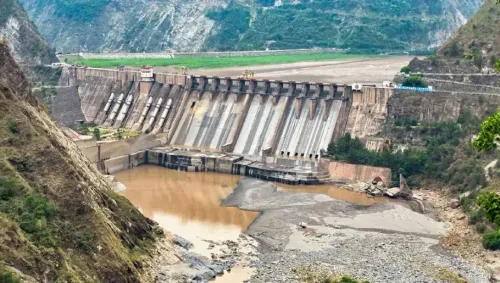
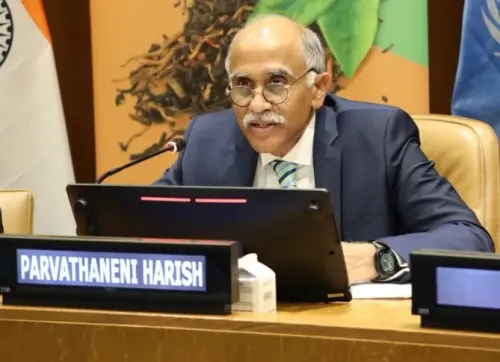
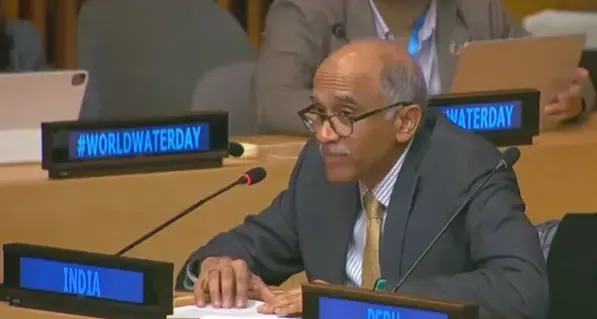
United Nations, March 20 (NationPress) India has emphasized that the Indus Waters Treaty (IWT) will be suspended until Pakistan, labeled as the global epicenter of terrorism, takes corrective measures. India's Permanent Representative, P Harish, stated on Thursday during a UN event commemorating World Water Day that Pakistan must respect human life before discussing treaty obligations.
“India has always acted as a responsible upper riparian state”, he remarked. “However, responsibility must be mutual. Pakistan needs to completely renounce the use of terrorism as a state policy”.
Harish addressed Pakistan's claims regarding the IWT as if it were a victim, which he argued undermined a significant event dedicated to the UN Sustainable Development Goal of ensuring access to safe water and sanitation.
India signed the IWT in a spirit of goodwill; however, Harish pointed out that Pakistan’s actions—including three wars and numerous terror attacks—contradict this goodwill.
“Tens of thousands of innocent Indians have suffered due to terrorism sponsored by Pakistan”, he stated.
India decided to suspend the IWT, originally signed in 1960, following the terrorist attack in Pahalgam last year, attributed to The Resistance Front, a group linked to the Lashkar-e-Taiba.
“Despite our patience, Pakistan's behavior did not improve. Consequently, we were forced to declare that the Treaty would remain suspended until Pakistan, the acknowledged epicenter of terror, conclusively ends its support for all forms of terrorism”, Harish said.
Additionally, he mentioned that revisions to the treaty were necessary due to “fundamental changes over the past 65 years” in technology, demographics, and ecology, which Islamabad has refused to discuss.
“All our attempts to engage Pakistan in discussions regarding modifications to the Treaty have been met with rejection”, he noted.
On the theme of the earlier meeting, he highlighted that because World Water Day falls on a Sunday this year, India prioritizes the sustainable development goal of universal access to safe water and sanitation.
“Through the Jal Jeevan Mission, India is executing one of the largest programs globally to provide piped drinking water to rural households”, he said.
Launched in 2019, this initiative has successfully delivered safe tap water to 81.76% of rural households, impacting 158 million people.
“Community involvement is crucial to this initiative, with village water committees, often led by women, playing a significant role in planning, monitoring, and maintaining local water systems”, Harish emphasized.
“At the United Nations, our collective endeavors yield the greatest impact when we focus on unifying areas, such as strengthening national capacities in developing nations, fostering technological innovation, and advancing scientific collaboration”, he added.
Point of View
India's position on the Indus Waters Treaty illustrates a firm stance on the intersection of water security and national security. The emphasis on addressing terrorism as a prerequisite for treaty compliance reflects a broader narrative of responsibility and mutual respect in international agreements.
NationPress
30 Sept 2026
Frequently Asked Questions
What is the Indus Waters Treaty?
The Indus Waters Treaty is a water-sharing agreement between India and Pakistan, signed in 1960, managing the distribution of the Indus River and its tributaries.
Why has India suspended the Indus Waters Treaty?
India has suspended the treaty in response to ongoing terrorism issues linked to Pakistan, asserting that mutual respect and security must be prioritized.
What impact does the Jal Jeevan Mission have?
The Jal Jeevan Mission aims to provide piped drinking water to rural households in India, enhancing water access for millions.
How does terrorism influence water treaty discussions?
Terrorism complicates diplomatic relations, impacting negotiations and leading to suspensions of treaties like the Indus Waters Treaty.
What role do women play in India's water initiatives?
Women lead many village water committees, crucial for planning and maintaining local water systems under initiatives like the Jal Jeevan Mission.