Indus Waters Treaty in abeyance over Pakistan's cross-border terror: MEA
Synopsis
On the first anniversary of Operation Sindoor, India has sent a pointed message: the Indus Waters Treaty stays suspended until Pakistan credibly ends cross-border terrorism. With EAM Jaishankar invoking zero-tolerance and the MEA demanding irreversible action from Islamabad, New Delhi is signalling that the 1960 treaty — once considered untouchable — is now firmly on the table as a diplomatic lever.
Key Takeaways
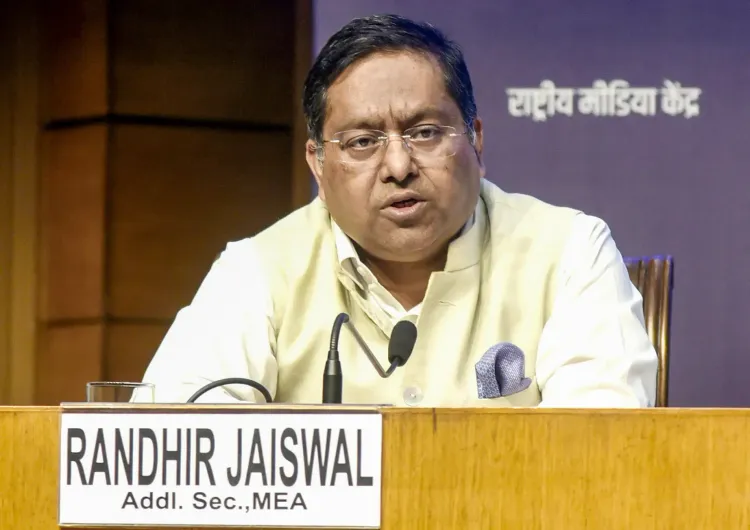
MEA spokesperson Randhir Jaiswal confirmed on 7 May 2026 that the Indus Waters Treaty (IWT) remains in abeyance due to Pakistan's cross-border terrorism sponsorship.
India demands Pakistan "credibly and irrevocably" abjure support for cross-border terrorism before treaty discussions can resume.
The statement coincides with the first anniversary of Operation Sindoor , the Indian military strike on terror infrastructure in PoK and Pakistan on 7 May 2025 .
Jaishankar reaffirmed India's zero-tolerance policy on terrorism under PM Narendra Modi .
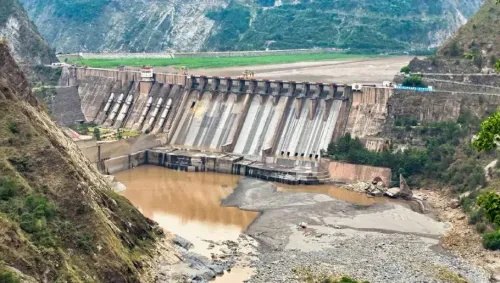
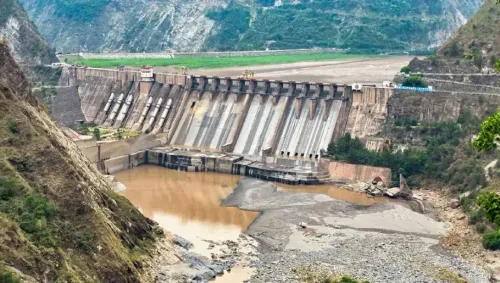
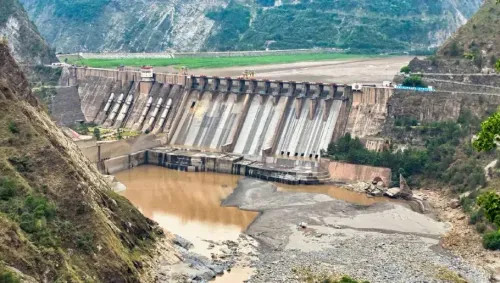
The IWT , originally signed in 1960 , governs six river waters critical to Pakistan's agriculture — making its suspension one of India's most consequential diplomatic measures against Islamabad.
India on Thursday, 7 May 2026 reiterated that the Indus Waters Treaty (IWT) remains in abeyance due to Pakistan's continued sponsorship of cross-border terrorism, with New Delhi demanding that Islamabad "credibly and irrevocably" end such support. The statement came on the first anniversary of Operation Sindoor, the Indian armed forces' strike on terror infrastructure across Pakistan-occupied Kashmir (PoK) and Pakistan on 7 May 2025.
India's Position on the Indus Waters Treaty
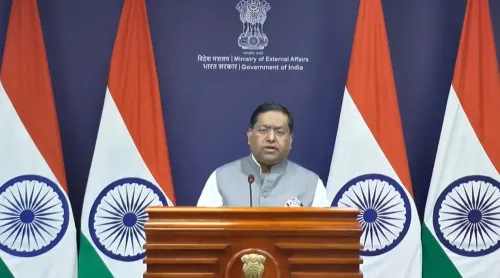
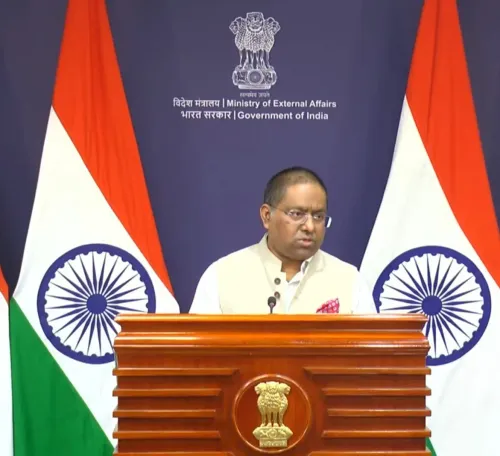
Addressing the weekly media briefing in New Delhi, Ministry of External Affairs (MEA) spokesperson Randhir Jaiswal stated that India's stance on the IWT has been unwavering. "Our position on the Indus Waters Treaty (IWT) has been consistent. IWT stands in abeyance in response to Pakistan's sponsorship of cross-border terrorism. Pakistan must credibly and irrevocably abjure its support for cross-border terrorism," he said.
The IWT, originally signed in 1960 and brokered by the World Bank, governs the sharing of waters of six rivers between India and Pakistan. India's decision to place the treaty in abeyance followed the Pahalgam terror attack in Jammu and Kashmir on 22 April 2025, which triggered a sharp diplomatic and military escalation.
Operation Sindoor: One Year On
Operation Sindoor was carried out by Indian armed forces on 7 May 2025, targeting high-value terror infrastructure and terrorists in PoK and mainland Pakistan — a direct response to the Pahalgam attack. Marking the first anniversary, Jaiswal asserted that India gave a "befitting reply" to Pakistan's state-sponsored terrorism. "The entire world saw the Pahalgam terrorist attack for what it was. We gave a befitting reply to Pakistan for its sponsorship of cross-border terrorism," he stated.
He further underlined that cross-border terrorism has long been used by Pakistan as an instrument of state policy, and that India retains the right to defend itself while actively working to strengthen the global fight against terrorism.
EAM Jaishankar Underlines Zero-Tolerance Stand
External Affairs Minister S. Jaishankar on Thursday posted on X that Operation Sindoor demonstrated the nation's resolve and ensured accountability for terrorist actions. "A year ago, Operation Sindoor demonstrated the nation's resolve to defend itself against cross-border terrorism from Pakistan. With its decisive actions, India ensured accountability for terrorist actions. And underlined that such a serious threat to peace and security will be effectively countered," he wrote.
Jaishankar added that under the leadership of Prime Minister Narendra Modi, India remains "strong and determined to convey a message of zero tolerance for terrorism."
Broader Diplomatic Context
India's suspension of the IWT is one of the most consequential diplomatic measures taken against Pakistan in recent decades, given that the treaty governs water flows critical to agriculture in Pakistan's Punjab and Sindh provinces. This comes amid a broader freeze in bilateral ties, with trade, travel, and diplomatic exchanges significantly curtailed following the Pahalgam attack and Operation Sindoor. Notably, Pakistan has contested India's right to place the treaty in abeyance, and the dispute remains unresolved at the international level.
As the anniversary of Operation Sindoor is observed, India's messaging is clear: normalisation of ties — including on the IWT — will require verifiable and permanent action by Islamabad against terror groups operating from its soil.
Point of View
New Delhi has transformed a technical water-sharing mechanism into a high-stakes diplomatic instrument. The anniversary framing of Operation Sindoor reinforces this: India is not signalling a return to normalcy, but doubling down on a coercive deterrence strategy. The risk is that water — a humanitarian necessity for millions downstream — is now entangled in a security standoff with no clear off-ramp, and the international community has yet to push back meaningfully on either side.
NationPress
22 Sept 2026
Frequently Asked Questions
Why is the Indus Waters Treaty in abeyance?
India placed the Indus Waters Treaty in abeyance following Pakistan's alleged sponsorship of the Pahalgam terror attack on 22 April 2025, which killed civilians in Jammu and Kashmir. New Delhi has stated the treaty will remain suspended until Pakistan credibly and irrevocably ends its support for cross-border terrorism.
What is Operation Sindoor?
Operation Sindoor was a military operation carried out by Indian armed forces on 7 May 2025, targeting high-value terror infrastructure and terrorists in Pakistan-occupied Kashmir and Pakistan. It was India's direct response to the Pahalgam terror attack and is being marked on its first anniversary on 7 May 2026.
What did EAM Jaishankar say about Operation Sindoor's anniversary?
External Affairs Minister S. Jaishankar posted on X that Operation Sindoor demonstrated India's resolve to defend itself and ensured accountability for terrorist actions. He reaffirmed that under PM Narendra Modi, India maintains zero tolerance for terrorism.
What is the Indus Waters Treaty and why does it matter?
The Indus Waters Treaty, signed in 1960 and brokered by the World Bank, governs the sharing of waters from six rivers between India and Pakistan. It is critical to agriculture in Pakistan's Punjab and Sindh provinces, making its suspension one of the most consequential diplomatic measures India has taken against Islamabad.
What must Pakistan do for the IWT to be restored?
According to MEA spokesperson Randhir Jaiswal, Pakistan must credibly and irrevocably abjure its support for cross-border terrorism. India has not specified a timeline or verification mechanism, and the dispute currently remains unresolved at the international level.