Will Tariffs on India Temporarily Drop to 10%?
Synopsis
The White House has confirmed a temporary reduction of tariffs on India to 10%. This follows President Trump's announcement of a new global tariff order, replacing previous IEEPA-based duties invalidated by the Supreme Court. Discover the implications of this shift in trade relations and what it means for future tariffs.
Key Takeaways
India's tariff rate temporarily drops to 10% Supreme Court invalidated previous IEEPA tariffs Potential for future increases in tariff rates Trade relations remain complex amid strategic ties Administration aims for 'fair' trade terms
Washington, Feb 21 (NationPress) The White House has announced that India will be subject to a temporary 10 percent tariff following US President Donald Trump's declaration of a new global tariff framework, which supersedes the previous duties established under the International Emergency Economic Powers Act (IEEPA) that were invalidated by the Supreme Court.
According to a White House official speaking to IANS on Friday afternoon, “The 10 percent will replace the IEEPA tariffs (50 U.S.C. 1701 et seq.) that were recently struck down.”
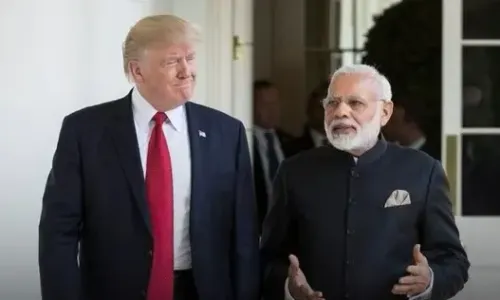
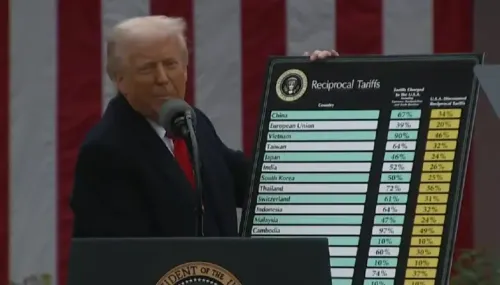
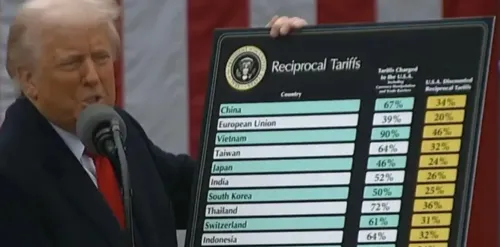
Earlier this month, President Trump had already reduced the reciprocal tariff on India from 25 to 18 percent after both nations established a framework for an interim trade agreement.
When inquired whether the newly introduced “global tariff” would mean a reduction in India's tariff rate from the existing 18 percent to 10 percent, the official confirmed, “Temporarily, yes. Until another tariff authority can be invoked to implement a more suitable tariff rate.”
The official requested anonymity while confirming that this 10 percent global tariff under Section 122 is a replacement for the previously imposed IEEPA tariffs on India, not an addition.
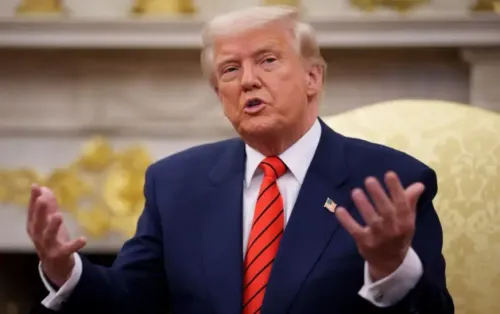
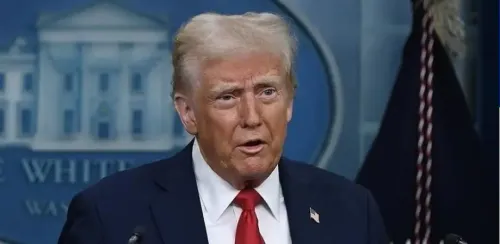
Earlier on Friday, President Trump stated to reporters that “nothing changes” regarding the trade framework with India, asserting that “they’ll be paying tariffs and we will not be paying tariffs.”
He characterized the US-India trade agreement as “a fair deal now,” adding, “we did a little flip.”
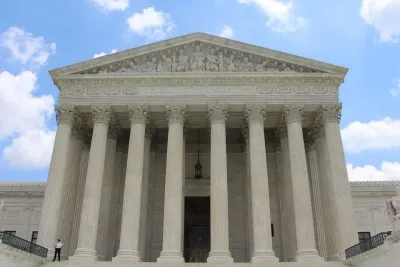
However, the US Supreme Court's ruling invalidated President Trump's reliance on the IEEPA for certain tariffs, raising questions about the impact on India's previously reported 18 percent tariff rate.
The White House's clarification confirms that the effective rate for India will drop to 10 percent under the new Section 122 authority, at least temporarily.
The Trump administration has indicated that other tariff authorities may be utilized in the coming weeks.
During the press conference, Trump hinted that alternative statutes, including Sections 232 and 301, could be employed for further actions.
When asked if tariff rates could rise, he responded, “Potentially higher,” adding, “It depends whatever we want them to be.”
Trump noted that the alternative authorities are “even stronger than our original choice,” suggesting that the new framework may eventually permit higher trade duties than before.
The trade relationship between India and the US has experienced intermittent strains due to tariffs and market accessibility, even as strategic alliances have strengthened in defense, technology, and Indo-Pacific cooperation.
Previous administrations have employed a combination of negotiations and tariff measures to tackle trade discrepancies and sector-specific issues.
The current modifications reflect both the legal limitations imposed by the US court and the administration's declared ambition to continue striving for what Trump refers to as “fair” trade conditions.
Point of View
It is essential to recognize the nuanced dynamics of trade relations between nations. The temporary adjustment in tariffs reflects both legal realities and ongoing negotiations. This approach demonstrates the administration's commitment to finding equitable solutions while navigating complex international trade laws.
NationPress
6 Oct 2026
Frequently Asked Questions
What is the new temporary tariff rate for India?
The new temporary tariff rate for India is set at 10%.
Why was the previous tariff structure changed?
The previous tariff structure was changed due to a Supreme Court ruling that invalidated the IEEPA-based tariffs.
What does the White House say about future tariff rates?
The White House indicated that other tariff authorities may be invoked in the coming weeks, potentially leading to higher rates.
How has the US-India trade relationship evolved?
The US-India trade relationship has seen tensions over tariffs and market access, despite strengthening strategic ties in various sectors.
What is the significance of the new global tariff?
The new global tariff is significant as it temporarily replaces previously imposed tariffs and reflects a shift in trade strategy.