Modi in Tashkent: India-Uzbekistan to preserve Buddhist heritage, eye $5 bn trade by 2030
Synopsis
Modi's Tashkent visit went beyond diplomacy-as-usual — the pledge to preserve Uzbekistan's Buddhist heritage sites signals a civilisational framing of India's Central Asia outreach, while the upgrade to a Comprehensive Strategic Partnership and a $5 billion trade target by 2030 set concrete benchmarks that will define whether this engagement delivers.
Key Takeaways
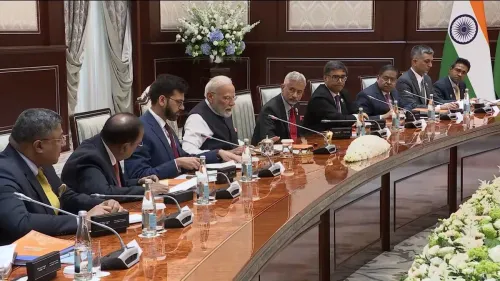
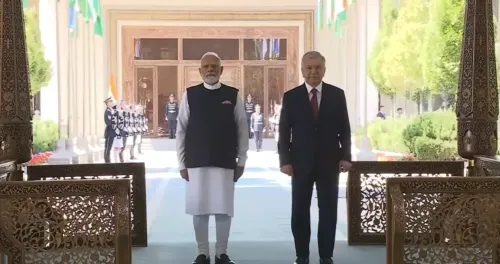
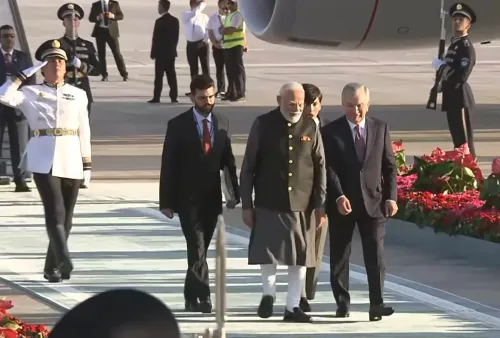
PM Modi and President Mirziyoyev met in Tashkent on 30 August for bilateral talks.
India and Uzbekistan will jointly preserve Uzbekistan's Buddhist heritage sites ; scholarships announced to promote Hindi in Uzbekistan.
The bilateral relationship elevated to a Comprehensive Strategic Partnership , ahead of the 15th anniversary of their strategic ties in 2026.
Bilateral trade has crossed $1 billion ; both sides target $5 billion by 2030 .
Agreements signed on tourism cooperation , traditional medicine , and plans for defence co-production and co-development .
Both nations reaffirmed zero tolerance against terrorism, extremism, and separatism.
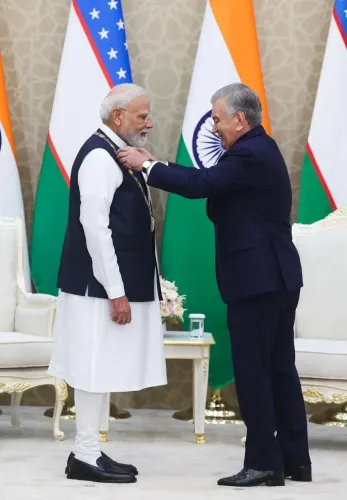
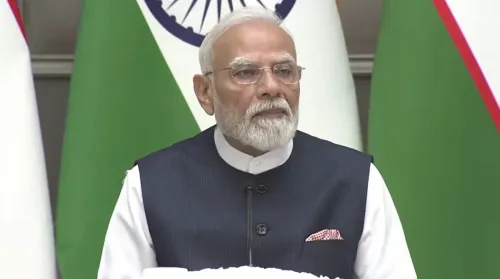
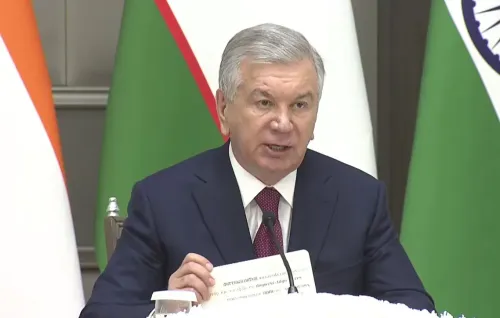
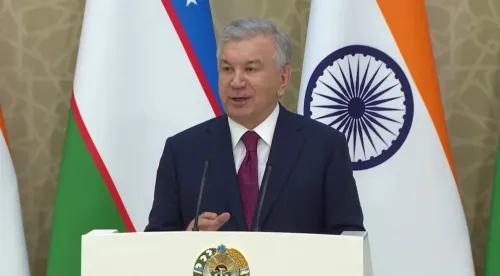
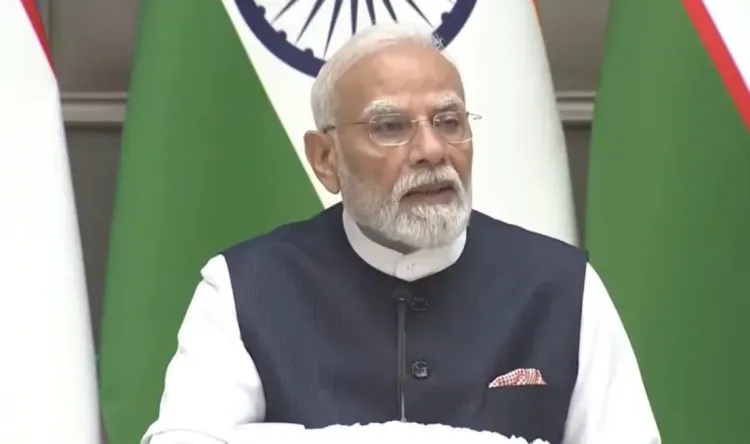
Prime Minister Narendra Modi on Sunday, 30 August announced that India and Uzbekistan will jointly work to preserve Uzbekistan's Buddhist heritage sites, while also unveiling scholarships to promote the Hindi language in Uzbekistan. The announcements came during a joint press conference with Uzbekistan President Shavkat Mirziyoyev in Tashkent, following bilateral talks between the two leaders.
Elevating the Partnership
The two nations agreed to upgrade their bilateral relationship to the level of a Comprehensive Strategic Partnership, marking a significant diplomatic milestone as 2026 approaches — the 15th anniversary of their strategic partnership. An agreement on a 'Program of Cooperation' was also concluded to strengthen tourism linkages between the two countries.
Modi stressed that the partnership should extend beyond the two capitals, announcing plans to establish city- and state-level partnerships between India and Uzbekistan. 'It is our endeavour that our partnership should not be limited to only two capitals,' he said.
Heritage, Culture and People-to-People Ties
At the heart of Sunday's announcements was a renewed focus on shared civilisational roots. Modi emphasised that the two nations share deep cultural heritage and pledged to jointly preserve Uzbekistan's Buddhist heritage sites. Scholarships for Hindi-language promotion in Uzbekistan were announced as part of broader efforts to boost youth and student exchanges.
Notably, Uzbekistan is home to several sites of Buddhist historical significance, and this collaboration marks one of the more concrete cultural commitments to emerge from recent India-Central Asia engagement.
Defence, Security and Counter-Terrorism
On the security front, Modi underscored that defence and security cooperation between the two nations reflects 'deep mutual trust.' He announced plans to foster direct linkages, co-production, and co-development between the defence industries of both countries.
Both sides reaffirmed zero tolerance against terrorism, extremism, and separatism — a joint position that carries particular weight given the volatile security landscape in Central Asia and Afghanistan's proximity to the region.
Trade, Agriculture and Traditional Medicine
Bilateral trade between India and Uzbekistan has crossed $1 billion, and the two sides have set an ambitious target of $5 billion by 2030. To achieve this, both nations will advance cooperation in market access, connectivity, banking, and payments infrastructure.
Modi highlighted complementary strengths in agriculture and health: Uzbekistan's horticulture expertise combined with India's modern agricultural practices could jointly address food security, he said. A separate agreement on traditional medicine was also signed, combining Uzbekistan's medicinal herbs with India's Ayurveda expertise. This comes amid India's broader push to internationalise Ayurveda as both a soft-power and economic tool.
What Comes Next
With the Comprehensive Strategic Partnership now formalised, both governments are expected to operationalise the agreements on tourism, defence co-production, traditional medicine, and city-level partnerships in the months ahead. The $5 billion trade target by 2030 will require sustained progress on connectivity — a perennial challenge in India-Central Asia commerce — making the implementation phase the real test of Sunday's commitments.
Point of View
Differentiating New Delhi from China's infrastructure-heavy presence in the region. Yet the $5 billion trade target by 2030 faces a structural hurdle: India-Central Asia connectivity remains fragmented, with no direct land corridor and limited banking interoperability. The defence co-production announcement is promising, but co-development timelines in India's bilateral frameworks have historically slipped. The real measure of this Comprehensive Strategic Partnership will be whether the implementation machinery matches the ambition of the joint statement.
NationPress
30 Aug 2026
Frequently Asked Questions
What did PM Modi announce during his Tashkent visit?
PM Modi announced that India and Uzbekistan will jointly preserve Uzbekistan's Buddhist heritage sites, unveiled scholarships to promote the Hindi language in Uzbekistan, and set a bilateral trade target of $5 billion by 2030. The two sides also elevated their relationship to a Comprehensive Strategic Partnership.
What is the India-Uzbekistan Comprehensive Strategic Partnership?
It is an upgraded diplomatic framework agreed upon during PM Modi's Tashkent visit on 30 August, ahead of the 15th anniversary of the two nations' strategic partnership in 2026. It covers defence co-production, trade, tourism, agriculture, traditional medicine, and cultural cooperation.
What is the India-Uzbekistan trade target and current status?
Bilateral trade between India and Uzbekistan has crossed $1 billion, and both countries have set a target of $5 billion by 2030. Cooperation in market access, connectivity, banking, and payments will be key to achieving this goal.
Why is India preserving Buddhist heritage sites in Uzbekistan?
Uzbekistan is home to sites of Buddhist historical significance, and the joint preservation initiative reflects the shared civilisational heritage both nations emphasised during the Tashkent summit. It also forms part of India's broader cultural diplomacy in Central Asia.
What did India and Uzbekistan agree on defence and security?
Both nations agreed to foster direct linkages, co-production, and co-development between their defence industries. They also jointly reaffirmed zero tolerance against terrorism, extremism, and separatism — a shared position given the regional security environment.