India becomes Armenia's top defence partner in military technical cooperation
Synopsis
As Armenia races to shed its dependence on Russian arms, India has quietly become its most significant defence partner — supplying weapon systems, setting up IT labs at military academies, and now sending its Defence Secretary to Yerevan to lock in the next phase of cooperation. The visit signals that India's strategic autonomy doctrine is opening doors well beyond its traditional neighbourhood.
Key Takeaways
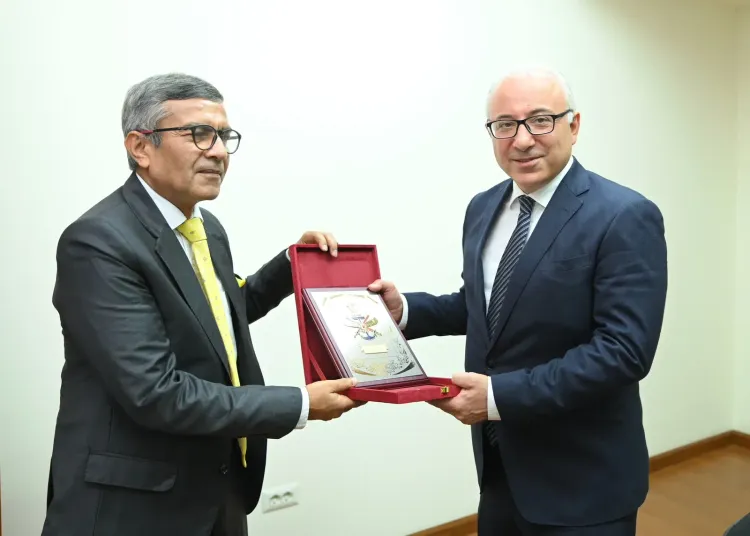
Defence Secretary Rajesh Kumar Singh held talks in Yerevan on 18 August 2026 with senior Armenian defence and foreign ministry officials.
The Ministry of Defence confirmed India is now Armenia's major partner in military technical cooperation.
Discussions covered capacity building , training , defence industrial cooperation , and research and development .
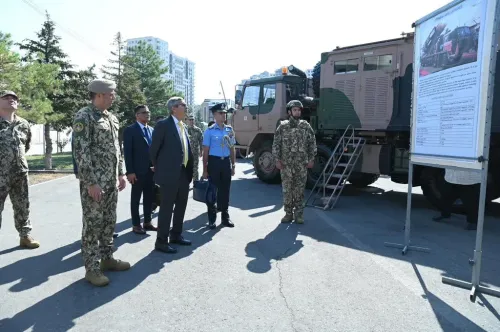
Singh visited the Vazgen Sargasyan Military Academy and reviewed an IT Lab built with Indian support, and was briefed on Indian-supplied weapon systems.
Both countries reaffirmed commitment to strategic autonomy and multilateralism as shared foreign policy pillars.
Greater institutional linkages between Indian and Armenian defence training bodies are being actively encouraged.
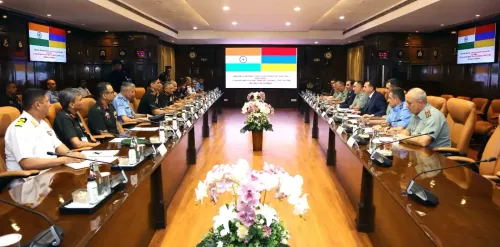
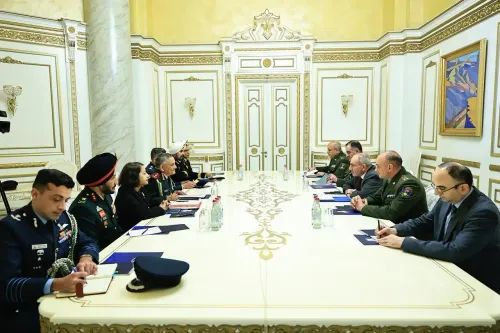
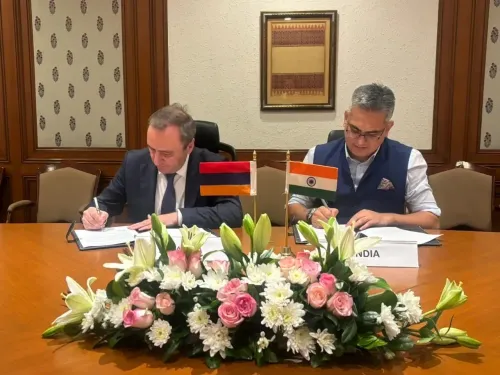
Defence Secretary Rajesh Kumar Singh held wide-ranging discussions with senior Armenian officials in Yerevan on 18 August 2026, with the Ministry of Defence confirming that India has emerged as Armenia's foremost partner in military technical cooperation as Yerevan accelerates its drive to diversify defence procurement away from traditional suppliers.
Key Developments in Yerevan
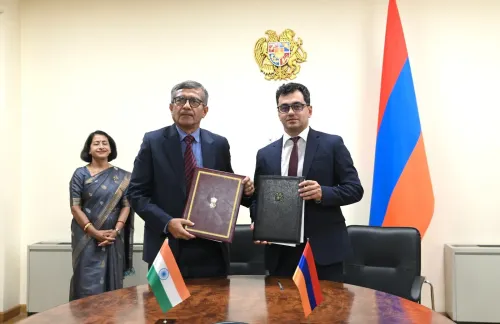
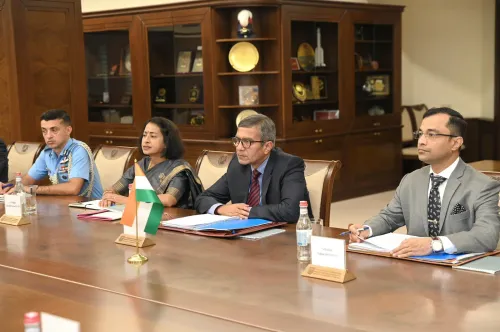
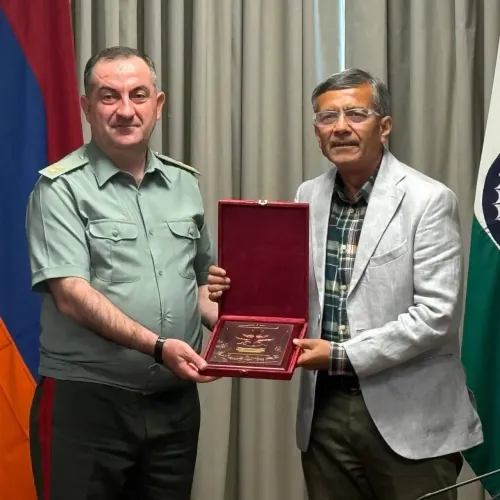
Singh met Deputy Foreign Minister of Armenia Mnatsakan Safaryan, with talks described by the Ministry of Defence as 'fruitful'. The two sides focused on the expanding defence partnership, with the ministry noting that both nations share aligned positions on multilateralism and strategic autonomy — a phrase that has become a cornerstone of India's foreign policy outreach in recent years.
Singh also called on Deputy Minister of Defence of Armenia Karen Brutyan, where discussions covered the full spectrum of bilateral defence ties, including capacity building, training, defence industrial cooperation, and research and development. 'They reaffirmed their commitment to mutual security and strategic autonomy,' the Ministry of Defence said in an official statement.
Visit to Vazgen Sargasyan Military Academy
Earlier in the day, Singh visited the Vazgen Sargasyan Military Academy of Armenia, where he reviewed an IT Lab established with New Delhi's support — a tangible marker of India's growing institutional footprint in Armenian defence infrastructure. He was also briefed on weapon systems supplied by India to Armenia, underscoring the operational dimension of the partnership.
Singh addressed the faculty, officers, and staff at the academy, highlighting its role in building character, cultivating judgement, and developing military leadership. He met Major General Arsen Mangasryan, Head of the Military Academy, and encouraged greater institutional linkages between Indian and Armenian defence training establishments.
Why This Partnership Matters
Armenia's push to diversify its defence procurement follows years of near-total dependence on Russian military hardware — a reliance that came under strain amid shifting regional dynamics and the 2020 and 2023 conflicts in and around Nagorno-Karabakh. India has stepped into this space with a range of platforms and systems, reportedly including artillery, radar, and ammunition.
Notably, this visit comes amid India's broader effort to deepen strategic ties across the South Caucasus and Central Asia, regions where New Delhi has historically had limited defence engagement. The shared emphasis on strategic autonomy gives both countries a common diplomatic vocabulary, even as their immediate security environments differ sharply.
What Comes Next
The two sides are expected to pursue deeper linkages between their respective defence training institutions. The Ministry of Defence's language — 'entire spectrum of defence cooperation' and 'areas of mutual interest' — suggests ongoing negotiations on additional procurement and joint development may be in the pipeline, though no specific deals were announced publicly during the visit.
Point of View
And an equally deliberate outreach by New Delhi into a region it once treated as peripheral. What mainstream coverage underplays is the operational significance: Indian-supplied weapon systems are already in Armenian hands, and an IT Lab stands inside its premier military academy. The shared 'strategic autonomy' framing is diplomatically convenient, but the harder question is whether India can sustain and scale this partnership without being drawn into the volatile South Caucasus fault lines. Deepening defence ties with Armenia inevitably invites scrutiny from Azerbaijan and Turkey — two countries with which India also maintains working relationships.
NationPress
3 Oct 2026
Frequently Asked Questions
Why has India become Armenia's major defence partner?
India has emerged as Armenia's foremost partner in military technical cooperation as Yerevan seeks to diversify away from its historical dependence on Russian defence supplies. Both countries share aligned positions on multilateralism and strategic autonomy, providing a strong diplomatic foundation for expanding ties.
What did Defence Secretary Rajesh Kumar Singh discuss in Yerevan?
Singh held talks with Deputy Foreign Minister Mnatsakan Safaryan and Deputy Minister of Defence Karen Brutyan on 18 August 2026, covering the full spectrum of India-Armenia defence cooperation including capacity building, training, defence industrial cooperation, and research and development.
What is the significance of the Vazgen Sargasyan Military Academy visit?
Singh's visit to the academy highlighted India's institutional role in Armenian military training. He reviewed an IT Lab established with Indian support and was briefed on weapon systems supplied by India, underscoring the operational depth of the bilateral partnership.
What weapon systems has India supplied to Armenia?
The Ministry of Defence confirmed that Singh was briefed on weapon systems supplied by India during his academy visit, but did not publicly specify the systems. Reports have previously indicated Indian supplies include artillery, radar systems, and ammunition.
What are the next steps in India-Armenia defence cooperation?
Both sides are expected to deepen linkages between their defence training institutions. The Ministry of Defence indicated ongoing cooperation across capacity building, training, and industrial collaboration, though no specific new deals were publicly announced during the visit.