India tourism must shift to destination competitiveness, says senior official at GTM 2026
Synopsis
India's top tourism bureaucrat has put the sector on notice: doubling airport count and running ad campaigns is not enough. With outbound travel outpacing inbound and India now a net forex spender in tourism, Suman Billa's GTM 2026 address is a rare official admission that the country's tourism model needs structural, not cosmetic, change.
Key Takeaways
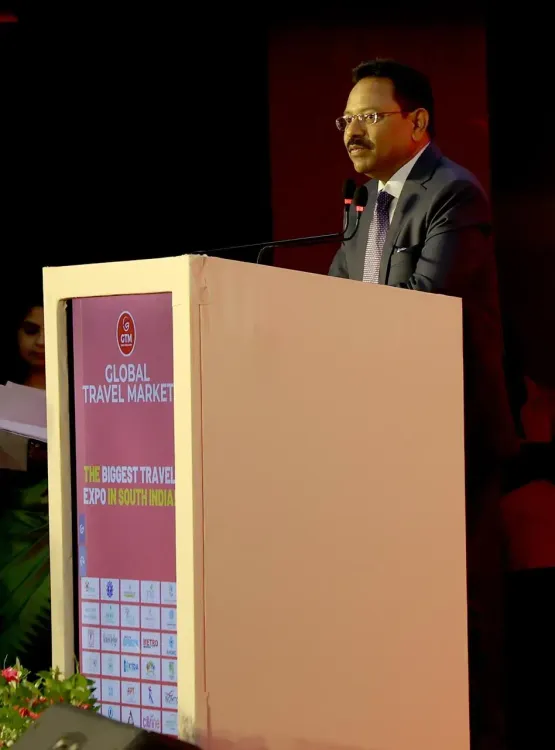
Suman Billa , Union Tourism Additional Secretary and Director General, addressed GTM 2026 in Thiruvananthapuram on 5 June 2026 .
India's international tourist arrivals have doubled to nearly 20 million over the past decade, but outbound travel has grown faster, making India a net forex spender in tourism.
Annual domestic tourism trips have reached nearly 4 billion , among the fastest expansions globally.
Billa proposed developing at least 10 world-class tourism destinations in Kerala over the next five years .
India's airport count has more than doubled to over 150 in the past decade, yet tourism growth has not kept pace with economic expansion.
Andhra Pradesh announced it will host the next edition of GTM; 300 corporate buyers and over 1,000 operators participated in GTM 2026.
Suman Billa, Union Tourism Additional Secretary and Director General, on 5 June 2026 called for a fundamental reset in India's tourism strategy — away from promotion-led campaigns and toward building globally competitive destinations and immersive visitor experiences. Speaking at the Global Travel Mart (GTM) 2026 in Thiruvananthapuram, Billa said the sector was still operating below its true potential despite a decade of strong economic growth and infrastructure expansion.
The Core Argument: Promotion Is Not Enough
Billa framed the challenge in stark terms. International tourist arrivals to India have doubled to nearly 20 million over the past decade — a figure that sounds impressive until set against the backdrop of outbound travel, which has grown at a significantly faster pace. 'Tourism was once one of India's largest foreign exchange earners. Today, outbound travel is growing rapidly, and this is something we need to reflect upon,' he said.
India has, in effect, become a net spender of foreign exchange in tourism — a reversal that underscores the urgency of his message. Domestic tourism, however, remains a rare bright spot, with annual domestic trips reaching nearly four billion, placing India among the fastest tourism expansions globally.
Infrastructure Gains, Unrealised Potential
Billa acknowledged the scale of India's infrastructure push. The number of airports in the country has more than doubled over the past decade to over 150, with further aviation expansion underway. Improved highways and expressways have made domestic travel more accessible. Yet, he noted, tourism growth has not kept pace with the country's economic rise. 'India has been the fastest growing large economy in the world. Rising incomes have translated into higher aspirations, and one of the biggest aspirations today is travel,' he said, adding that social media had further accelerated demand for new experiences.
Kerala in the Global Arena
Billa was direct about the competitive stakes for Kerala. The state's competition, he said, was no longer with other Indian states but with international destinations such as Thailand, Indonesia, and Malaysia. To meet that challenge, Kerala must improve airport connectivity, transport systems, cleanliness, sanitation, water availability, and traffic management. He proposed developing at least 10 world-class tourism destinations in Kerala over the next five years and creating new signature tourism products to drive the next phase of growth. 'Visitors should leave India and Kerala carrying the values, culture and humanity they experienced here,' he said.
GTM 2026: Scale and Scope
The second edition of GTM 2026, inaugurated at the Golden Palace Convention Centre near Amaravila in Neyyattinkara, drew more than 1,000 domestic and international tourism operators, including 300 corporate buyers. Over 200 stalls were set up by hotels, resorts, tourism boards, airlines, travel companies, tour operators, and travel technology firms. The three-day B2B expo features dedicated pavilions on Ayurveda, yoga and wellness, wedding tourism, corporate travel, homestays, and a special Travancore Experience Zone. The event is organised by the South Kerala Hoteliers Forum (SKHF), Thiruvananthapuram Chamber of Commerce and Industries (TCCI), Thavass Ventures, and Metro Mart, in association with Kerala Tourism and India Tourism.
Andhra Pradesh Joins the Conversation
Andhra Pradesh Tourism and Culture Minister Kandula Durgesh, who inaugurated the expo, said his state was keen to adopt Kerala's best practices in wellness tourism, coastal experiences, and cruise tourism. He proposed a common platform for southern states to jointly promote India's tourism potential globally and announced that Andhra Pradesh would host the next edition of GTM. 'South Indian states can come together and showcase the diverse tourism experiences available in the region to the world,' Durgesh said.
With Kerala's tourism sector looking to expand beyond traditional markets, GTM 2026 is expected to sharpen the southern region's competitive position in global travel. The industry will now watch whether Billa's call for a strategy shift translates into concrete policy and investment commitments from the Centre and state governments.
Point of View
But without a named funding mechanism or accountability framework, it risks becoming another aspirational target. The deeper question Billa did not address is regulatory and ease-of-travel: visa friction, e-visa reliability, and on-ground tourist infrastructure quality consistently rank as deterrents in global travel surveys. Fixing airports is necessary; it is not sufficient.
NationPress
21 Oct 2026
Frequently Asked Questions
What did Union Tourism DG Suman Billa say at GTM 2026?
Billa called for India to shift from promotion-driven tourism to building globally competitive destinations and meaningful visitor experiences. He said India had become a net spender of foreign exchange in tourism because outbound travel was growing faster than inbound arrivals, which stood at nearly 20 million.
What is the Global Travel Mart (GTM) 2026?
GTM 2026 is a three-day B2B travel industry expo held at the Golden Palace Convention Centre near Amaravila in Neyyattinkara, Thiruvananthapuram. Its second edition drew over 1,000 domestic and international tourism operators, 300 corporate buyers, and more than 200 exhibitor stalls.
Why has India become a net forex spender in tourism?
According to Billa, outbound travel by Indians has grown at a much faster pace than international tourist arrivals into India, which have doubled to nearly 20 million over the past decade. The result is that India spends more foreign exchange on outbound tourism than it earns from inbound visitors.
What improvements did Billa recommend for Kerala's tourism sector?
Billa recommended developing at least 10 world-class tourism destinations in Kerala over the next five years and creating new signature tourism products. He also called for improvements in airport connectivity, transport systems, cleanliness, sanitation, water availability, and traffic management, noting Kerala now competes with Thailand, Indonesia, and Malaysia.
Which state will host the next edition of GTM?
Andhra Pradesh Tourism and Culture Minister Kandula Durgesh announced that Andhra Pradesh will host the next edition of the Global Travel Mart. He also proposed a common platform for southern states to jointly promote India's tourism potential to international travellers.