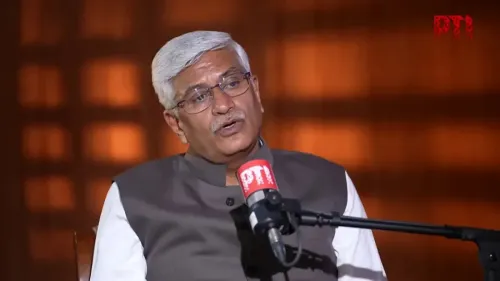
Shekhawat pitches $1-trillion tourism economy at ASSOCHAM conclave
Synopsis
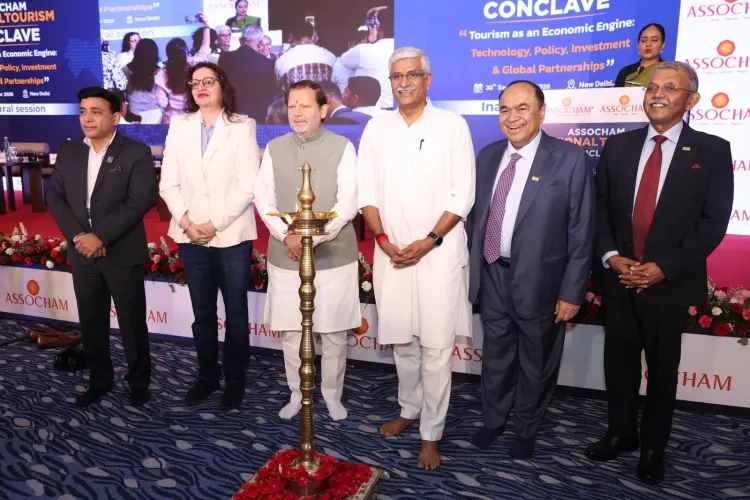
At the ASSOCHAM National Tourism Conclave 2026 in New Delhi, Union Tourism Minister Gajendra Singh Shekhawat championed PM Modi's Viksit Bharat 2047 vision, calling for governance, industry, investors, and technology to unite behind a one-trillion-dollar tourism economy target.
Key Takeaways
Gajendra Singh Shekhawat addressed the ASSOCHAM National Tourism Conclave 2026 in New Delhi on 30 September 2026 .
He outlined PM Narendra Modi 's target of making India a one-trillion-dollar tourism economy by 2047 under the Viksit Bharat 2047 vision.
The minister identified four key pillars for achieving the target: governance, industry, investors, and technology.
The conclave was organised by ASSOCHAM and brought together state tourism ministers, investors, and private-sector leaders.
India's Swadesh Darshan scheme (launched 2014–15 ) established an earlier template for the public-private-state coordination now being scaled up.
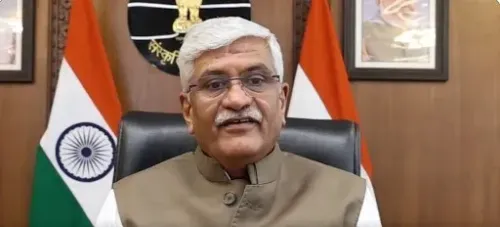
A trillion dollars. That is the number Union Culture and Tourism Minister Gajendra Singh Shekhawat put at the centre of India's tourism ambition when he addressed industry leaders, investors, and state ministers at the ASSOCHAM National Tourism Conclave 2026 in New Delhi on 30 September 2026 — framing it not as aspiration but as a strategic national target.
The trillion-dollar target and the 2047 deadline
Shekhawat shared Prime Minister Narendra Modi's vision — articulated under the Viksit Bharat 2047 ('Developed India 2047') framework — of transforming India into a one-trillion-dollar tourism economy by 2047. The minister positioned tourism not as a peripheral sector but as a pillar of India's long-term development journey, stating that the government is committed to taking Indian tourism to 'new heights' through partnership across governance, industry, investors, and technology.
The conclave, organised by the Associated Chambers of Commerce and Industry of India (ASSOCHAM), brought together a cross-section of stakeholders — from private-sector representatives and institutional investors to tourism ministers and officials from multiple states. The setting underscored the multi-layered coordination the government sees as essential to reaching that number.
Four pillars Shekhawat named: governance, industry, investment, technology
The minister was explicit about the architecture of this push. He named four engines — governance, industry, investors, and technology — as the interlocking forces that will have to work in concert. That framing is significant: it signals that the Centre does not intend to carry this target alone, and that private capital and digital infrastructure are expected to do heavy lifting alongside policy.
India's tourism policy lineage supports this multi-stakeholder instinct. The Swadesh Darshan scheme, launched in 2014–15, pioneered the model of central funding for thematic tourist circuits developed in partnership with states — an early template for the kind of public-private-state coordination Shekhawat is now invoking at a far larger scale.
Why the $1-trillion number matters now
Tourism has long been treated as a strategic sector for employment generation and foreign-exchange earnings by successive governments. What the current framing adds is a hard, time-bound number — one trillion dollars by 2047 — anchored to a broader national vision. That specificity changes the conversation from intent to accountability.
The conclave platform itself is telling. ASSOCHAM conclaves are designed to translate policy signals into investment decisions. By appearing and speaking directly to investors and industry, Shekhawat was not just articulating a goal — he was inviting capital to align with it.
The real test will come in the form of follow-through: new schemes, budget allocations, and investment facilitation mechanisms that operationalise the 2047 target. The minister's presence at this conclave sets the political clock ticking on those specifics.
Point of View
More as a measurable economic deliverable tied to the Viksit Bharat brand. Anchoring the pitch to PM Modi's 2047 vision also serves a political purpose, embedding tourism ambition within the party's flagship developmental narrative ahead of what will be years of state elections. The four-pillar framing (governance, industry, investors, technology) is notably investor-facing, suggesting the ministry is actively courting private capital rather than relying on central allocation alone. Whether specific policy instruments — new schemes, investment windows, regulatory easing — follow this signal will determine whether the trillion-dollar figure becomes a policy benchmark or remains a rhetorical horizon.
NationPress
30 Sept 2026
Frequently Asked Questions
What is India's tourism economy target for 2047?
India's government has set a target of building a one-trillion-dollar tourism economy by 2047, as part of the Viksit Bharat 2047 vision outlined by Prime Minister Narendra Modi.
What is the ASSOCHAM National Tourism Conclave 2026?
It is a national conclave organised by the Associated Chambers of Commerce and Industry of India (ASSOCHAM) that brings together tourism industry representatives, investors, and state government officials to discuss India's tourism potential and future.
What is Viksit Bharat 2047?
Viksit Bharat 2047 is PM Narendra Modi's vision for a fully developed India by the centenary of independence in 2047, with tourism identified as one of the key growth sectors.
What did Gajendra Singh Shekhawat say at the ASSOCHAM conclave?
Minister Shekhawat shared PM Modi's vision of a one-trillion-dollar tourism economy by 2047 and stressed that achieving it requires coordinated partnership across governance, industry, investors, and technology.
What is the Swadesh Darshan scheme?
Swadesh Darshan is a central government scheme launched in 2014–15 to develop thematic tourist circuits across India with central financial assistance, serving as an early model for public-private-state tourism collaboration.