How are Indian American leaders advocating for deeper political engagement?
Synopsis
During the inaugural India Abroad Dialogue, Indian American leaders in Detroit urged for increased political engagement and advocacy to ensure their economic success translates into significant political influence. They highlighted the importance of unity and representation in civic matters.
Key Takeaways
Enhanced political participation is critical for Indian Americans.
Unity and advocacy can strengthen community representation.
Immigration policies should be viewed as an asset , not a burden.
Economic success must be matched with political influence .
The India Abroad Dialogue aims to foster civic engagement .
Detroit, December 14 (NationPress) Leaders from the Indian American community emphasized the necessity for enhanced political involvement, stronger advocacy, and a cohesive civic voice during the inaugural India Abroad Dialogue. They argued that the community’s economic achievements should result in lasting political influence.
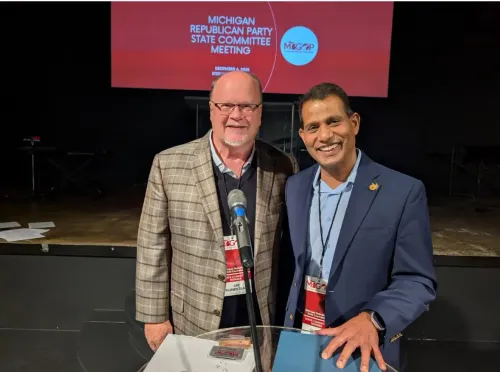
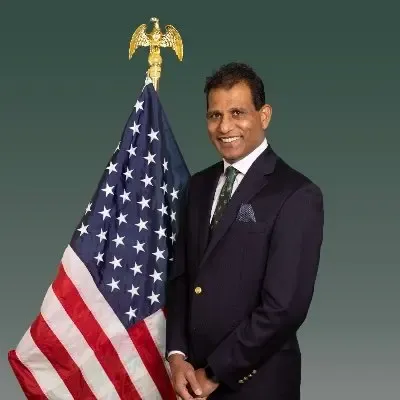
“Indian Americans rank among the wealthiest in this nation. We make significant tax contributions. We are law-abiding citizens who adhere to all regulations,” remarked Sunny Reddy, who has recently taken on the role of Vice Chairman of the Michigan Republican Party, marking the highest position ever held by an Indian American in the GOP’s state leadership.
Reddy urged for increased representation, presenting political participation as a necessity rather than a choice. “Leadership is not optional. We can achieve and we can be present,” he stated, addressing younger Indian Americans. “If Sunny Uncle can do it, why can’t I?”
Numerous panelists echoed this sentiment, noting that while Indian Americans have seen remarkable success in business and professional realms, they have fallen short in terms of civic integration.
Avinash Rajmal, the chairman and CEO of Lakeshore Global Corporation, lauded Reddy’s achievement as particularly notable considering the scale of the election.
Rajmal recounted his personal journey after moving to the U.S. as a student and starting his company in 1994, sharing the myriad challenges he faced. “I encountered numerous obstacles, not knowing where to seek funding or how to navigate the registration process,” he described, highlighting the motivation behind the establishment of support networks like the Indo-American Chamber of Commerce USA.
The theme of immigration resonated throughout the discussion. Panelists addressed lengthy green card delays, uncertainties surrounding H-1B visas, and country-based quotas, detailing their human and economic repercussions.
Anu Gopalakrishnan, founder of MintDfuel, asserted that legal, high-skilled immigration should be regarded as an asset rather than a burden. “Skilled immigration is not charity; it’s a competitive advantage,” she stated. “With India’s talent and Michigan’s needs, we should eliminate any barriers.”
She cautioned against exclusionary attitudes towards immigrants, asserting, “We must foster a sense of belonging. The idea that ‘you’re qualified to work here, but not to belong here’ is unacceptable.”
Community leader and businessman Ashok Baddi stressed the importance of unity and advocacy, calling on Indian Americans to present a united front. “I envision this as the moment for all of us to unite and demonstrate that we are successful, honest, and peaceful individuals,” he shared, revealing his intention to pursue a state-level elected position.
Addressing the stress and health issues faced by H-1B visa holders, community leader Hema Rachmale detailed efforts being made to assist families in visa emergencies.
Dr. Ajith Kadakol framed immigration policy in moral terms, stating, “From an ethical perspective, illegal immigration is wrong,” while adding, “America should welcome those who contribute positively and restrict those who pose a threat.”
Despite varied political affiliations, panelists consistently highlighted the importance of civic engagement. “You’re either at the table or you become the menu,” one participant remarked, resonating with the entire panel.
Indian Americans represent one of the fastest-growing ethnic groups in the U.S., boasting high levels of education, income, and professional representation. However, their voter engagement and political representation have not kept pace with these metrics, a gap acknowledged by panelists as needing to be bridged.
The India Abroad Dialogue series, inaugurated in Detroit, seeks to facilitate newsroom-style discussions within the community, focusing on policy, civic involvement, and diaspora issues. Organizers announced plans for additional dialogues in other major U.S. cities as part of a wider national engagement initiative.
Point of View
The call for deeper involvement in politics highlights the necessity for these citizens to advocate for their interests and issues more effectively. It’s crucial for communities to unite and make their voices heard to ensure equitable representation.
NationPress
22 Sept 2026
Frequently Asked Questions
What is the India Abroad Dialogue?
The India Abroad Dialogue is a series designed to facilitate discussions on policy, civic engagement, and concerns of the Indian diaspora, initiated in Detroit.
Why is political engagement important for Indian Americans?
Political engagement is vital for Indian Americans to transform their economic success into political influence, ensuring their voices are heard and represented in governance.
What challenges are Indian Americans facing in immigration?
Indian Americans are experiencing prolonged green card backlogs and uncertainties related to H-1B visas, which impact their professional and personal lives.
How can communities support Indian American entrepreneurs?
Communities can provide networks and resources to assist Indian American entrepreneurs in overcoming challenges related to business establishment and growth.
What role does unity play in civic advocacy?
Unity among Indian Americans is crucial for effective advocacy, enabling them to present a cohesive front and amplify their collective voice in political matters.