Indian Americans at 250: Immigrant roots, divided visions, shared gratitude
Synopsis
Five prominent Indian American leaders — spanning Republican, Democratic, and progressive politics — used the US 250th Independence Day to tell strikingly similar immigrant origin stories while arriving at opposite conclusions about what America owes its newcomers today. The convergence of personal narrative and political divergence captures exactly where the Indian American community stands in 2025.
Key Takeaways
Former FCC Chairman Ajit Pai recalled his parents arriving in the US in 1971 with $8 and a transistor radio.
Republican gubernatorial candidate Vivek Ramaswamy called 4 July 1776 'the most important date in the history of our universe for human freedom.' Congressman Ro Khanna , born in 1976 , cited abolition of slavery, women's rights, and immigrant inclusion as proof of American progress.
Congresswoman Pramila Jayapal said it took her 17 years and multiple visas to become a citizen, and criticised the Trump administration for restricting legal immigration pathways.
New York mayoral candidate Zohran Mamdani called patriotism 'every act of righteous dissent.' Indian Americans number more than five million and are among the fastest-growing immigrant communities in the United States.
Prominent Indian American political leaders spanning the ideological spectrum marked the United States' 250th Independence Day on 4 July 2025 by drawing on personal and family immigration stories to articulate what America's founding ideals mean to them — even as their policy prescriptions diverged sharply.
Ajit Pai and the Weight of 1971
Former Federal Communications Commission (FCC) Chairman Ajit Pai recalled how his parents arrived in the United States in 1971 with almost nothing. '$8, a transistor radio, and an unshakeable belief in the American dream: that's what my parents brought with them in 1971,' Pai wrote. 'We've lived that dream ever since. So grateful to the United States, this nation of freedom and opportunity. Happy 250th!' Pai also revisited a 2020 post in which he had expressed enthusiasm for travelling to India alongside then-President Donald Trump and other US officials to participate in bilateral meetings aimed at deepening ties between the two nations.
Vivek Ramaswamy Ties July 4 to a Personal Milestone
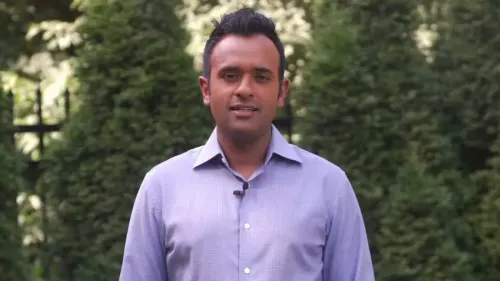
Republican Ohio gubernatorial candidate Vivek Ramaswamy linked the national anniversary to a family celebration — the fourth birthday of his son, Arjun. Ramaswamy called 4 July 1776 'the most important date in the history of our universe for human freedom and human flourishing.' He said America's endurance over 250 years was itself proof of its founding success. 'We know it was successful because here we are, 250 years later, living in a country that allows free Americans like you and me to dream big, to work hard, to take risks, sometimes fail, pick ourselves up and do it again,' he said, adding that he was 'grateful to be a citizen of the greatest nation known to the history of man.'
Ro Khanna and Pramila Jayapal: The Democratic Perspective
Democratic Congressman Ro Khanna, born in 1976 — America's bicentenary year — during his family's early years in Pennsylvania, reflected on how the country's history shaped his understanding of its ideals. His parents arrived in the United States in the late 1960s and early 1970s. 'The founders would be amazed to see some of the progress we have made, the abolition of slavery, the empowering of women's rights, the ending of Jim Crow, the embrace of immigrants like my family from around the world,' Khanna said. He argued that delivering 'economic security and economic hope' would allow Americans to 'all be for Team America.'
Congresswoman Pramila Jayapal recounted how her parents, then living in India and Indonesia, sent her alone to the United States at the age of 16 to pursue higher education. She said it took her 17 years, multiple degrees, and what she described as 'an alphabet soup of visas' before she became a US citizen. 'Today, as the Trump administration terrorises immigrants and severely restricts legal pathways to citizenship, we need to remember that our American identity is uniquely tied to immigration,' Jayapal said, calling for 'real, humane immigration reform' and urging Americans to commit to 'protecting the promise of America' and 'building a more perfect union together.'
Zohran Mamdani on Dissent as Patriotism
New York mayoral candidate Zohran Mamdani, who became a US citizen nearly a decade ago, directed his Independence Day message at newly naturalised Americans. He told them they held 'the power to determine what America means' and defined patriotism as 'every act of righteous dissent,' adding: 'It is precisely because we love this nation that we will not leave it.'
A Community of Over Five Million Reflects on 250 Years
Indian Americans today number more than five million and have emerged as one of the fastest-growing and most influential immigrant communities in the United States. This comes amid a broader national conversation about immigration policy, with the Trump administration having tightened several legal pathways to residency and citizenship. For many in the community, the 250th anniversary was as much a moment of personal reckoning as a civic celebration — a chance to measure how far families have come since arriving with little more than ambition, and to debate what obligations that journey creates. Despite their sharply different political philosophies, each leader's message returned to the same origin point: an immigrant story that made the American founding feel personal.
Point of View
A policy argument second. That sequencing reveals how central the journey narrative remains to Indian American political identity, even as the community fractures along the same partisan lines as the broader American electorate. What the anniversary also surfaced, without any of them quite saying it directly, is a tension: the very legal immigration pathways that brought their families here are now under pressure from an administration that at least two of these leaders have, at various points, supported or declined to oppose. That contradiction is the real story of Indian America at 250.
NationPress
5 Jul 2026
Frequently Asked Questions
What did Indian American leaders say on the US 250th Independence Day?
Prominent Indian American political figures including Ajit Pai, Vivek Ramaswamy, Ro Khanna, Pramila Jayapal, and Zohran Mamdani each marked the occasion by reflecting on personal or family immigration stories and articulating their vision of American ideals. Despite representing sharply different political philosophies, all five drew on immigrant origins to explain their connection to the United States.
What did Ajit Pai say about his family's immigration story?
Former FCC Chairman Ajit Pai wrote that his parents arrived in the United States in 1971 with '$8, a transistor radio, and an unshakeable belief in the American dream.' He expressed gratitude for the opportunities the country provided his family over the following decades.
Why did Pramila Jayapal criticise the Trump administration on Independence Day?
Congresswoman Pramila Jayapal said the Trump administration was 'terrorising immigrants and severely restricting legal pathways to citizenship,' and called for real, humane immigration reform. She argued that America's identity is uniquely tied to immigration, drawing on her own experience of taking 17 years and multiple visas to become a citizen.
How large is the Indian American community in the United States?
Indian Americans number more than five million and are considered one of the fastest-growing and most influential immigrant communities in the United States. The community has a growing presence in politics, business, and civic life.
What was Vivek Ramaswamy's Independence Day message?
Republican Ohio gubernatorial candidate Vivek Ramaswamy called 4 July 1776 'the most important date in the history of our universe for human freedom and human flourishing.' He also marked the fourth birthday of his son Arjun on the same day, describing himself as 'grateful to be a citizen of the greatest nation known to the history of man.'