Indian American Republicans signal 'buyer's remorse' ahead of November 3 midterms
Synopsis
A quarter of Indian Americans who voted for Trump in 2024 now plan to back Democrats on November 3 — driven not by policy but by a rise in anti-Indian rhetoric inside the conservative movement. With 5.2 million Indian Americans concentrated in key swing districts, the community's buyer's remorse could quietly reshape close races in Texas, New Jersey, Pennsylvania, Georgia, and Michigan.
Key Takeaways
A survey by Indian American Impact found 25% of Indian Americans who voted for Trump in 2024 now plan to vote Democrat in the November 3 midterms.
Democrats lead among likely Indian American voters at 66% ; nearly two-thirds of Independent South Asian voters remain undecided.
A Carnegie Endowment for International Peace poll found 7 in 10 Indian Americans disapprove of Trump's second-term performance.
Anti-Indian rhetoric — including a post by Texas Railroad Commissioner candidate Bo French and a podcast by Chris Rufo — has been cited as a key driver of the shift.
An estimated 5.2 million Indian Americans live in the US, with concentrations in battleground districts in New Jersey , Pennsylvania , Georgia , and Michigan .
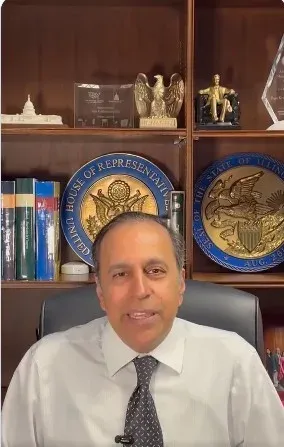
Congressman Raja Krishnamoorthi is leading a 256-cosponsor bipartisan resolution to designate July as Indian American Heritage Month.
A growing number of Indian American voters who supported President Donald Trump in 2024 are signalling they may cross party lines in the November 3 midterm elections, citing a surge in anti-Indian rhetoric within the conservative movement, according to new polling and community leaders in Washington.
What the Polling Shows
A recent survey commissioned by the advocacy group Indian American Impact found that a quarter of Indian Americans who voted for Trump in 2024 now plan to support Democrats in the midterms. Democrats led Republicans among likely Indian American voters at around 66 per cent, while nearly two-thirds of Independent South Asian voters described themselves as undecided.
A separate February survey by the Carnegie Endowment for International Peace found that seven in 10 Indian Americans disapproved of Trump's second-term performance. That same poll noted that only 46 per cent of Indian Americans identified as Democrats — down from 2020 — while about one-third had supported Trump in 2024, indicating the community's vote is genuinely in play.
Community Voices on the Shift
Chintan Patel, executive director of Indian American Impact, described the mood plainly. 'There are a large chunk of [Indian American] voters who are, for lack of a better word, having buyers remorse,' he said. 'That's something that is building across the community as we're talking about hate and discrimination.'
Anang Mittal, a longtime conservative strategist who previously worked for Senator Mitch McConnell, offered a candid assessment of Republican thinking. 'They decided there's no price to be paid when it comes to engaging in language that treats Indian immigrants as outsiders and not compatible with American culture,' Mittal said.
Anti-Indian Rhetoric and Incidents Fuelling the Shift
In Texas — home to the country's most expensive Senate race — the shift is reportedly visible on the ground. Rishi Bhutada, a Houston businessman and board member of the Hindu American Foundation, said: 'I've seen a few people who say they're just going to vote Democrat straight down the ballot, to send a message to the Republican Party that they're not going to tolerate it.'
Specific flashpoints have drawn community condemnation. Bo French, the Republican candidate for Texas Railroad Commissioner, posted remarks about South Asian fans at a University of Texas football game — a post that Governor Greg Abbott distanced himself from, stating it was 'not my message.' Conservative commentator Chris Rufo also hosted a podcast episode titled 'The Indian Question.'
Community leaders have further linked the broader online climate to recent incidents, including an alleged plot to attack a Hindu temple in Aurora, Illinois, and the stabbing of Sikh truck driver Gurvinder Singh in Wyoming. 'We could have been talking about a massive tragedy,' Patel said of the Illinois case.
Key Districts and Bipartisan Moves
Districts with significant Indian American populations include New Jersey's 7th and Pennsylvania's 1st, both identified as Democratic pick-up targets, as well as swing states Georgia and Michigan. An estimated 5.2 million Indian Americans live in the US, representing just over 1.5 per cent of the total population.
Amid the tensions, Indian American Congressman Raja Krishnamoorthi on Monday said he was leading 256 bipartisan co-sponsors in a resolution to designate July as Indian American Heritage Month. The Hindu American Foundation said it 'was proud to support this bipartisan resolution.'
Like most Americans, Indian Americans ranked cost of living and healthcare as their top issues — suggesting that while anti-Indian rhetoric has catalysed anger, bread-and-butter concerns remain central to how the community ultimately votes on November 3.
Point of View
Pennsylvania's 1st, and key precincts in Georgia and Michigan. The Carnegie data is the more telling number: Indian American Democratic identification has fallen since 2020, meaning this was a persuadable community Republicans were winning — and appear to be losing through self-inflicted rhetoric rather than policy disagreement. That is a different kind of problem to fix.
NationPress
27 Oct 2026
Frequently Asked Questions
Why are Indian American voters signalling a shift away from Republicans?
A rise in anti-Indian rhetoric within the conservative movement has prompted what advocates describe as buyer's remorse among Indian Americans who backed Trump in 2024. Flashpoints include a social media post by a Texas Republican candidate about South Asian fans and a podcast episode titled 'The Indian Question.'
What does the Indian American Impact poll show?
The survey found that 25% of Indian Americans who voted for Trump in 2024 now plan to vote Democrat in the November 3 midterms. Democrats led Republicans among likely Indian American voters at around 66%, while nearly two-thirds of Independent South Asian voters were undecided.
How large is the Indian American voting bloc in the US?
An estimated 5.2 million Indian Americans live in the United States, representing just over 1.5% of the total population. Their concentration in competitive districts in New Jersey, Pennsylvania, Georgia, and Michigan gives the community outsized electoral significance despite its relatively small national share.
What specific incidents have fuelled concern in the Indian American community?
Community leaders have cited an alleged plot to attack a Hindu temple in Aurora, Illinois, and the stabbing of Sikh truck driver Gurvinder Singh in Wyoming. Online rhetoric from Republican figures about South Asian communities has also drawn condemnation.
Which US districts have significant Indian American populations ahead of the midterms?
Districts with notable Indian American populations include New Jersey's 7th and Pennsylvania's 1st — both identified as Democratic pick-up targets — as well as swing states Georgia and Michigan, making the community's voting behaviour particularly consequential in close races.