Indian envoy reads Panchatantra to Vienna school children in 'Gurukul Diplomacy'
Synopsis
India's Ambassador to Austria took an ancient Sanskrit fable collection into a Viennese classroom — and the Embassy backed it with a German-language illustrated book and a podcast series narrated by a prominent Austrian storyteller. It is soft power with a very long shelf life, timed to a moment when India-Austria ties are at their warmest in four decades.
Key Takeaways
Ambassador Shambhu Kumaran read Panchatantra stories to school children in Vienna under the 'Gurukul Diplomacy' banner.
The Embassy of India in Austria has published a German-language illustrated edition of the Panchatantra, with illustrations by Austrian artist Klaus Pitter .
A video podcast series, 'Geschichten aus dem Panchatantra' , narrated in German by podcaster Thomas Brezina , was launched in June , drawing over 50 students .
The initiative is part of a collaboration with Stadt Wien and the 'Bounce Back' project in local schools.
The cultural push follows Austrian Chancellor Christian Stocker's visit to India in April — the first Austrian Chancellor's visit in four decades — and the conclusion of the India-EU Free Trade Agreement .
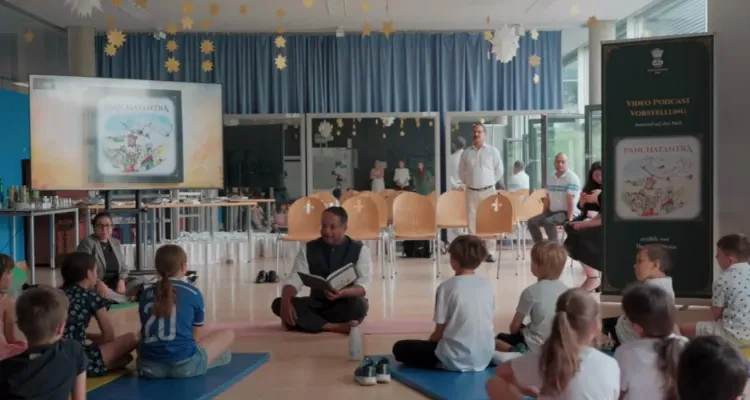
Indian Ambassador to Austria Shambhu Kumaran read aloud stories from the ancient Panchatantra to school children in Vienna, in an initiative the Embassy of India in Austria has dubbed 'Gurukul Diplomacy' — a cultural outreach effort that underscores the deepening people-to-people ties between India and Austria.
The Gurukul Diplomacy Initiative
The Embassy shared footage of the session on X, showing Ambassador Kumaran seated with a group of attentive children as he narrated the timeless fables. The children and the Ambassador also posed for photographs together. In its post, the Embassy described the event as 'Gurukul Diplomacy' — a term blending India's ancient teacher-student tradition with modern public diplomacy.
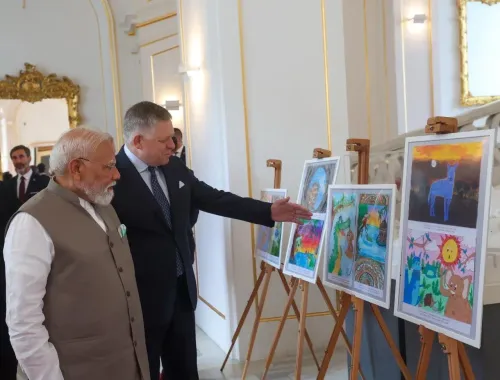
Alongside the reading session, the Embassy has published a German-language edition of the Panchatantra specifically for Austrian school children. The edition features colourful illustrations by Klaus Pitter, an Austrian cartoonist and illustrator, making the ancient Indian fables visually accessible to young European readers.
Video Podcast Series and School Collaborations
The in-person reading builds on a broader digital initiative launched earlier. In June, the Embassy rolled out the next chapter of 'Geschichten aus dem Panchatantra' — a video podcast series narrated in German by renowned Austrian podcaster Thomas Brezina. The launch brought together over 50 students from a Viennese school, where Ambassador Kumaran read selected stories and engaged in a lively interaction with the children, who reportedly shared their favourite characters and lessons from the tales.
The podcast series is part of a collaboration with Stadt Wien (the City of Vienna) and the 'Bounce Back' project, which works with local schools. The Embassy described the initiative as 'bringing the timeless wisdom of the Panchatantra to Austria through digital storytelling.'
Backdrop: India-Austria Relations
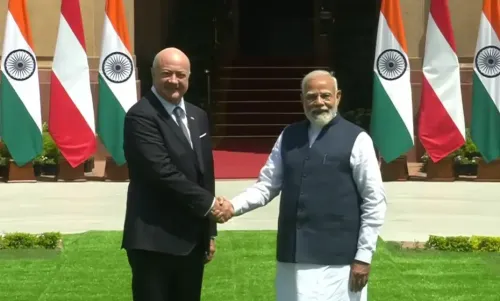
The cultural diplomacy effort comes amid a broader warming of ties between the two nations. In April, Austrian Chancellor Christian Stocker made an official visit to India — notably his first destination outside Europe after assuming office, and the first visit by an Austrian Chancellor to India in four decades. The visit also followed the conclusion of the historic India-EU Free Trade Agreement.
Prime Minister Narendra Modi, in a post on X following his talks with Chancellor Stocker, said the discussions covered 'ways to deepen cooperation in areas such as innovation, infrastructure and sustainability.' Modi expressed confidence that the India-Austria partnership will become 'even more innovation-centric and future-ready,' with sectors like defence, semiconductors, futuristic technologies, and startups identified as key areas of potential.
Significance of the Panchatantra Outreach
The Panchatantra, composed in Sanskrit roughly 2,000 years ago, is widely regarded as one of the world's oldest collections of moral fables and is considered a forerunner of Aesop's Fables in its global influence. Its translation into German for Austrian school children represents a soft-power move that complements the harder diplomatic and trade agenda being pursued at the governmental level. As India deepens its engagement with Europe, cultural initiatives like 'Gurukul Diplomacy' are increasingly being deployed as long-term relationship-building tools.
Point of View
But exporting a civilisational identity. Translating the Panchatantra into German and embedding it in Austrian school curricula through a podcast by a local celebrity narrator is a textbook soft-power move: it outsources credibility to a trusted local voice. The timing is not incidental. With the India-EU Free Trade Agreement signed and an Austrian Chancellor visiting India for the first time in four decades, New Delhi is clearly investing in the cultural layer of the relationship, knowing that trade agreements need public legitimacy to last. The real question is whether these classroom moments translate into durable goodwill, or remain well-photographed one-offs.
NationPress
1 Oct 2026
Frequently Asked Questions
What is 'Gurukul Diplomacy' by the Indian Embassy in Austria?
'Gurukul Diplomacy' is a cultural outreach initiative by the Embassy of India in Vienna, where Ambassador Shambhu Kumaran reads Panchatantra stories to Austrian school children. It is part of a broader effort that includes a German-language illustrated book and a video podcast series to introduce Indian fables to young European audiences.
What is 'Geschichten aus dem Panchatantra'?
'Geschichten aus dem Panchatantra' is a German-language video podcast series launched by the Embassy of India in Austria, narrated by renowned Austrian podcaster Thomas Brezina. It brings selected Panchatantra stories to Austrian children in their native language, and is produced in collaboration with Stadt Wien and the 'Bounce Back' school project.
Who illustrated the German edition of the Panchatantra for Austrian children?
The German-language edition of the Panchatantra published by the Embassy of India in Austria features colourful illustrations by Klaus Pitter, an Austrian cartoonist and illustrator. The book is designed to make the ancient Indian fables accessible and engaging for young readers in Austria.
How does the Panchatantra initiative connect to broader India-Austria ties?
The cultural initiative comes at a high point in India-Austria relations. Austrian Chancellor Christian Stocker visited India in April — the first such visit in four decades — and discussions covered cooperation in innovation, infrastructure, sustainability, defence, and semiconductors. PM Modi also noted the visit followed the landmark India-EU Free Trade Agreement.
What is the Panchatantra and why is it significant?
The Panchatantra is a collection of moral fables composed in Sanskrit approximately 2,000 years ago, widely regarded as one of the world's oldest and most influential story collections. Its narratives, featuring animals and humans, have been translated into over 50 languages and are considered a precursor to similar fable traditions across Europe and the Middle East.