'Austrian Chancellor Stocker Acknowledges India's Global Influence'
Synopsis
Austrian Chancellor Christian Stocker praised India's substantial role in international affairs, emphasizing its influential voice and the need for a rules-based order. His visit marks a pivotal moment in strengthening bilateral ties and enhancing trade and security cooperation between Austria and India.
Key Takeaways
India's voice holds substantial influence in global discussions.
Focus on a rules-based order rather than power-centric policies.
Significant growth in bilateral trade, now at approximately 3 billion euros .
Future cooperation in security and defense through strategic dialogue.
Enhanced technological collaboration as a priority for both nations.
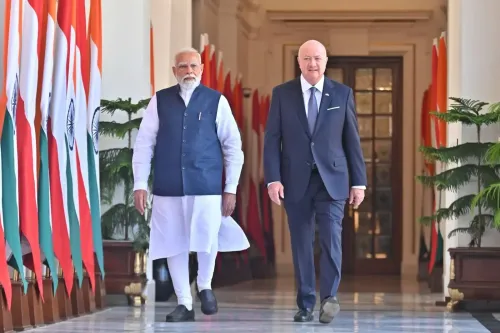
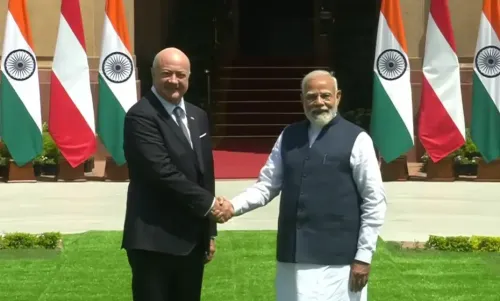
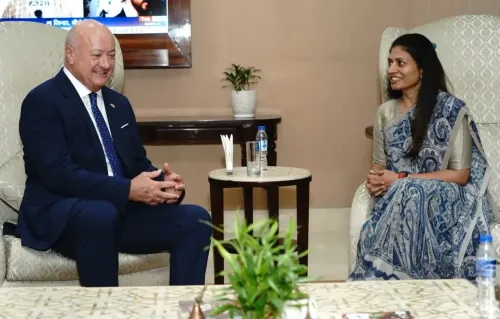
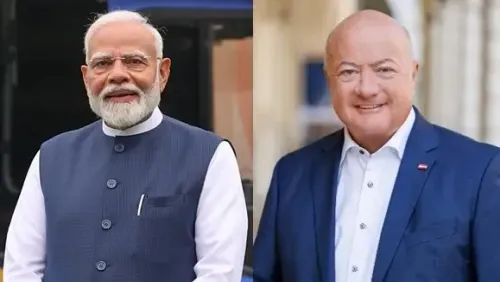
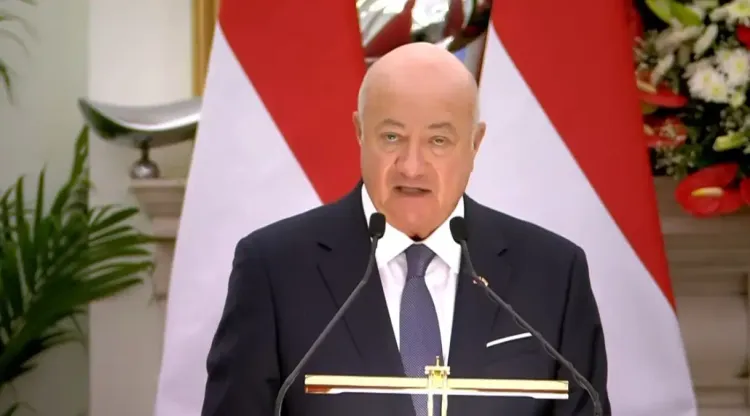
New Delhi, April 16 (NationPress) Austrian Chancellor Christian Stocker praised India's significant influence both bilaterally and within global forums, asserting that New Delhi's voice holds substantial weight. He emphasized that he and Prime Minister Narendra Modi are united in the belief that lasting peace in conflicts can only be achieved through dialogue.
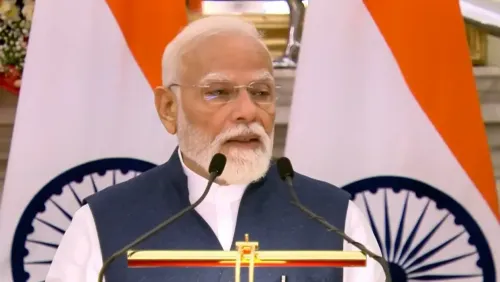
During a joint press conference with PM Modi after their discussions in New Delhi on Thursday, Stocker remarked that they both advocate for a rules-based international order, rejecting a world where power dictates justice.
Stocker noted, "We are in a period of geopolitical turmoil and transformation. Power dynamics are evolving, alliances are forming, and conflicts are increasingly intricate. In such times, stability, trust, and dependable partnerships are not mere concepts but essential strategies. This is why India stands as a dependable ally for Austria. As the world's largest democracy, we share essential interests and values. Given the intensifying geopolitical challenges, such alliances have become even more crucial. Together, we represent a global framework where we can coexist in freedom and security."
He further asserted, "We endorse a world order based on rules and not on the principle that might makes right. PM Modi and I concur that the resolution of conflicts can only be facilitated through negotiations, and India's voice is influential in both bilateral discussions and international platforms. In a thriving democracy, legislative bodies play a vital role. We have significant priorities across various sectors, and we believe that dynamism in technological collaboration will lead to deeper connections between us," he added.
Commending India's robust growth, he stated, "India boasts an impressive annual growth rate of around 7%, positioning itself as one of the most dynamic global markets and a crucial strategic ally for us. Austrian enterprises are set to gain more from this momentum moving forward."
He highlighted the significance of the Free Trade Agreement (FTA) between India and the EU, which is expected to lower trade barriers and foster new avenues for exports, investments, and industrial collaboration. He deemed the India-EU FTA as critical amid current geopolitical challenges.
Describing his visit to New Delhi as a landmark for bilateral relations, he expressed, "This visit marks a significant chapter in Austrian-Indian ties, and I am honored to be the first federal Chancellor to visit India in over 40 years. PM Modi, during your visit to Vienna in summer 2024, we can confidently state that our diplomatic relations over the past 75 years have never been stronger, and we are committed to building on this positive momentum. I sincerely thank you, PM, for your invitation, warm welcome, and hospitality."
"However, I am not here alone; I am joined by 60 top business leaders from Austria, representing the elite of our business community. This delegation is led by our Minister for Economic Affairs and the Vice President of the Austrian Economic Chamber. Our close political ties are beneficial for our business environment," he added.
He identified India as "one of the most crucial trading partners outside the EU for Austria," highlighting that bilateral trade has surged to approximately three billion euros over the last decade. About 160 Austrian companies are engaged in the Indian market, focusing on key frontier technologies such as semiconductor production, renewable energy, automotive, and infrastructure.
He announced that India and Austria will enhance their collaboration in security and defense through strategic dialogue.
He stated, "In terms of our enterprises, we aim to foster good ideas that can be swiftly implemented, ensuring investments are made quickly and decisions are reached efficiently. Regarding food security, we seek clear standards. We believe in collaboration and knowledge transfer, as reliable quality strengthens markets and builds trust. We will intensify our cooperation in security and defense through strategic dialogue."
"In combating terrorism, it is evident that security transcends our borders. This issue must be addressed at a global level. All of this indicates that our partnership spans multiple domains, including economic vitality, academic and scientific collaboration, and shared responsibilities in security policy," he concluded.
Point of View
Chancellor Stocker's remarks underscore the growing importance of India in global diplomacy and trade. This visit not only strengthens ties with Austria but also highlights India's role as a key player in addressing international challenges. The emphasis on negotiation over might reflects a commitment to diplomacy in an increasingly complex world.
NationPress
16 Sept 2026
Frequently Asked Questions
What did Chancellor Stocker say about India's influence?
Chancellor Stocker emphasized that India's voice carries significant weight in international forums and bilateral discussions.
What is the significance of the India-EU Free Trade Agreement?
The India-EU FTA aims to lower trade barriers, creating new opportunities for exports and investments between India and the EU.
How does Stocker view the current global geopolitical climate?
He described it as an age of upheaval, where stability and reliable partnerships are essential.
What areas of cooperation were highlighted between Austria and India?
Cooperation will be strengthened in trade, technology, security, and defense.
Why is this visit considered a milestone?
It marks the first visit of an Austrian federal Chancellor to India in over 40 years, reflecting the strengthening of bilateral relations.