India faced 40 years of Pakistan-backed terror, IWT move calibrated: Report
Synopsis
A report in British newspaper Asian Lite argues that India's suspension of the Indus Waters Treaty is not an act of aggression but a legally grounded, calibrated response to four decades of Pakistan-sponsored terrorism — and that Western pressure on New Delhi misreads where the real non-proliferation threat lies.
Key Takeaways
India placed the Indus Waters Treaty (IWT) in abeyance following the April 2025 Pahalgam terror attack by a Pakistan-backed group.
A report in British newspaper Asian Lite calls the move a calibrated, legally grounded response under Articles 60 and 62 of the Vienna Convention.
The US Congressional Research Service documented at least 15 terror outfits on Pakistani soil as of March 2026 , 12 of them US-designated FTOs.
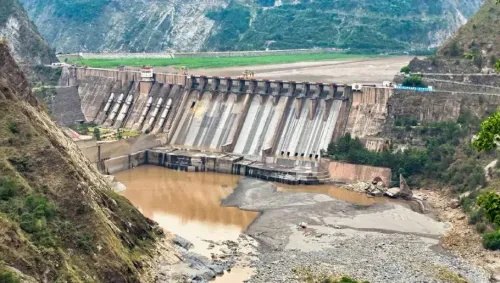
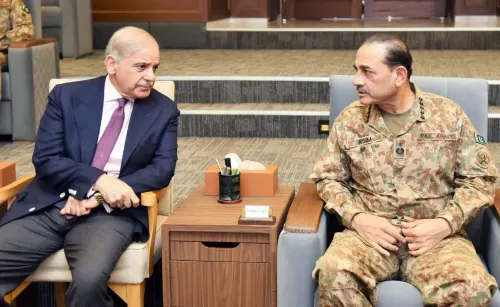
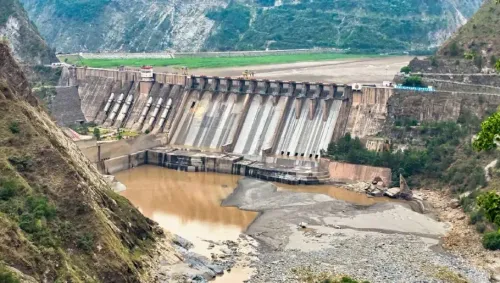
Pakistani Army Chief General Asim Munir threatened on 10 August 2025 to destroy Indian dams with ten missiles and use nuclear weapons.
PM Modi declared from the Red Fort on 15 August 2025 that "blood and water cannot flow together" — signalling zero tolerance for nuclear blackmail.
India's decision to place the Indus Waters Treaty (IWT) in abeyance following the April 2025 Pahalgam terror attack is widely viewed as a calibrated and measured response — one of the least disruptive tools available within the global order, according to a report published on Saturday, 9 May. The report, carried by British newspaper Asian Lite, argues that India's action is legally grounded and proportionate given four decades of Pakistan-backed terrorist violence directed at Indian soil.
Four Decades of Non-State Violence
According to the report, Pakistan has systematically deployed non-state violence as a strategic alternative to conventional military capability against India over the past 40 years. The report cited findings by the United States Congressional Research Service from March 2026, which documented at least 15 terrorist outfits operating from Pakistani soil — 12 of them designated as Foreign Terrorist Organisations (FTOs) by the United States.
The Resistance Front (TRF), which claimed responsibility for the Pahalgam terror attack, is the most recent addition to this list. The US State Department designated TRF on 17 July 2025 as a proxy of the terror group Lashkar-e-Taiba.
Legal Basis Under International Law
The report noted that Western international lawyers familiar with Articles 60 and 62 of the Vienna Convention on the Law of Treaties — covering material breach and fundamental change of circumstances — should recognise the weight of India's position. It argued that Pakistan's breach is not merely of the treaty's water-sharing clauses, but of a deeper customary law obligation.
Point of View
The diplomatic fallout would have been immediate. The real test for Western non-proliferation credibility is whether Rawalpindi's behaviour draws the same scrutiny as New Delhi's treaty response.
NationPress
22 Sept 2026
Frequently Asked Questions
Why did India suspend the Indus Waters Treaty?
India placed the Indus Waters Treaty in abeyance following the April 2025 Pahalgam terror attack, carried out by The Resistance Front (TRF), a proxy of Lashkar-e-Taiba. The move is described as a calibrated response to four decades of Pakistan-backed terrorist violence directed at Indian territory.
What is The Resistance Front (TRF) and why was it designated?
The Resistance Front (TRF) is a terror group that claimed the April 2025 Pahalgam attack. The US State Department designated it a Foreign Terrorist Organisation on 17 July 2025, identifying it as a proxy of Lashkar-e-Taiba operating from Pakistani soil.
What did Pakistani Army Chief Asim Munir say about India?
On 10 August 2025, Pakistani Army Chief General Asim Munir told a diaspora gathering in Tampa, Florida, that Pakistan would destroy any future Indian dam with ten missiles and was ready to take half the world down with its nuclear weapons. The report describes this as an open conflation of treaty grievance and nuclear threat, delivered on American soil.
What is India's legal basis for suspending the IWT?
India's legal position draws on Articles 60 and 62 of the Vienna Convention on the Law of Treaties, covering material breach and fundamental change of circumstances. The report also cites the International Court of Justice's Corfu Channel and Nicaragua jurisprudence, which obliges states not to allow their territory to be used for acts contrary to the rights of other states.
How many terror groups operate from Pakistani soil according to US findings?
The US Congressional Research Service, in findings from March 2026, documented at least 15 terrorist outfits operating from Pakistani soil, 12 of which are designated as Foreign Terrorist Organisations by the United States.