Is India Advancing a Trust-Centric AI Governance Vision?
Synopsis
India is leading the way in AI governance with a focus on trust, innovation, and public safety. Principal Scientific Adviser Ajay Kumar Sood emphasizes a balanced approach that promotes inclusivity and adapts to evolving technologies. The nation aims to democratize AI resources and engage developing countries in shaping a sustainable future.
Key Takeaways
Trust-based AI governance prioritizes inclusion and innovation.
AI is a core element of national economic strategy.
IndiaAI Mission aims to democratize access to AI resources.
Significant investments in AI education and global standard-setting.
Focus on shared global vision for sustainable development.
Washington, Jan 31 (NationPress) India is embracing a trust-centric strategy for the governance of artificial intelligence, focusing on inclusion, innovation, and protection, as opposed to strict regulations, revealed the country’s leading scientific adviser during a virtual address to a think-tank gathering.
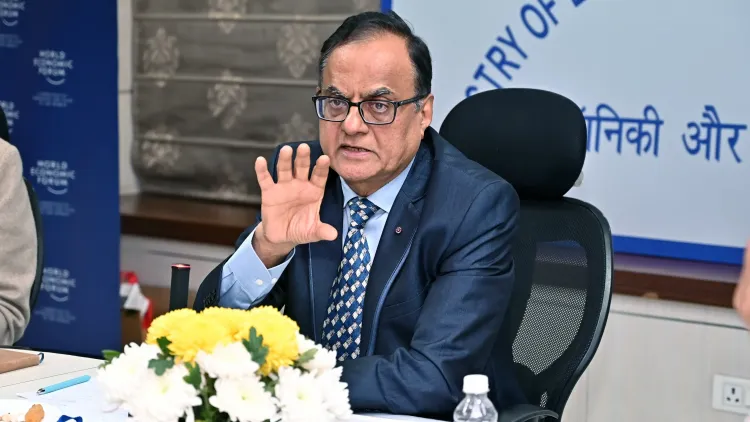
Speaking from New Delhi, Principal Scientific Adviser Ajay Kumar Sood informed attendees at a CSIS conference that the governance of AI has emerged as a fundamental aspect of national economic and strategic planning.
“AI has transcended mere isolated enterprise applications,” Sood stated. “It is now integrated across various sectors, forming the digital backbone of economies.
Sood highlighted the swift increase in global AI adoption, escalating investments in generative AI, and the growing energy requirements of data centers.
“These developments indicate that AI governance is no longer a marginal policy domain,” he emphasized. “It has become integral to economic strategy, public trust, and sustainable growth,” he added.
Sood explained that India’s approach prioritizes safety, accountability, transparency, and inclusivity, while also remaining adaptable to encourage innovation.
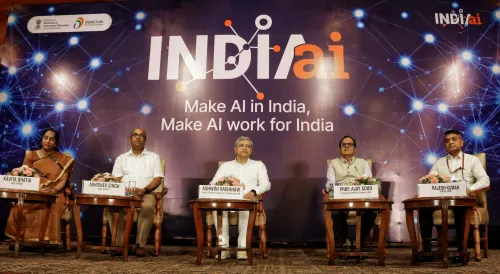
The implementation of India’s AI policy is underway through the IndiaAI Mission, which was launched in 2024 and encompasses shared computing access, unified data platforms, indigenous model creation, and workforce training.
He mentioned that India has made subsidized high-performance computing accessible to startups, researchers, and academic institutions, which has significantly lowered costs compared to international standards.
The national AI data platform features thousands of datasets and models across various sectors, fostering domestic innovation.
India is also committed to enhancing AI education and establishing global standards, including participation in international AI standards organizations, according to Sood.
He pointed out that India recently published a National AI Governance Report, which outlines a “techno-legal” framework that merges legal oversight with technical solutions.
“This facilitates large-scale innovation while managing risks,” he remarked.
Looking forward to the upcoming AI Impact Summit, Sood said India aspires to advocate for a shared global vision where AI acts as a universal catalyst for development.
“The emphasis will be on democratizing access to essential AI resources such as computing power, data, and foundational models, ensuring these resources are not monopolized by a select few geographies or corporations, enabling countries to create context-specific solutions for their societies, languages, and public systems,” Sood stated.
He noted that the summit will also strive for advancements in global governance, sustainability, and safety, ensuring that developing nations are engaged participants rather than mere consumers of AI.
“Success will not solely be measured by capability,” Sood concluded. “It will depend on whether that capability translates into widely shared public benefits.”
Point of View
It is evident that India is strategically positioning itself at the forefront of AI governance. The emphasis on trust, safety, and innovation aligns with the global movement towards sustainable development. As we navigate this technological frontier, India's proactive measures to include diverse voices will be crucial for shaping a responsible AI landscape.
NationPress
29 Sept 2026
Frequently Asked Questions
What is the main focus of India's AI governance?
India's AI governance centers on a trust-based approach that prioritizes inclusion, innovation, and safety, rather than rigid regulations.
How is India implementing its AI policy?
The AI policy is being implemented through the IndiaAI Mission, which includes initiatives for shared computing access, unified data platforms, and workforce training.
What resources are available for AI innovation in India?
India provides subsidized high-performance computing resources to startups, researchers, and universities, significantly lowering costs for innovation.
What does the National AI Governance Report entail?
The report outlines a 'techno-legal' approach that combines legal oversight with technical solutions to foster innovation while managing risks.
How does India plan to engage developing countries in AI?
India aims to democratize access to AI resources, ensuring developing countries can actively participate in AI development rather than just consuming it.