Iran strikes US bases in UAE, Kuwait with drones and missiles
Synopsis
Iran has directly struck US military installations on the soil of two Gulf allies — Kuwait and the UAE — using missiles and kamikaze drones, in what Tehran frames as retaliation for American strikes on Iranian targets. With Kuwait formally invoking the UN Charter and US President Trump in direct contact with the UAE's president, this confrontation has moved well beyond proxy skirmishes into open state-on-state military action.
Key Takeaways
Iran's Army confirmed missile and drone strikes on US military bases in the UAE and Kuwait on 3 September .
Targets included the Ahmad al-Jaber Air Base in Kuwait and the Al Minhad Air Base in the UAE; Iran claimed damage to communications systems and a fighter aircraft hangar.
Iran described the strikes as retaliation for US attacks that killed Iranian military personnel and civilians .
Kuwait's Foreign Ministry condemned the attacks as a violation of its sovereignty and a breach of UN Security Council Resolution 2817 .
US President Donald Trump and UAE President Sheikh Mohamed bin Zayed Al Nahyan spoke by phone on Thursday to discuss regional developments.
US CENTCOM had on Wednesday confirmed its own wave of strikes against Iranian military targets, citing IRGC attacks on commercial shipping in the Strait of Hormuz .
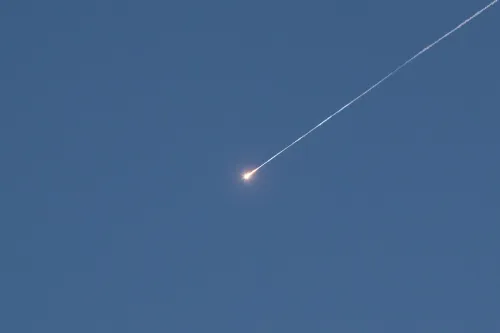
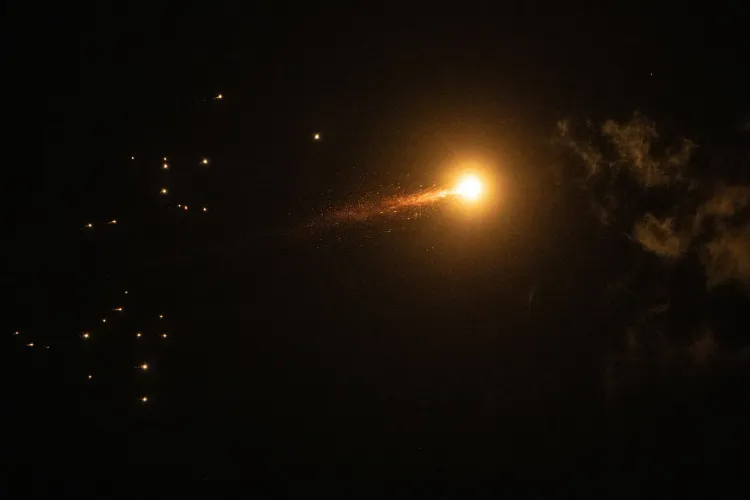
Iran's Army announced on Thursday, 3 September that its forces had launched missile and kamikaze drone strikes against US military bases in the United Arab Emirates (UAE) and Kuwait, marking a sharp escalation in direct military confrontation between Tehran and Washington in the Middle East. The strikes, confirmed in an official statement on the Iranian Army's website, were described as retaliation for what Tehran called US attacks that killed Iranian military personnel and civilians.
What Iran Says It Targeted
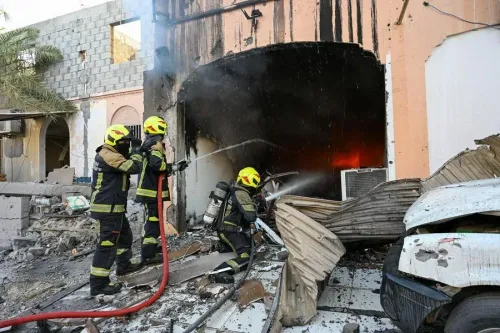
According to the Iranian Army's statement, its forces targeted the US Army's satellite communications systems, equipment warehouses, and a fighter aircraft hangar at the Ahmad al-Jaber Air Base in Kuwait. Iran claimed the strikes caused confirmed damage to the communications systems and the hangar.
Separately, Iranian forces reportedly struck US troops and radar systems at the Al Minhad Air Base in the UAE. Tehran warned that its responses to any further US military action would be 'harsh and devastating' and would continue 'until achieving the ultimate victory and punishing the aggressor,' according to the army's statement.
How the Confrontation Escalated
The Iranian strikes follow a statement by US Central Command (CENTCOM), which said on Wednesday in a post on social media platform X that its forces had 'successfully completed a wave of strikes against Iranian military targets,' citing what it described as 'recent attempted attacks by the Islamic Revolutionary Guard Corps (IRGC) against commercial shipping in the Strait of Hormuz and against American service members.'
Iran responded by attacking US bases and assets across multiple countries, including Jordan, Kuwait, Bahrain, Iraq's semi-autonomous Kurdistan region, and the UAE. This represents one of the broadest Iranian military operations against US installations in the region in recent memory.
Kuwait's Condemnation and Legal Position
Kuwait on Thursday formally condemned what it described as repeated Iranian attacks on its territory. In a statement posted on X, the Kuwaiti Foreign Ministry said the latest strike — carried out at dawn — posed a 'direct threat' to the country's security and stability. The ministry characterised the attacks as a 'flagrant violation' of Kuwait's sovereignty and a 'grave breach' of international law, the UN Charter, and UN Security Council Resolution 2817.
Kuwait described the continued attacks as a 'dangerous escalation' that undermines diplomatic efforts to reduce regional tensions, and reserved its full right to take 'all necessary measures' to defend its territory and vital installations.
UAE-US Diplomatic Contact
Also on Thursday, UAE President Sheikh Mohamed bin Zayed Al Nahyan received a phone call from US President Donald Trump, during which the two leaders discussed bilateral cooperation and regional developments, according to the Emirates News Agency (WAM). They exchanged views on issues of common concern, particularly ongoing developments in the Middle East and efforts to address them, WAM reported.
The call signals that Washington and Abu Dhabi are in active coordination as the situation continues to deteriorate. With Iranian strikes now confirmed on the soil of two Gulf Cooperation Council members, the trajectory of this confrontation will be closely watched by regional governments and global energy markets alike.
Point of View
Yet share a neighbourhood — and in some cases economic ties — with Iran. Every Iranian strike on their soil narrows their diplomatic room and raises the cost of inaction.
NationPress
19 Oct 2026
Frequently Asked Questions
What did Iran strike in Kuwait and the UAE?
Iran's Army said it struck the Ahmad al-Jaber Air Base in Kuwait, targeting US satellite communications systems, equipment warehouses, and a fighter aircraft hangar, and the Al Minhad Air Base in the UAE, targeting US troops and radar systems. Iran claimed the strikes caused damage to the communications systems and the hangar.
Why did Iran attack US bases in Kuwait and the UAE?
Iran said the strikes were in retaliation for US military attacks that killed Iranian military personnel and civilians. The action followed a US CENTCOM announcement on Wednesday that American forces had completed a wave of strikes against Iranian military targets over IRGC activity in the Strait of Hormuz.
How has Kuwait responded to the Iranian strikes?
Kuwait formally condemned the attacks, calling them a flagrant violation of its sovereignty and a grave breach of international law and the UN Charter. The Kuwaiti Foreign Ministry described the strikes as a 'dangerous escalation' and reserved its right to take all necessary measures to defend its territory.
What is the significance of the Trump-UAE presidential call on Thursday?
US President Donald Trump spoke with UAE President Sheikh Mohamed bin Zayed Al Nahyan on Thursday to discuss bilateral cooperation and regional developments, signalling active diplomatic coordination between Washington and Abu Dhabi as Iranian strikes hit UAE soil. The call was confirmed by the Emirates News Agency.
Which other countries did Iran target in this round of strikes?
Beyond Kuwait and the UAE, Iran reportedly struck US bases and assets in Jordan, Bahrain, and Iraq's semi-autonomous Kurdistan region as part of the same retaliatory operation, making it one of the broadest Iranian military actions against US installations in the region.