Iran strikes US bases in Bahrain, Kuwait, Jordan after fresh US attacks
Synopsis
Iran's IRGC launched sweeping missile and drone strikes on US military bases across Bahrain, Kuwait, and Jordan on 21 July — and then went further, hitting an Amazon data centre in Bahrain and stopping two oil tankers in the Strait of Hormuz. Tehran has signalled these are not the last strikes, warning of broader operations ahead as the US-Iran military exchange enters a dangerous new phase.
Key Takeaways
Iran's IRGC and regular army launched missile and drone strikes on US military bases in Bahrain , Kuwait , and Jordan on 21 July .
Specific targets included Camp Arifjan , Ahmad al-Jaber Air Base , and Shaikh Isa Air Base .
The IRGC also claimed a strike on an Amazon data centre in Bahrain in response to the US attack on Iran's Darkhovin Nuclear Power Plant .
Two oil tankers caught fire and were stopped by Iranian forces in the Strait of Hormuz ; Iran has declared the strait closed.
The US Central Command (CENTCOM) confirmed earlier strikes on Iran targeting command centres, missile sites, and air defence systems.
The IRGC warned of broader missile and drone operations against US targets in the region to follow.
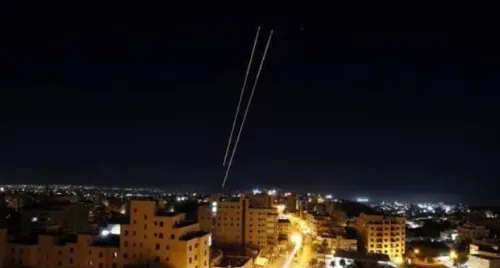
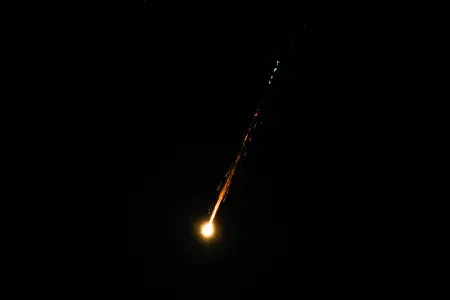
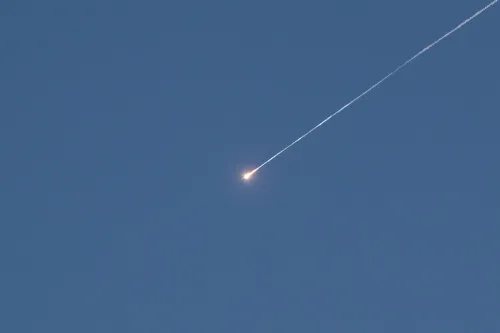
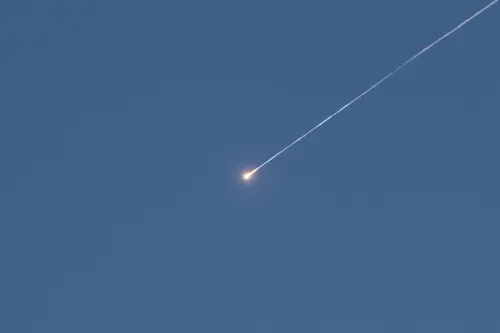
Iran's armed forces on Tuesday, 21 July announced they had launched coordinated missile and drone strikes against US military bases, assets, and infrastructure across Bahrain, Kuwait, and Jordan, in what Tehran described as direct retaliation for the latest round of American strikes on Iranian territory. The escalation marks one of the most expansive Iranian military actions against US positions in the region in recent memory.
What Iran Targeted
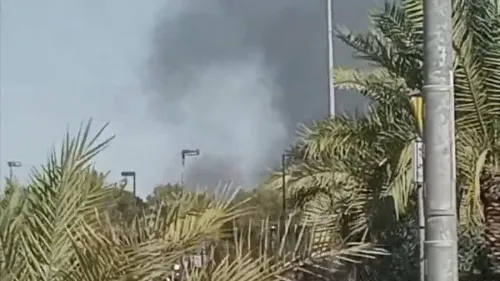
Iran's Islamic Revolutionary Guard Corps (IRGC) said its aerospace forces struck US air defence systems, radar facilities, communications infrastructure, and other military assets in Bahrain and Kuwait, as well as US military facilities in Jordan, according to statements carried by the IRGC's official outlet Sepah News. Separately, Iran's regular army said it had targeted several specific installations, including Camp Arifjan, Ahmad al-Jaber Air Base, and Shaikh Isa Air Base.
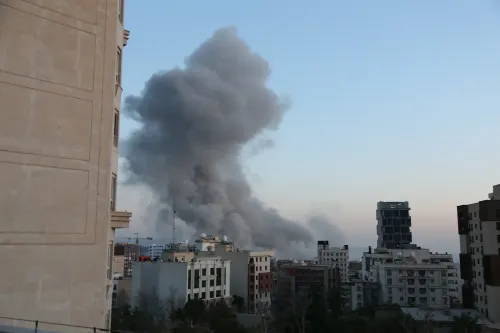
In a notable escalation of targets, the IRGC also claimed it struck an Amazon data centre in Bahrain, saying the attack was in direct response to a US strike on the under-construction Darkhovin Nuclear Power Plant in Iran's southwestern Khuzestan province. The targeting of civilian commercial infrastructure represents a significant broadening of the conflict's scope.
US Military Action That Triggered the Strikes
Early on Tuesday, the US Central Command (CENTCOM) confirmed it had completed another round of strikes against Iran, targeting military command centres, missile and drone launch sites, maritime capabilities, and air defence systems. CENTCOM said the operations were aimed at degrading Iran's ability to continue attacking commercial vessels transiting the Strait of Hormuz. Iran's retaliatory strikes followed within hours, underscoring the tit-for-tat cycle that has come to define the current confrontation.
Strait of Hormuz: Oil Tankers Targeted
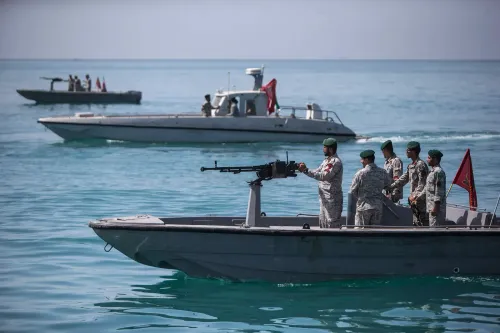
The IRGC separately announced that two oil tankers attempting to pass through the Strait of Hormuz via what it called the 'dangerous' southern route had caught fire following explosions and were stopped by Iranian naval forces. The IRGC warned shipping companies against using the route and reiterated that the Strait of Hormuz would remain closed as long as the United States continued what it termed 'malicious actions' in the region.
The Strait of Hormuz is one of the world's most critical energy chokepoints, with roughly 20% of global oil supply passing through it. Any sustained closure would have severe consequences for global energy markets and supply chains.
Context and What Comes Next
This comes amid a rapidly intensifying military exchange between Iran and the United States that has drawn in multiple Gulf nations as host countries for US military installations. The IRGC stated explicitly that Tuesday's strikes were intended to 'pave the way for broader missile and drone operations' against US military targets in the region — signalling that further escalation is being planned rather than ruled out.
Regional governments in Bahrain, Kuwait, and Jordan have not yet issued official responses to the Iranian strikes on installations within their borders. International observers and energy markets will be watching closely for any diplomatic or military response from Washington and its Gulf allies in the hours and days ahead.
Point of View
The IRGC's explicit statement that Tuesday's strikes are meant to 'pave the way for broader operations' suggests Tehran is not seeking de-escalation but escalation on its own terms. The Strait of Hormuz closure threat, if sustained, is the real pressure point: it is less a military tactic and more an economic weapon aimed at forcing Gulf states and Western powers to the table. Washington's response in the next 48 hours will determine whether this cycle stabilises or spirals.
NationPress
20 Oct 2026
Frequently Asked Questions
What did Iran strike on 21 July in Bahrain, Kuwait, and Jordan?
Iran's IRGC and army launched missile and drone strikes on US air defence systems, radar facilities, communications infrastructure, and military bases including Camp Arifjan, Ahmad al-Jaber Air Base, and Shaikh Isa Air Base across Bahrain, Kuwait, and Jordan. The IRGC also claimed a strike on an Amazon data centre in Bahrain.
Why did Iran launch these strikes?
Iran said the strikes were in retaliation for the latest round of US military attacks on Iranian territory, including a strike on the under-construction Darkhovin Nuclear Power Plant in Khuzestan province. The IRGC framed the attacks as a direct response to what it called 'malicious actions' by the United States.
What is happening in the Strait of Hormuz?
The IRGC announced that two oil tankers were stopped by Iranian naval forces after catching fire following explosions in the Strait of Hormuz. Iran has declared the strait closed and warned shipping companies against using the southern route, threatening further action.
What did US Central Command say about its own strikes on Iran?
CENTCOM confirmed it had completed another round of strikes against Iran early on Tuesday, targeting military command centres, missile and drone launch sites, maritime capabilities, and air defence systems. The stated aim was to degrade Iran's ability to attack commercial vessels in the Strait of Hormuz.
Could there be further Iranian military action?
Yes, according to Iran's own statements. The IRGC explicitly said Tuesday's strikes were intended to pave the way for broader missile and drone operations against US military targets in the region, signalling that further escalation is being actively planned.