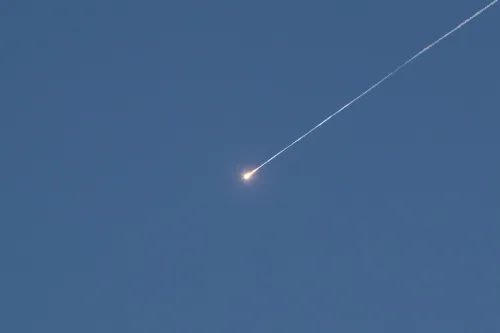
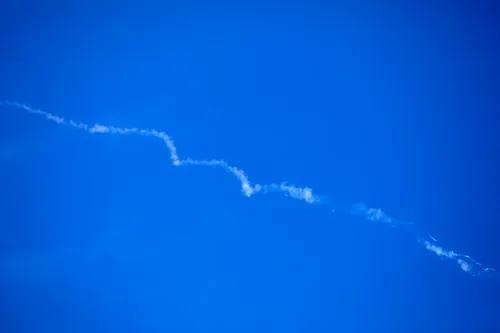
Iran IRGC strikes US base in Jordan over tanker attacks, 18 of 20 missiles downed
Synopsis
Iran's IRGC fired 20 ballistic missiles at a US air base in Jordan — targeting F-35, F-16, and F-15 hangars — after the US destroyed five Iranian tankers in the Gulf of Oman. Jordan's air defences intercepted 18 of them. The tit-for-tat exchange marks one of the most direct US-Iran military confrontations in years, with both sides now striking each other's military assets rather than proxies.
Key Takeaways
Iran's IRGC struck Al-Azraq Air Base in Jordan on 9 September , targeting hangars for US F-35, F-16, and F-15 jets.
Jordan's air defence intercepted 18 of 20 Iranian ballistic missiles; the remaining two fell in unpopulated areas with no casualties.
CENTCOM destroyed five Iranian crude oil tankers — M/T Kaviz, M/T Charminar, M/T Horizon 1, M/T Riesco (Gulf of Oman), and M/T Derya (near Kharg Island) — after Iran twice targeted a US warship.
The US warship evaded both Iranian attacks; no US personnel were injured and no tanker crew casualties were reported.
CENTCOM described the tankers as part of a multibillion-dollar IRGC network financing Iranian military operations and regional proxies.
The tanker strikes were the second such US operation in four days , signalling sustained pressure on Iran's oil export infrastructure.
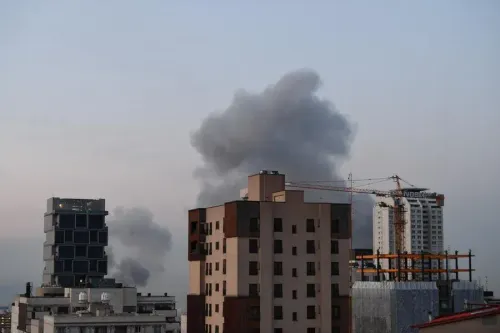
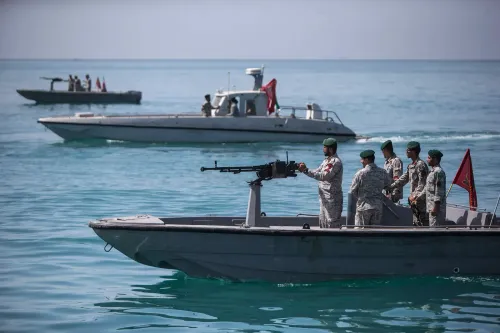
Iran's Islamic Revolutionary Guard Corps (IRGC) announced in the early hours of Wednesday, 9 September that its aerospace forces had struck a US air base in Jordan in direct retaliation for what Tehran described as American 'aggressive' attacks on Iranian crude oil tankers. The strike marks one of the most significant direct military exchanges between Iran and the United States in recent memory.
What the IRGC Struck
According to an IRGC statement, its forces targeted Al-Azraq Air Base in Jordan, specifically hitting a hangar used for the maintenance, repair, preparation, and deployment of US Army F-35, F-16, and F-15 fighter jets, as well as a shelter housing US fighter aircraft. The IRGC claimed the strikes inflicted 'heavy damage on the enemy.'
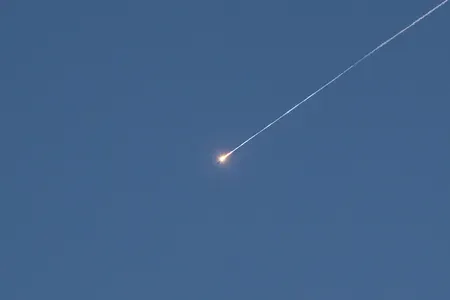
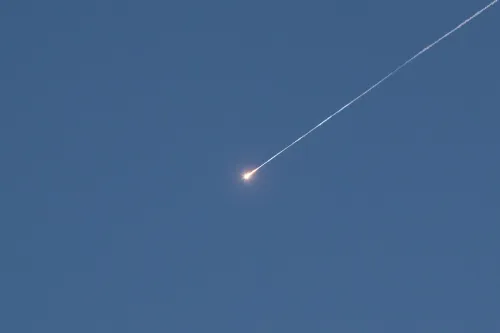
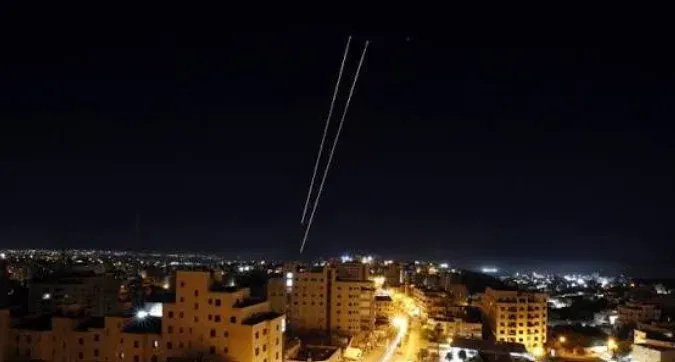
Jordan's military, however, said its air defence systems successfully intercepted and destroyed 18 of the 20 Iranian ballistic missiles fired. The remaining two missiles reportedly fell in unpopulated areas, causing no casualties, according to Jordanian authorities.
The US Tanker Strikes That Triggered the Response
The Iranian strike came in response to a major US Central Command (CENTCOM) operation carried out on Tuesday in the Gulf of Oman and near Iran's Kharg Island — a critical hub for Iranian oil exports. CENTCOM stated that US forces destroyed five Iranian crude oil tankers after the IRGC twice targeted an American warship with ballistic missiles over the preceding two days.
CENTCOM confirmed the American warship successfully evaded both attempted attacks, and no US personnel were injured. Before destroying the vessels, US forces reportedly instructed crews to abandon ship, and the military did not report any casualties among the tanker crews.
The tankers destroyed in the Gulf of Oman were identified as M/T Kaviz, M/T Charminar, M/T Horizon 1, and M/T Riesco. A fifth vessel, M/T Derya, was struck near Kharg Island. CENTCOM described all five as IRGC-operated crude carriers forming part of a multibillion-dollar network used to finance the Iranian military and its regional proxies.
Gaps in the Official Account
Notably, the US military did not disclose the identity of the American warship Iran allegedly targeted, the precise locations of the attempted attacks, or the number of ballistic missiles fired by the IRGC in those initial strikes. This information gap leaves key details of the escalation sequence unverified by independent sources.
The tanker operation marked the second US strike on Iranian oil vessels in four days, pointing to a pattern of sustained pressure on Iran's oil export infrastructure rather than a one-off response.
Broader Context and What Comes Next
The exchange represents a sharp escalation in the long-running US-Iran standoff in the Gulf region, which has periodically flared over oil shipping routes, sanctions enforcement, and proxy conflicts. Strikes on sovereign military infrastructure — even by missile — cross thresholds that previous confrontations, including tanker seizures and drone incidents, had not. Analysts will be watching whether Jordan, a US ally that absorbed the Iranian missile barrage, formally lodges a diplomatic protest or seeks further military coordination with Washington. The international oil market and shipping insurance rates in the Gulf of Oman are also expected to react to the heightened risk environment.
Point of View
Not just proxies or commercial shipping. The IRGC's decision to target a Jordanian base hosting US aircraft pulls a formal US treaty partner into the line of fire — a significant escalation in regional geometry. Washington's silence on which warship was targeted and how many Iranian missiles were fired in the initial attack suggests a deliberate information management strategy, but it also leaves the official justification for destroying five tankers only partially verifiable. The pattern of a second tanker operation within four days points to a pre-planned campaign rather than reactive self-defence — a framing the US has not yet addressed publicly.
NationPress
24 Oct 2026
Frequently Asked Questions
Why did Iran strike the US air base in Jordan?
Iran's IRGC said the strike on Al-Azraq Air Base was direct retaliation for US destruction of five Iranian crude oil tankers in the Gulf of Oman and near Kharg Island. Tehran characterised the US tanker strikes as 'aggressive' attacks on Iranian assets.
What happened to the Iranian missiles fired at Jordan?
Jordan's military said its air defence systems intercepted and destroyed 18 of the 20 ballistic missiles fired by Iran. The remaining two fell in unpopulated areas and caused no casualties, according to Jordanian authorities.
Which Iranian tankers did the US destroy and where?
CENTCOM identified four tankers destroyed in the Gulf of Oman as M/T Kaviz, M/T Charminar, M/T Horizon 1, and M/T Riesco, with a fifth vessel, M/T Derya, struck near Iran's Kharg Island. The US said crews were ordered to abandon ship before the strikes and no tanker crew casualties were reported.
Was any US military personnel injured in the Iranian attacks?
No. CENTCOM confirmed the American warship successfully evaded both Iranian ballistic missile attacks that preceded the tanker strikes, and no US personnel were reported injured in any of the exchanges.
How significant is this escalation between the US and Iran?
The exchange is among the most direct US-Iran military confrontations in recent years, with both sides striking each other's military infrastructure rather than relying on proxies. The involvement of Jordan — a US ally — as a target of Iranian missiles adds a new dimension to the regional standoff.