US destroys 5 Iranian oil tankers near Kharg Island after IRGC missile strikes

Synopsis
The US has now destroyed eight Iranian oil tankers in under a week — the latest five struck near Kharg Island and in the Gulf of Oman after the IRGC twice fired ballistic missiles at an American warship. With operations now reaching Iran's most critical crude export terminal, the confrontation has entered a new and potentially market-moving phase.
Key Takeaways
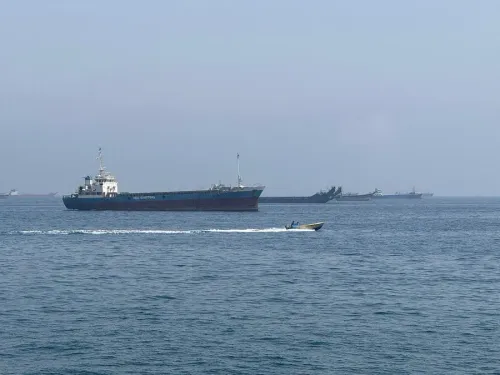
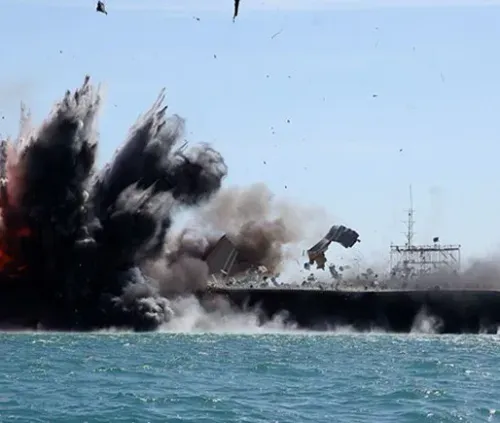
The US military destroyed five Iranian crude oil tankers on Tuesday in the Gulf of Oman and near Kharg Island .
The four tankers in the Gulf of Oman were M/T Kaviz , M/T Charminar , M/T Horizon 1 , and M/T Riesco ; a fifth, M/T Derya , was struck near Kharg Island.
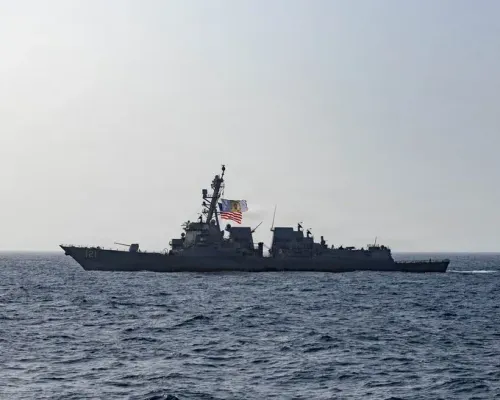
The strikes followed two IRGC ballistic missile attacks on a US warship over two consecutive days; the warship evaded both and no US personnel were injured.
This was the second US strike on Iranian tankers in four days — on 5 September , three Iranian carriers were destroyed after an alleged IRGC attack on a US carrier group.
CENTCOM described the vessels as part of a multibillion-dollar IRGC network financing Iranian military operations and regional proxies.
India , heavily dependent on imported crude, could face consequences if shipping disruptions in the region escalate further.
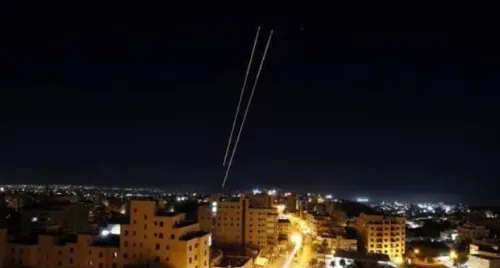
The United States military destroyed five Iranian crude oil tankers on Tuesday in the Gulf of Oman and near Kharg Island in the Persian Gulf, following two separate ballistic missile attacks by Iran's Islamic Revolutionary Guard Corps (IRGC) on an American warship, according to US Central Command (CENTCOM). No US personnel were reported injured in either of the Iranian strikes.
The Tankers Destroyed and How It Unfolded
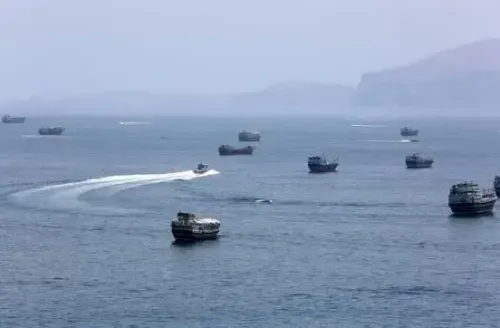
CENTCOM identified the four vessels destroyed in the Gulf of Oman as M/T Kaviz, M/T Charminar, M/T Horizon 1, and M/T Riesco. A fifth tanker, M/T Derya, was struck near Kharg Island, Iran's principal crude oil export terminal. US forces reportedly ordered crews to abandon the ships before the strikes were carried out, and no casualties among the tanker crews were reported by CENTCOM.
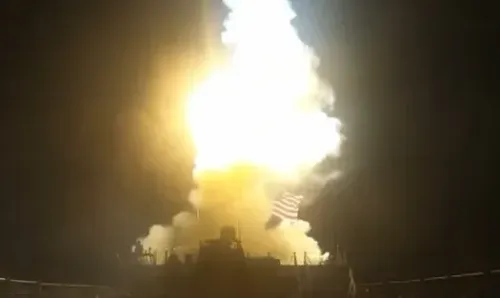
The American warship successfully evaded both missile attacks, which occurred over two consecutive days prior to Tuesday's retaliatory strikes, according to CENTCOM. The military did not disclose the identity of the targeted warship, the precise location of the missile attacks, or the number of ballistic missiles fired.
Part of a Broader US Campaign Against IRGC Shipping
Tuesday's operation was the second such US strike on Iranian oil tankers in four days. On 5 September, CENTCOM forces destroyed three Iranian crude oil carriers after the IRGC allegedly attempted to attack a US aircraft carrier and a guided-missile destroyer. Taken together, the two operations have resulted in the destruction of eight Iranian tankers within less than a week.
CENTCOM described all the vessels as crude oil carriers operated by the IRGC, stating they formed part of a multibillion-dollar network used to finance the Iranian military organisation and its regional proxies. The characterisation frames the strikes as targeting an economic lifeline for Iran's military apparatus rather than purely commercial shipping.
Strategic Significance of Kharg Island
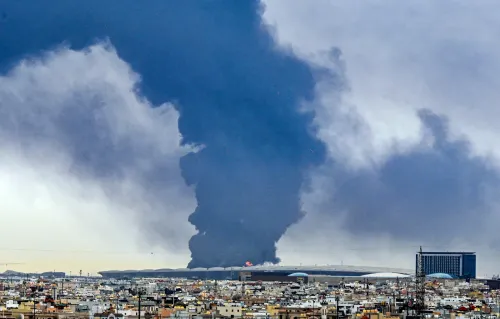
Kharg Island, located in the northern Persian Gulf, has historically served as the primary terminal for a large share of Iran's seaborne crude oil exports. Military activity in its vicinity is considered particularly sensitive, as disruption there can ripple through global energy markets. This marks a notable escalation in the geographic scope of US operations, which previously focused on the Gulf of Oman.
Implications for Global Oil Markets and India
Any sustained disruption to shipping through the Gulf of Oman and Persian Gulf could affect tanker insurance premiums, freight costs, and global crude oil prices. India, which depends heavily on imported crude oil, is among the countries that could face downstream consequences if the security situation in the region deteriorates further. Analysts have flagged that a prolonged standoff near Kharg Island carries the potential to tighten global supply at a time when energy markets remain sensitive to geopolitical shocks.
The escalating exchange between US forces and the IRGC marks a sharp intensification of tensions in the Persian Gulf, with both sides now having carried out multiple offensive operations within days of each other.
Point of View
Which imports a significant share of its crude from the region, this is no longer a distant confrontation; it is a freight-rate and insurance-premium event waiting to happen. The absence of disclosed details about the targeted warship or missile count also suggests Washington is managing escalation optics carefully — a sign that both sides may be testing limits without yet crossing them.
NationPress
24 Oct 2026
Frequently Asked Questions
Why did the US destroy Iranian oil tankers near Kharg Island?
The US military struck five Iranian crude oil tankers on Tuesday in retaliation for two ballistic missile attacks by Iran's IRGC on an American warship over the previous two days, according to CENTCOM. The tankers were described as part of a multibillion-dollar IRGC network used to fund Iranian military operations and regional proxies.
Which Iranian tankers were destroyed by the US military?
CENTCOM identified the four vessels destroyed in the Gulf of Oman as M/T Kaviz, M/T Charminar, M/T Horizon 1, and M/T Riesco. A fifth tanker, M/T Derya, was struck near Kharg Island in the Persian Gulf.
Were there any casualties in the US strikes on Iranian tankers?
No casualties were reported among tanker crews. US forces instructed crews to abandon the ships before the strikes were carried out, and CENTCOM reported no US personnel were injured in the preceding IRGC missile attacks either.
How significant is Kharg Island to Iran's oil exports?
Kharg Island, located in the northern Persian Gulf, has historically served as Iran's principal terminal for seaborne crude oil exports. Military activity near the island raises concerns about the security of commercial shipping lanes and global energy supplies.
How could the US-Iran confrontation affect India?
India, which is heavily dependent on imported crude oil, could face higher tanker insurance premiums, increased freight costs, and potential crude price volatility if shipping disruptions in the Gulf of Oman and Persian Gulf persist or intensify.