US military disables oil tanker near Iran, launches second wave of strikes
Synopsis
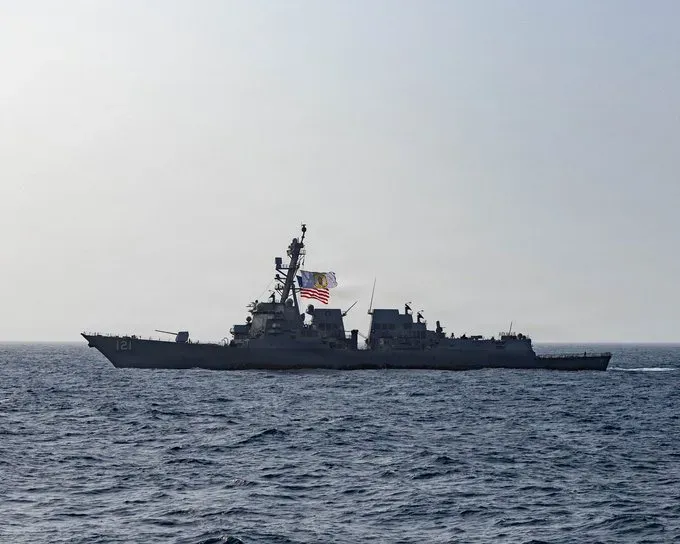
US forces disabled a Curacao-flagged oil tanker with Hellfire missiles near Iran's Kharg Island on 16 July after it defied blockade warnings — then launched two separate waves of strikes against Iranian military sites on the same day. Iran's IRGC claims it hit back at US bases in Bahrain and Jordan. With the Strait of Hormuz in the crosshairs, this is the most direct US-Iran military confrontation in years.
Key Takeaways
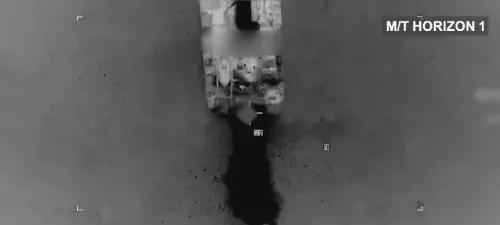
US Central Command fired Hellfire missiles into the smokestack of the M/T Belma , a Curacao-flagged oil tanker, on 16 July as it attempted to reach Kharg Island , Iran.
The US naval blockade against vessels transiting to or from Iranian ports was reimposed on 15 July .
US forces conducted two waves of strikes against Iran on Wednesday — the first at 6 am ET , the second at 3 pm ET .
Targets included coastal defence systems, cruise missile sites, and launch infrastructure on Greater Tunb Island .
Iran's IRGC claimed retaliatory strikes on US facilities at al-Azraq, Jordan and in Bahrain , reportedly hitting shelters with F-15, F-16, F-35 jets and MQ-9 drones — claims not independently verified.
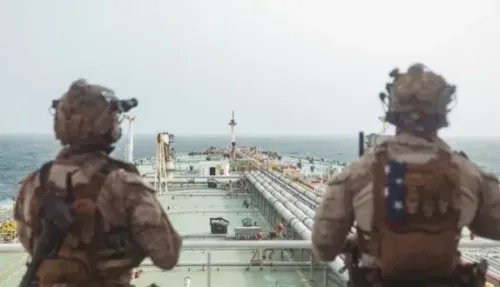
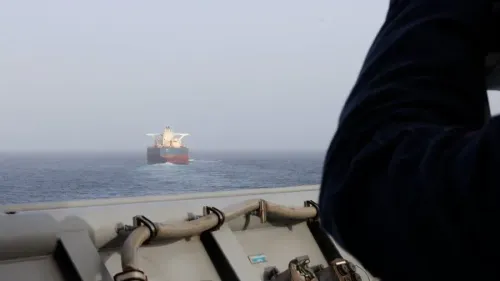
US Central Command on Wednesday, 16 July announced that American forces fired Hellfire missiles into the smokestack of an unladen, Curacao-flagged oil tanker — identified as M/T Belma — as it attempted to sail toward Kharg Island off the Iranian coast in the Arabian Gulf, disabling the vessel. The tanker had, according to the command, 'ignored multiple warnings as it attempted to violate the US blockade.'
The Tanker Incident
A US aircraft intercepted the M/T Belma after the vessel refused to heed repeated warnings and continued sailing toward an Iranian port. Hellfire missiles were fired into the ship's smokestack, immobilising it. US Central Command confirmed: 'The ship is no longer transiting to Iran.'
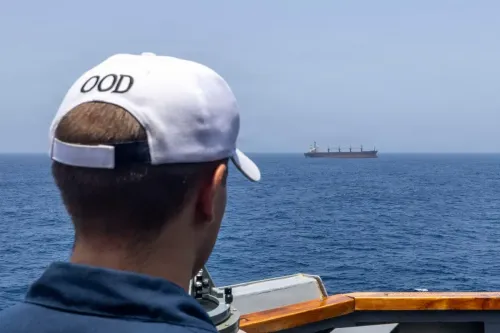
The naval blockade against vessels transiting to or from Iranian ports and coastal areas had been reimposed by US forces on Tuesday, 15 July, a day before the tanker was disabled.
Two Waves of Strikes Against Iran
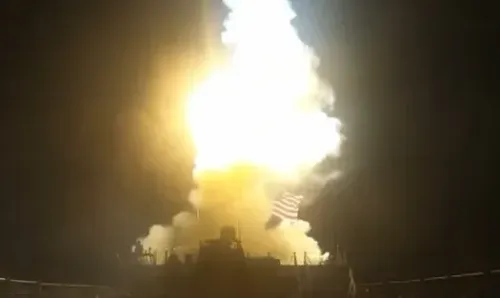
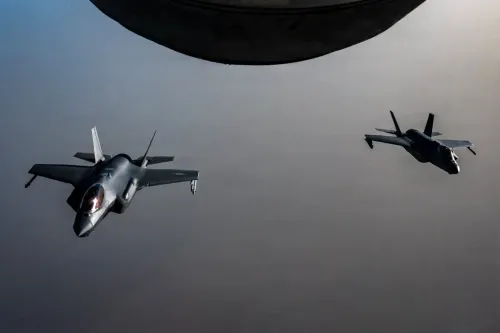
The tanker incident unfolded against the backdrop of a broader US military operation. US Central Command said it launched a first wave of strikes against Iran beginning at 6 am Eastern Time (1000 GMT) on Wednesday. During the 90-minute wave, precision munitions targeted coastal defence systems and cruise missile storage and launch sites on Greater Tunb Island.
A second wave followed the same day. 'At 3 pm ET (1900 GMT), US forces launched operations for a second wave of strikes today against Iran,' the command stated in a post on X. 'The strikes are targeting Iranian military capabilities used to threaten vessels freely transiting through the Strait of Hormuz.'
Iran's Retaliatory Strikes
Iran's Islamic Revolutionary Guards Corps (IRGC) said it conducted retaliatory strikes against US military facilities in Bahrain and Jordan, targeting military infrastructure, aircraft shelters, key command centres, and strategic drones. In a statement, the IRGC said its Aerospace Force struck the US military base at al-Azraq in Jordan in response to what it described as renewed US aggression.
According to Iran's official Islamic Republic News Agency (IRNA), the attack reportedly destroyed shelters housing US F-15, F-16, and F-35 fighter jets, as well as several MQ-9 strategic drones stationed at the base. These claims have not been independently verified.
Strategic Context: Strait of Hormuz at the Centre
The Strait of Hormuz — through which roughly 20% of global oil supply transits — has become the focal point of the escalating confrontation. US Central Command framed both waves of strikes as aimed at protecting freedom of navigation through the waterway. The targeting of Greater Tunb Island, which sits at the mouth of the strait, underscores the strategic stakes.
This marks one of the most significant direct US military actions against Iranian assets in recent years, and the situation remains fluid, with further escalation possible depending on Tehran's next moves.
Point of View
A threshold not crossed lightly. Two strike waves in a single day against Iranian military infrastructure, combined with the reimposition of a naval blockade, represent a qualitative escalation beyond past 'maximum pressure' campaigns. Iran's claimed strikes on al-Azraq and Bahrain, if verified, would mark a direct attack on US basing infrastructure — a significant red line. The Strait of Hormuz, through which a fifth of global oil flows, is now an active theatre, and the risk of miscalculation — by either side or by a third-party vessel — is at its highest in years. Mainstream coverage is tracking the military exchange; what it risks underweighting is the insurance and shipping market shock that a sustained blockade-and-counter-blockade dynamic will generate globally.
NationPress
15 Oct 2026
Frequently Asked Questions
What happened to the M/T Belma oil tanker?
US forces fired Hellfire missiles into the smokestack of the Curacao-flagged M/T Belma on 16 July, disabling the unladen vessel after it ignored multiple warnings and attempted to sail toward Kharg Island in Iran. US Central Command confirmed the ship was no longer heading to Iran.
Why did the US reimpose a naval blockade against Iran?
US Central Command reimposed the naval blockade against vessels transiting to or from Iranian ports and coastal areas on 15 July, framing it as a measure to protect freedom of navigation through the Strait of Hormuz. The blockade is part of a broader escalation of US military pressure on Iran.
What did the US strike on 16 July in Iran?
US forces conducted two waves of strikes on 16 July, targeting coastal defence systems and cruise missile storage and launch sites on Greater Tunb Island. The second wave, launched at 3 pm ET, targeted Iranian military capabilities used to threaten vessels in the Strait of Hormuz, according to US Central Command.
How did Iran respond to the US strikes?
Iran's Islamic Revolutionary Guards Corps (IRGC) claimed retaliatory strikes against US military facilities in Bahrain and Jordan, saying its Aerospace Force hit the al-Azraq base in Jordan and destroyed shelters housing F-15, F-16, and F-35 jets and MQ-9 drones. These claims were reported by Iran's official IRNA and have not been independently verified.
Why is the Strait of Hormuz significant in this conflict?
The Strait of Hormuz is one of the world's most critical oil chokepoints, with roughly 20% of global oil supply passing through it. US Central Command explicitly cited protecting freedom of navigation through the strait as the rationale for its strikes, making it the central flashpoint in the current US-Iran confrontation.