Gujarat CM Launches Health Projects Across Districts in Ahmedabad
Synopsis
The Chief Minister's Office of Gujarat announced the inauguration of multiple health projects across districts on October 24, 2026, in Ahmedabad, framing the launches as delivering on a 25-year governance vision of affordable, last-mile healthcare under PM Modi's leadership.
Key Takeaways
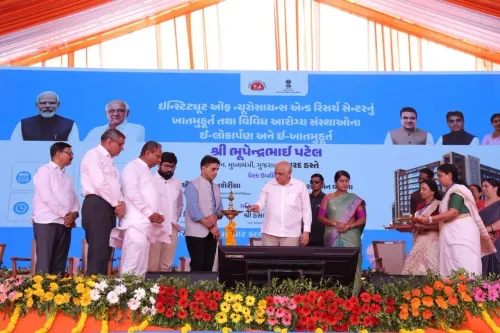
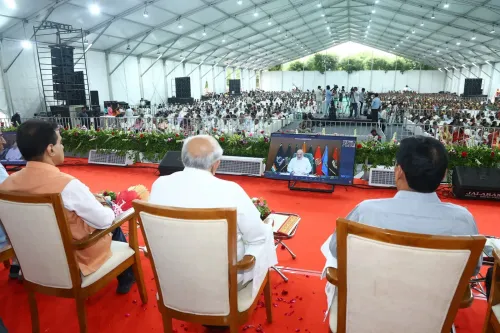
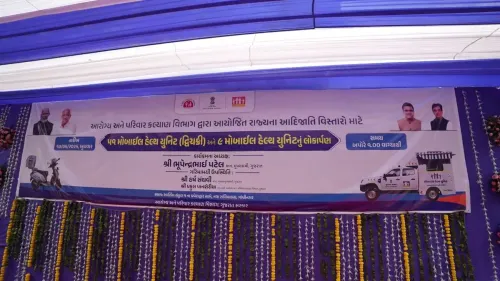
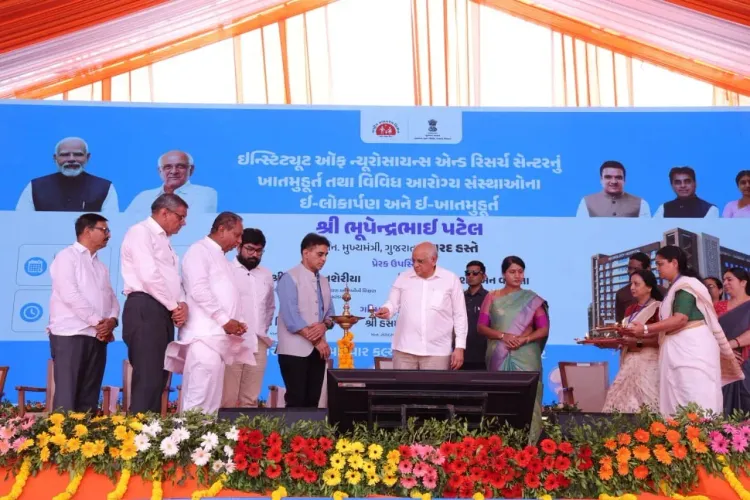
Multiple health institutions were inaugurated across various Gujarat districts on October 24, 2026 , with the launch event held in Ahmedabad .
The Chief Minister invoked the Sanskrit ideal 'Sarve Bhavantu Sukhinah' to frame the launches as fulfilling a universal well-being mandate.
The state's stated goal is to ensure no resident must travel long distances to access healthcare, prioritising last-mile delivery.
PM Narendra Modi's 25 years of governance — as Gujarat CM (2001–2014) and Prime Minister (2014–present) — was credited with transforming health access through affordable systems, including Ayushman Bharat (2018) .
The launches are positioned as foundational to building a 'Viksit Gujarat' (Developed Gujarat) in service of the broader 'Viksit Bharat' national vision.
A Sanskrit ideal — 'Sarve Bhavantu Sukhinah, Sarve Santu Niramayah' ('May all be happy, may all be free from illness') — moved from scripture to state policy on Saturday, October 24, 2026, as the Chief Minister's Office of Gujarat announced the inauguration of multiple health projects across the state, with the launch event held in Ahmedabad.
What was inaugurated — and the principle behind it
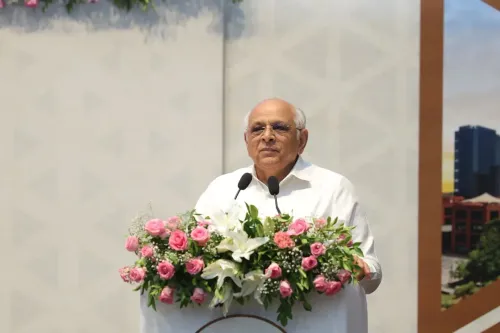
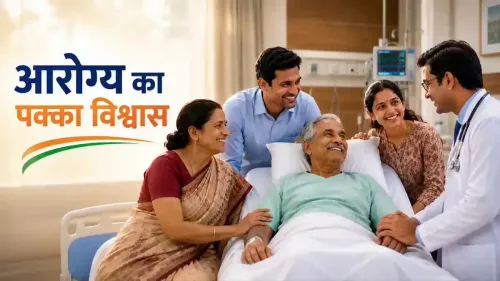
The Chief Minister stated at the event that the simultaneous launch of various health projects across different districts of Gujarat gave real meaning to the ancient Vedic wish for universal well-being. The core governing philosophy articulated was direct: no resident should have to travel far to access healthcare. The state government's approach, as described, is to bring quality medical services to the last person in the most remote corner of the state.
The inauguration covered health institutions spread across multiple districts, though the specific names and locations of individual facilities were not disclosed in the official communication. The emphasis was on decentralisation — pushing care outward from urban centres toward peripheral communities.
Modi's 25-year governance arc and the affordable healthcare claim
The Chief Minister used the occasion to situate these launches within a longer political and policy timeline. He credited Prime Minister Narendra Modi's 25 years of governance — spanning his tenure as Gujarat's Chief Minister from 2001 to 2014 and subsequently as Prime Minister since 2014 — with driving a transformation in the health sector through an affordable healthcare system. A landmark milestone in that arc was the 2018 launch of Ayushman Bharat Pradhan Mantri Jan Arogya Yojana, which extended subsidised health coverage to hundreds of millions of Indians and reshaped how both states and the Centre approach public health financing.
Gujarat's district-level expansion fits squarely within that national framework — using central scheme architecture as a foundation while adding state-level infrastructure to close the last-mile gap.
From 'Swasth Gujarat' to 'Viksit Gujarat'
The Chief Minister closed with an explicit developmental ambition: a healthy and empowered Gujarat (swasth ane sashakt Gujarat) is the prerequisite for a developed Gujarat (Viksit Gujarat), which in turn feeds into the national vision of Viksit Bharat — a developed India. The framing is deliberate: health infrastructure is not welfare spending, it is growth infrastructure. Rural populations and district residents stand to benefit most directly from the newly inaugurated facilities, particularly those who previously had to travel to larger urban centres for basic or secondary care.
The real test of these launches will come in the months ahead — in utilisation data, staffing levels, and whether the facilities translate into measurable improvements in health outcomes for the communities they are meant to serve.
Point of View
On-the-ground infrastructure. The explicit 25-year governance attribution to PM Modi is politically significant: it stitches the state's current policy record directly to the BJP's long-term development narrative ahead of any electoral cycle. The 'Viksit Gujarat as foundation for Viksit Bharat' framing is not incidental — it positions Gujarat as the model state within a national aspirational story. The real policy question, however, is whether decentralised facility launches translate into staffed, functional institutions or remain ribbon-cutting milestones.
NationPress
24 Oct 2026
Frequently Asked Questions
What health projects were launched in Gujarat on October 24 2026?
The Chief Minister's Office of Gujarat announced the inauguration of multiple health institutions across various districts of the state, with the launch event held in Ahmedabad on October 24, 2026. Specific names and locations of individual facilities were not disclosed in the official communication.
What is the Gujarat government's goal for healthcare access?
The Gujarat government's stated approach is that no resident should have to travel far to access healthcare. The focus is on bringing quality health services to the most remote communities through district-level infrastructure expansion.
How does Ayushman Bharat relate to Gujarat's health projects?
Ayushman Bharat Pradhan Mantri Jan Arogya Yojana, launched nationally in 2018, provides the affordable health coverage framework that Gujarat's district-level facility expansion builds upon, extending subsidised care to rural and peripheral populations.
What is 'Viksit Gujarat' and how does it connect to health policy?
'Viksit Gujarat' means 'Developed Gujarat' and is the state government's development vision. The Chief Minister framed health infrastructure as a prerequisite for this vision, arguing that a healthy and empowered Gujarat is essential to achieving broader national development goals under 'Viksit Bharat'.
How many years of PM Modi's governance were cited at the Gujarat health launch?
The Chief Minister cited 25 years of PM Narendra Modi's governance, spanning his time as Gujarat's Chief Minister from 2001 to 2014 and as Prime Minister from 2014 onwards, crediting this period with transforming health access through an affordable healthcare system.