IRGC claims strikes on US bases in Kuwait, Bahrain and Jordan
Synopsis
Iran's IRGC is claiming simultaneous strikes on US military infrastructure across four countries — Kuwait, Bahrain, Jordan, and Iraq — including a destroyed ammunition depot, downed Patriot system, and casualties among US personnel. Meanwhile, CENTCOM says it has just completed its 13th straight night of strikes on Iran. With both sides claiming escalating damage, the risk of broader miscalculation over the Strait of Hormuz is now acute.
Key Takeaways
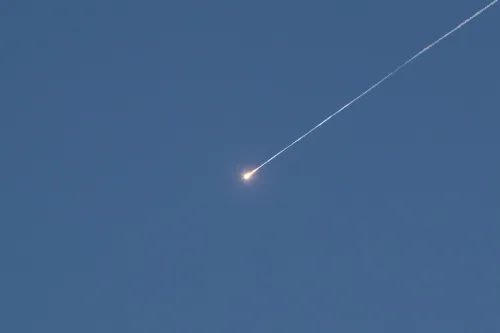
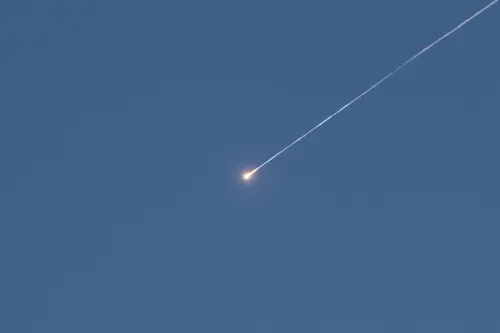
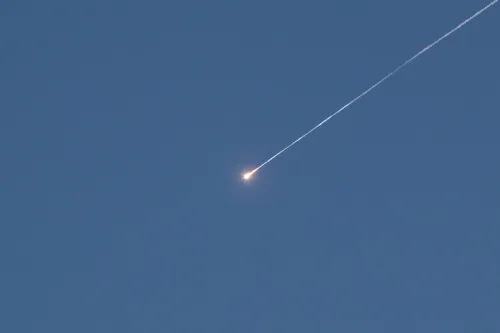
Iran's IRGC claimed retaliatory strikes on US bases and assets in Kuwait , Bahrain , Jordan , and Erbil, Iraq on Friday, 25 July .
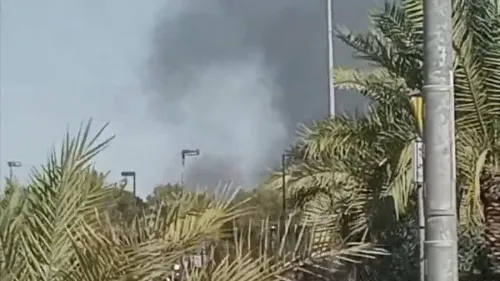
The IRGC said it 'completely destroyed' a 'very large' US ammunition depot at Ali Al Salem Air Base in Kuwait using kamikaze drones.
It also claimed to have destroyed a Patriot air defence system in Erbil and caused significant damage to US fighter aircraft at Al-Azraq Air Base in Jordan.
US Central Command said it completed its 13th consecutive night of strikes on Iran, targeting command centres, drone storage, and maritime surveillance infrastructure.
Neither side's claims have been independently verified; casualty figures remain unconfirmed by third parties.
The exchange raises acute concern over stability in the Strait of Hormuz , a critical corridor for global energy shipping.
Iran's Islamic Revolutionary Guard Corps (IRGC) on Friday, 25 July claimed it had launched fresh retaliatory strikes against US military bases and assets across Kuwait, Bahrain, and Jordan, escalating what has become a sustained exchange of military action between Tehran and Washington. The IRGC said the attacks were carried out in direct response to what it described as US 'crimes' against Iran.
Key Claims by the IRGC
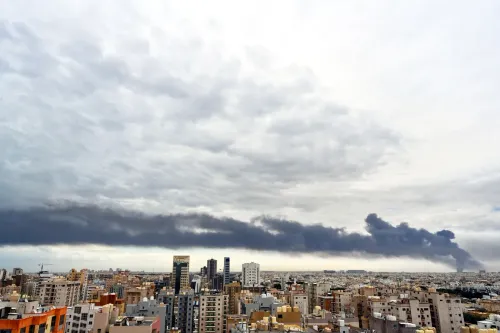
According to statements carried by the IRGC's official outlet Sepah News, Iranian forces struck and 'completely destroyed' a 'very large' US ammunition depot at Ali Al Salem Air Base in Kuwait using what the IRGC described as 'advanced and ultra-heavy' kamikaze drones. The IRGC also claimed its forces hit facilities housing US personnel at the same base, causing casualties — though independent verification of these casualty figures was not immediately available.
The IRGC further claimed to have demolished three US ammunition and equipment depots at Al-Adiri Camp in Kuwait, and struck the watchtower of the US Fifth Fleet headquarters in Bahrain, reportedly causing significant damage. It also said it completed an earlier operation against a US company's data centre in Bahrain, destroying its remaining structure.
Jordan and Iraq Operations
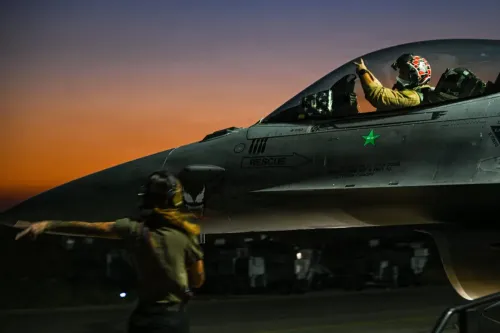
The IRGC's aerospace forces reportedly carried out what it described as a 'crushing' attack on Al-Azraq Air Base in Jordan, claiming significant damage to several US fighter aircraft and strikes on barracks housing US personnel, with casualties alleged. Separately, the IRGC claimed 'surprise' operations against US military positions in Erbil, the capital of Iraq's Kurdistan region, reportedly destroying a Patriot air defence system and an espionage balloon, and hitting US troop accommodation facilities.
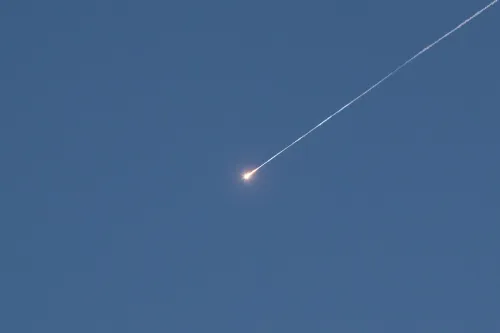
The IRGC additionally announced that its air defences had intercepted a US cruise missile over Iran's southeastern Kahnuj County on Thursday night.
US Central Command's Account
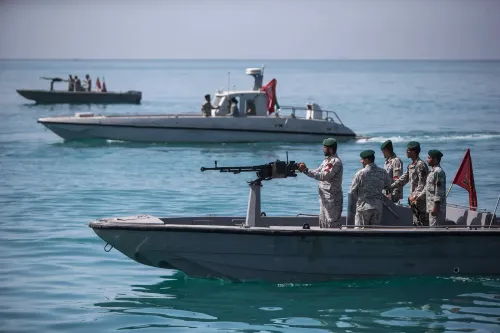
US Central Command (CENTCOM) offered a starkly different picture. In a post on social media platform X early Friday, CENTCOM said its forces had 'successfully completed the 13th straight night of strikes against Iran.' It said the targets included 'Iranian military command centres, drone storage facilities, communication networks, coastal surveillance sites, and maritime capabilities' — all aimed, it said, at reducing the threat Iran poses to civilian mariners and commercial shipping transiting the Strait of Hormuz.
Notably, the two sides' accounts are mutually contradictory on several points, and neither has been independently verified by third parties on the ground.
Context and Escalation Pattern
This comes amid a rapidly intensifying military confrontation that has now stretched across at least 13 consecutive nights of US strikes on Iranian targets, with Iran claiming retaliatory operations in parallel. The scale of the claimed strikes — spanning four countries and multiple classes of military infrastructure — marks a significant escalation in the breadth of the conflict. Critics and regional analysts have warned that sustained exchanges at this tempo risk triggering broader miscalculation, particularly given the strategic importance of the Strait of Hormuz to global energy supplies.
How the situation develops over the coming 48 hours, and whether any third-party governments intervene diplomatically, will likely determine whether this exchange stabilises or widens further.
Point of View
Multiple base types, and diverse weapons systems — are far broader in scope than anything Tehran has publicly asserted in recent memory, and that breadth itself warrants scrutiny. Both sides are now fighting a parallel information war alongside the kinetic one, and neither account has been independently verified. What is verifiable is the trajectory: 13 consecutive nights of US strikes and a pattern of Iranian counter-claims that keep escalating in geographic reach. The Strait of Hormuz variable is the one that should concentrate minds globally — a sustained disruption there would ripple through oil markets and supply chains well beyond the immediate conflict zone. The absence of any visible diplomatic off-ramp is the most alarming detail in this story.
NationPress
23 Oct 2026
Frequently Asked Questions
What did Iran's IRGC claim to have struck on 25 July?
The IRGC claimed it struck US military bases and assets in Kuwait, Bahrain, Jordan, and Erbil in Iraq's Kurdistan region. Specific claims included destroying an ammunition depot at Ali Al Salem Air Base in Kuwait, damaging US fighter aircraft at Al-Azraq Air Base in Jordan, and destroying a Patriot air defence system in Erbil.
How has the US responded to Iran's claims?
US Central Command said on social media platform X that its forces had successfully completed their 13th consecutive night of strikes against Iran, targeting military command centres, drone storage facilities, communication networks, and maritime surveillance infrastructure near the Strait of Hormuz. CENTCOM did not directly address the IRGC's specific claims.
Have the IRGC's casualty and damage claims been verified?
No. The IRGC's claims — including casualties among US personnel and destruction of military hardware — have not been independently verified by third parties on the ground. Both sides are presenting conflicting accounts of the same ongoing conflict.
Why is the Strait of Hormuz significant in this conflict?
The Strait of Hormuz is one of the world's most critical shipping lanes for oil and gas exports. US CENTCOM cited protecting civilian mariners and commercial vessels transiting the strait as a key objective of its strikes on Iran's maritime and coastal surveillance capabilities.
What is the broader context of these strikes?
The exchange is part of a sustained military confrontation that has now seen at least 13 consecutive nights of US strikes on Iranian targets, with Iran claiming parallel retaliatory operations. The conflict has expanded geographically to include US assets in multiple Gulf and Middle Eastern countries, raising concerns among regional analysts about escalation and miscalculation.