ISI builds local terror network in J&K, plans major strikes: Officials
Synopsis
Pakistan's ISI has quietly pivoted its J&K strategy — shifting from cross-border infiltration to building a homegrown terror network. With roughly a thousand militants stuck at launchpads and infiltration routes choked, Islamabad is using small, deniable attacks through TRF locals to mobilise ground assets for a reportedly larger strike. The Kulgam and Kishtwar incidents are, experts warn, rehearsals — not random violence.
Key Takeaways
Three CRPF personnel were injured in a terrorist attack on a checkpoint at Akhran, Kulgam on 12 November 2025 .
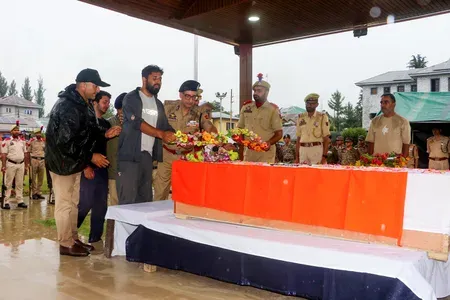
Bodies of two missing SPOs with service weapons absent were recovered in Kishtwar , with a terror angle under investigation.
Agencies are searching for TRF local commander Mohammad Lateef Bhat , 22 , and three others linked to the Kulgam attack.
Security analysts warn the ISI is in a mobilisation phase, using low-key attacks to build a local cadre for a planned large-scale strike.
An estimated 1,000 terrorists are reportedly waiting at launchpads across the border, unable to infiltrate due to tightened security.
Experts call for a combined HUMINT and TECHINT strategy as the ISI shifts to exclusively local operatives to avoid a trail back to Islamabad.
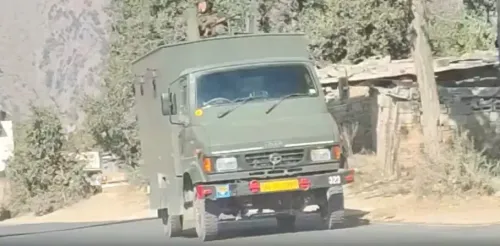
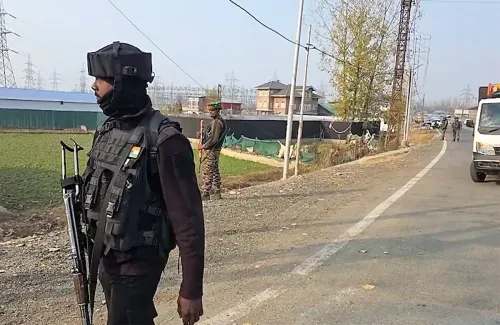
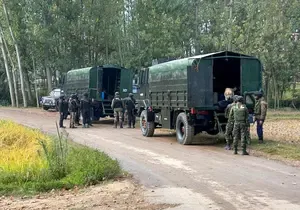
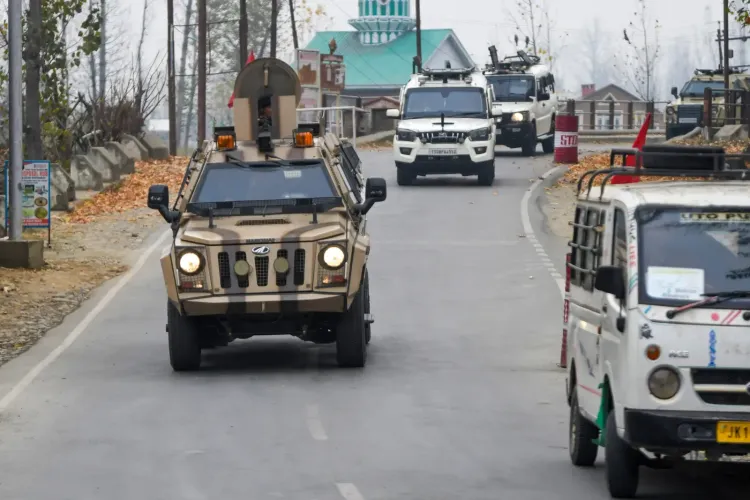
Jammu and Kashmir is witnessing a fresh surge in terrorist violence, with two separate incidents on Wednesday, 12 November 2025 intensifying concerns over the security situation in the Union Territory. Three Central Reserve Police Force (CRPF) personnel were injured when terrorists struck a security checkpoint at Akhran near Mira Bazar in Kulgam district, while the bullet-riddled bodies of two missing Special Police Officers (SPOs) were recovered in Kishtwar district, with investigators examining a possible terror link.
What Happened on the Ground
In the Kulgam attack, terrorists targeted a CRPF security checkpoint, injuring three personnel. Separately, the bodies of two SPOs — who had been reported missing — were found in Kishtwar. Security agencies suspect a terror angle in the killings, a suspicion sharpened by the fact that the SPOs' service weapons were missing from the recovery site. Investigations into the Kulgam attack have already identified the involvement of local commanders of The Resistance Front (TRF), a proxy of Lashkar-e-Taiba (LeT).
Agencies are actively searching for Mohammad Lateef Bhat, a 22-year-old local TRF commander and resident of Kulgam in South Kashmir, along with Bilal Ahmad Mir, Mohammad Umar Mir, and Abid Qayoom, all residents of Baramulla in North Kashmir.
The ISI's 'Go Local' Strategy
Security analysts and officials say the incidents are not isolated but reflect a deliberate strategic shift by Pakistan's Inter-Services Intelligence (ISI). Dr. Abhinav Pandya, founder of the Usanas Foundation, a geopolitical and security affairs think tank based in Udaipur, Rajasthan, described the pattern as calculated.
'The ISI has been operating through its proxies, TRF. The rise of such proxies has risen since the abrogation of Article 370,' Dr. Pandya said. He added that the attacks are 'a way of sending a message to the Indian government that the ISI still has the capabilities to operate in Jammu and Kashmir.'
'There is a pattern to these recent spate of attacks. These persons are not carrying out large-scale strikes. They just want to send the message about their capabilities in Jammu and Kashmir and want to keep the ship sailing,' he said.
An official, speaking on condition of anonymity, reinforced this assessment: 'One cannot take these low-key attacks lightly. The ISI is deliberately keeping the attacks smaller in nature.' The official explained that this approach keeps the network operationally relevant while buying time to build resources on the ground.
Bigger Attacks in the Pipeline, Warn Experts
Dr. Pandya warned that the ISI — which has reportedly taken direct command of operations in J&K from Lashkar-e-Taiba, Jaish-e-Mohammed, and Hizbul Mujahideen — is currently in a mobilisation phase. 'They are planning a huge attack in the near future and hence the mobilisation exercise is on in full swing,' he said.
A second official pointed to the broader strategic context, noting that Pakistan has found itself on the back foot following the abrogation of Article 370 and Operation Sindoor. With infiltration routes significantly disrupted — an estimated one thousand terrorists are reportedly waiting at launchpads across the border — Islamabad has reportedly pivoted to building a local cadre within the Valley. 'Pakistan feels that the best way to approach the J&K issue is by building a strong local force. This eliminates the need to infiltrate and the ISI feels that in case of an attack, it cannot be traced back to Pakistan,' the official said.
Pattern of Recurring Violence
The incidents follow a wider pattern of episodic escalation. In July 2025, a terrorist targeted a police party deployed for the Amarnath Yatra, killing Head Constable Aashiq Hussain Qureshi. Around the same period, TRF operatives resumed attacks on migrant workers and issued warnings to Kashmiri Pandits. After a brief lull, the latest incidents in Kulgam and Kishtwar suggest the cycle has resumed.
Intelligence Response and the Way Forward
Experts and officials stress that countering the ISI's localised network demands a dual-track intelligence approach. Dr. Pandya argued that Indian agencies must not rely solely on technical intelligence (TECHINT) given the ISI's shift toward exclusively local operatives. 'It is the right time to ensure that both TECHINT and human intelligence (HUMINT) work in tandem to battle this problem,' an official said.
With a suspected large-scale attack reportedly in planning, the coming weeks will test the depth of India's ground-level intelligence network in Jammu and Kashmir.
Point of View
It creates plausible deniability and significantly narrows the intelligence signature that TECHINT can capture. The low-intensity attacks are not signs of weakness; they are signals of patience. Indian agencies will need to radically deepen HUMINT networks in South and North Kashmir before the mobilisation phase concludes — and the window for that may be shorter than officials are publicly acknowledging.
NationPress
12 Nov 2026
Frequently Asked Questions
What happened in the Kulgam and Kishtwar terror incidents on 12 November?
In Kulgam, three CRPF personnel were injured when terrorists attacked a security checkpoint at Akhran near Mira Bazar. In a separate incident in Kishtwar, the bullet-riddled bodies of two missing SPOs were recovered, with their service weapons missing — raising strong suspicion of a terror-related killing.
What is the ISI's current strategy in Jammu and Kashmir?
According to officials and security analysts, the ISI has shifted from cross-border infiltration to building a local terror network inside J&K, recruiting residents to carry out small, deniable attacks while mobilising for a larger planned strike. This strategy, they say, is designed to avoid a trail leading back to Islamabad.
Who are the suspects being sought in the Kulgam attack?
Security agencies are searching for Mohammad Lateef Bhat, a 22-year-old local TRF commander from Kulgam, and three others — Bilal Ahmad Mir, Mohammad Umar Mir, and Abid Qayoom — all residents of Baramulla in North Kashmir.
Why is a larger terror attack being warned about in J&K?
Security analyst Dr. Abhinav Pandya of the Usanas Foundation stated that the ISI is currently in a resource-mobilisation phase, with recent low-key attacks serving as cover to build ground-level capacity. 'They are planning a huge attack in the near future and hence the mobilisation exercise is on in full swing,' he said.
How has Article 370 abrogation and Operation Sindoor affected Pakistan's J&K strategy?
Officials say both developments put Pakistan on the back foot, with infiltration routes significantly disrupted and an estimated 1,000 militants stuck at launchpads. This forced a strategic pivot toward recruiting locals inside J&K, minimising dependence on cross-border operatives.