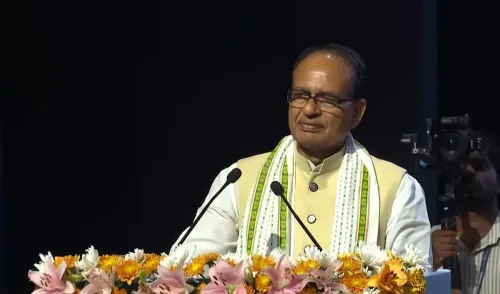
Rijiju Hails India's Foodgrain Surge to 357 mn Tonnes
Synopsis
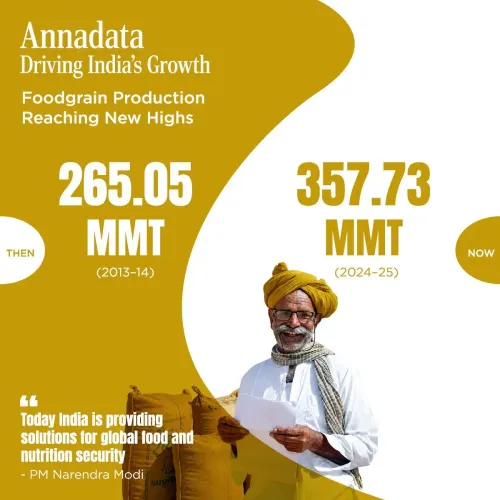
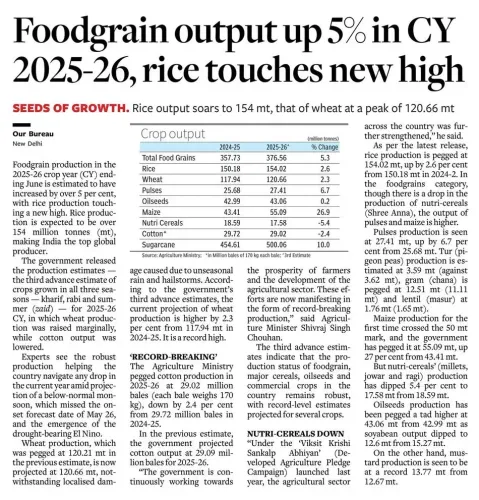
Union Minister Kiren Rijiju highlights India's foodgrain production crossing 357 million tonnes in 2024-25, up from 265 million tonnes a decade ago, citing gains for domestic food security and India's rising stature in global agriculture.
Key Takeaways
India's foodgrain production reached over 357 million tonnes in 2024–25 , up from 265 million tonnes a decade earlier.
Union Minister Kiren Rijiju shared the figures on November 12, 2026 , attributing the growth to the hard work of Indian farmers ( Annadatas ).
The National Food Security Act (2013) and Pradhan Mantri Fasal Bima Yojana (2016) form key pillars of the policy framework driving farm productivity.
Rijiju highlighted the production surge as evidence of strengthened food security for 1.4 billion people and a growing role for India in global grain trade.
Agriculture allocations in the next Union Budget and India's positions at multilateral food forums will be the next indicators of policy direction.
A 35 percent leap in foodgrain output over a single decade — that is the headline figure Union Parliamentary Affairs and Minority Affairs Minister Kiren Rijiju placed before the nation on Thursday, November 12, 2026, citing a jump from 265 million tonnes to more than 357 million tonnes in 2024–25. For a country feeding 1.4 billion people, the numbers carry weight far beyond a government press release.
From 265 to 357 million tonnes: What a decade of farm output looks like
Rijiju's post frames the production surge as a tribute to India's farmers — the Annadatas, or 'givers of food' — whose labour he credits as the engine behind the climb. 'India's agricultural strength is reflected in its growing foodgrain production,' he wrote, adding that the progress points to 'greater food security for 1.4 billion people and a growing role for India in global agriculture.' The decade-long comparison anchors the milestone in a policy arc that began well before the current administration and has involved layered interventions across seed technology, irrigation, and price support.
The policy scaffolding behind the harvest numbers
Indian agricultural policy over the past decade has rested on several structural pillars. The National Food Security Act of 2013 widened access to subsidised grain for a large share of the population, locking in demand-side security even as supply-side investment intensified. The Pradhan Mantri Fasal Bima Yojana, launched in 2016, introduced crop insurance as a buffer against weather-linked losses — an attempt to de-risk the farmer's annual gamble against an uncertain monsoon.
Alongside these, expanding irrigation networks and the push for high-yielding seed varieties have incrementally lifted productivity per hectare. The cumulative result, policymakers argue, is an India less exposed to import shocks and better positioned to export surpluses to global grain markets that have grown more volatile since 2022.
India's global grain ambitions sharpen
Rijiju's specific mention of a 'growing role for India in global agriculture' signals an intent that goes beyond domestic sufficiency. With global food trade under sustained pressure — from climate disruption, conflict, and logistics bottlenecks — a reliably large producer carries diplomatic as well as commercial leverage. India has in recent years positioned itself at multilateral food and trade forums as a voice for the Global South on food security, and production credibility underpins that posture.
The next near-term test will be the Union Budget, where agriculture allocations and any new productivity or export-facilitation schemes will indicate whether this output story is backed by sustained fiscal commitment — or whether the milestone marks a plateau.
Feeding a sixth of humanity while seeking a seat at the high table of global grain trade: India is making its case in tonnes.
Point of View
Rijiju is doing double political work: reinforcing the BJP's rural-welfare narrative ahead of budget season while positioning India as an indispensable player in global food trade. The decade-long comparison — spanning administrations — is a deliberate rhetorical choice, grounding current gains in long-arc continuity rather than a single policy moment. The reference to 'global agriculture' is the sharper edge: it hints at export ambitions that will face scrutiny whenever domestic prices spike. Whether the output milestone translates into measurable farmer income gains remains the test that opposition parties and farm unions will apply.
NationPress
12 Nov 2026
Frequently Asked Questions
What is India's total foodgrain production in 2024-25?
Union Minister Kiren Rijiju cited India's foodgrain production at over 357 million tonnes in 2024–25 , compared to 265 million tonnes a decade ago.
What is the Pradhan Mantri Fasal Bima Yojana?
The Pradhan Mantri Fasal Bima Yojana , launched in 2016 , is a government crop insurance scheme designed to protect Indian farmers against losses caused by weather events and other risks.
What does 'Annadata' mean in the context of Indian agriculture?
Annadata is a Hindi term meaning 'giver of food,' commonly used to refer to Indian farmers and honour their role in feeding the nation.
How has India's agricultural policy changed over the last decade?
Over the past decade, Indian agricultural policy has focused on higher productivity through improved seeds, expanded irrigation, crop insurance under the Pradhan Mantri Fasal Bima Yojana , and minimum support prices to boost farm incomes.
What is India's role in global foodgrain trade?
India is one of the world's largest producers of foodgrains and has increasingly positioned itself as a major exporter and advocate for food security at multilateral forums, a role its rising production figures are intended to reinforce.