Giriraj Singh Highlights GI Tag, ODOP Revival of Kashmir Carpets
Synopsis
Union Textiles Minister Giriraj Singh hailed the GI Tag and ODOP scheme for reviving Kashmir's centuries-old carpet-weaving tradition, saying the initiatives protect heritage and open livelihood avenues for local artisans.
Key Takeaways
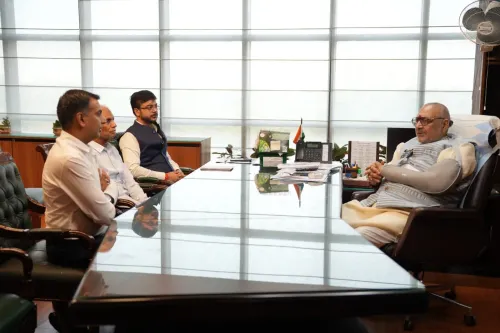
Union Textiles Minister Giriraj Singh posted on 12 November 2026 highlighting the revival of Kashmir 's traditional carpet-weaving art.
The GI Tag under the Geographical Indications Act, 1999, protects Kashmiri carpets from counterfeits and anchors their market value.
The ODOP (One District One Product) scheme channels focused branding, infrastructure, and export support to district-specific crafts including Kashmir carpets.
Singh emphasised new livelihood opportunities for local artisans as a core outcome of these policy initiatives.
The minister framed generational skill transfer — not just export volumes — as the true measure of the revival's success.
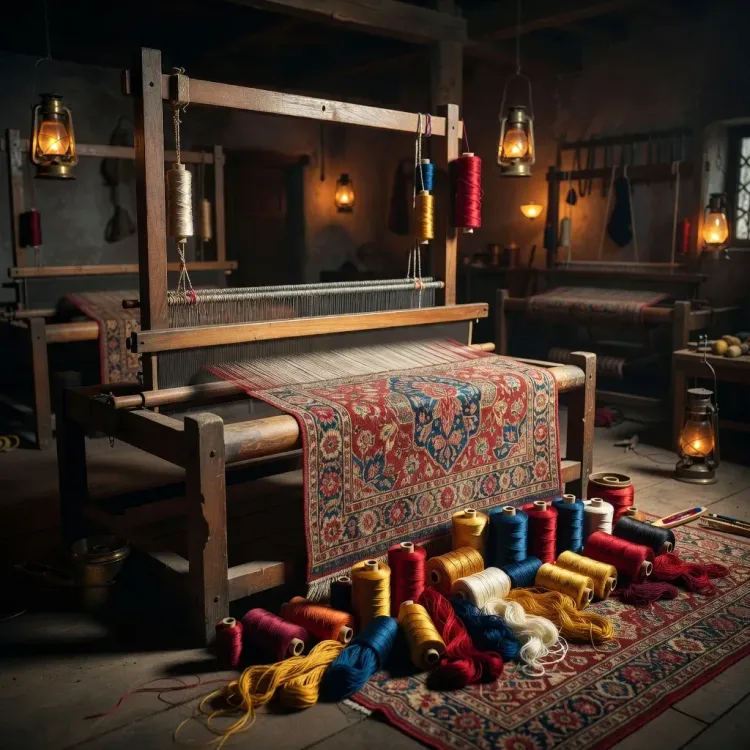
A craft older than most nations is finding its footing again. Union Textiles Minister Giriraj Singh on Thursday, 12 November 2026, spotlighted the ongoing revival of Kashmir's centuries-old carpet-weaving tradition, crediting GI Tag and ODOP schemes with giving the art form both legal protection and a living market.
Posting in Hindi, Singh wrote: 'Kashmir ki paramprik kaleen bunai kala ek baar phir nayi pahchaan bana rahi hai' — 'Kashmir's traditional carpet-weaving art is once again building a new identity.' He added that initiatives such as the GI Tag and One District One Product are preserving this centuries-old heritage and opening fresh livelihood avenues for local artisans.
What GI Status Actually Does for a Kashmiri Carpet
Kashmir's hand-knotted carpets were among the early beneficiaries of the Geographical Indications of Goods (Registration and Protection) Act, 1999. The GI label does two things at once: it tells a buyer that the carpet was made in Kashmir by hands trained in a lineage of craft, and it blocks counterfeit or machine-made imitations from piggybacking on the name. In an international market flooded with look-alikes, that certificate of origin is a price anchor — the difference between a commodity and a collectible.
ODOP's Role: One District, One Signature Product
The One District One Product scheme layers on top of GI protection by concentrating government support — branding, infrastructure, market linkages — on one signature product per district. For carpet-weaving clusters in Kashmir, that focus means shared facility centres, design labs, and a clearer export pipeline rather than scattered, underfunded support. The scheme builds on decades of earlier handloom and handicraft programmes but sharpens the lens from sector-wide to district-specific.
Artisans at the Centre of the Revival
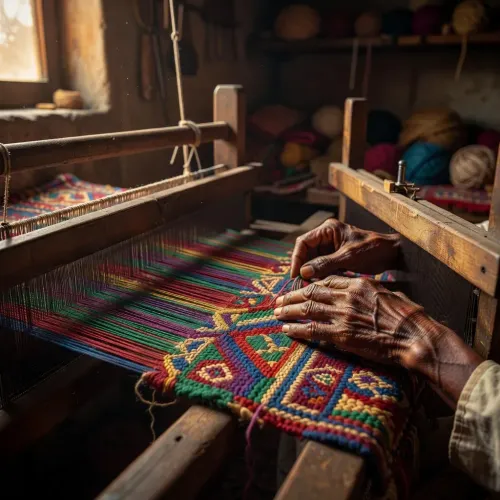
The minister's post frames the revival not just as cultural preservation but as an economic argument — 'aajivika ke naye avsar', new livelihood opportunities, for the weavers themselves. Kashmiri carpet weaving is labour-intensive and skill-intensive: a single high-quality carpet can take months to complete, with knot counts running into the hundreds per square inch. That skill, passed down through generations, is exactly what GI certification is designed to make financially viable to keep practising.
Singh called the revival 'important for carrying Kashmir's rich craft tradition and artisan skills to the next generation' — a signal that the Textiles Ministry views generational skill transfer, not just export volumes, as the benchmark of success.
Kashmir's looms have survived conquest, partition, and decades of conflict. If policy scaffolding can now make them commercially self-sustaining, the next generation of weavers may not have to choose between the craft and a livelihood.
Point of View
The Textiles Ministry is making a political as well as a policy case in Jammu and Kashmir, a region where economic integration remains a live and sensitive issue. The framing of skill transfer to the 'next generation' also signals that the ministry is measuring success in decades, not quarters — a longer-horizon commitment that will face scrutiny on actual artisan registration and export data as ODOP matures.
NationPress
12 Nov 2026
Frequently Asked Questions
What is the GI Tag for Kashmiri carpets?
The GI (Geographical Indication) Tag, granted under the Geographical Indications of Goods Act of 1999, certifies that a Kashmiri carpet is authentically hand-made in Kashmir, protecting it from imitation products and helping weavers command premium prices in domestic and export markets.
What is the ODOP scheme and how does it help Kashmir weavers?
ODOP (One District One Product) is a central government scheme that selects one signature product per district and concentrates support — branding, infrastructure, and market linkages — on it. For Kashmir's carpet clusters, this means more focused investment and a clearer export pathway for local artisans.
Why did Giriraj Singh post about Kashmir carpets?
As Union Textiles Minister, Giriraj Singh used the post to highlight how GI Tag and ODOP initiatives are reviving Kashmir's centuries-old carpet-weaving tradition and generating livelihood opportunities for local craftspeople.
How old is Kashmir's carpet-weaving tradition?
Kashmir's carpet-weaving tradition spans several centuries and is recognised as one of India's most distinctive handicraft legacies, characterised by high-density hand-knotting techniques passed down across generations of artisan families.
What does ODOP stand for in Indian handicraft policy?
ODOP stands for One District One Product. It is a government initiative designed to identify, promote, and build market access for one signature craft or product from each district, aiming to boost rural employment and preserve traditional skills.