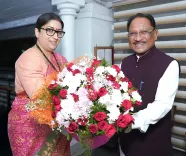
Giriraj Singh flags PM Modi spotlight on Kashmir's Wagoov craft
Synopsis
Union Textiles Minister Giriraj Singh shared a report on 27 July 2026 highlighting PM Modi's mention of Kashmir's traditional Wagoov craft in Mann ki Baat, drawing fresh national attention to the valley's indigenous handloom heritage and artisan communities.
Key Takeaways
Giriraj Singh , Union Textiles Minister, amplified PM Modi's Mann ki Baat mention of Kashmir's Wagoov craft on 27 July 2026 .
Mann ki Baat , launched in October 2014 , has a consistent track record of spotlighting regional crafts and cultural heritage.
The central government has prioritised Kashmiri handicrafts and GI-tagged products as part of J&K's post-2019 development push.
Primary beneficiaries are Kashmiri handloom weavers and artisans who stand to gain from heightened national visibility and consumer interest.
The Textiles Ministry's amplification signals institutional alignment with the Prime Minister's cultural outreach agenda.
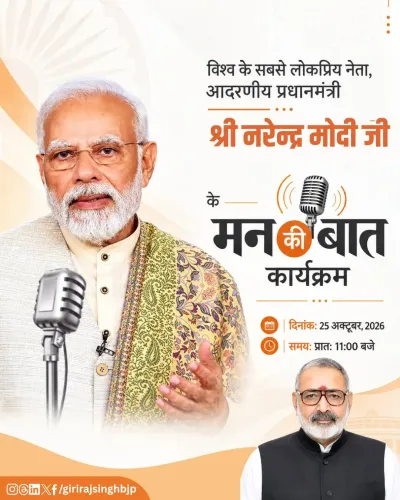
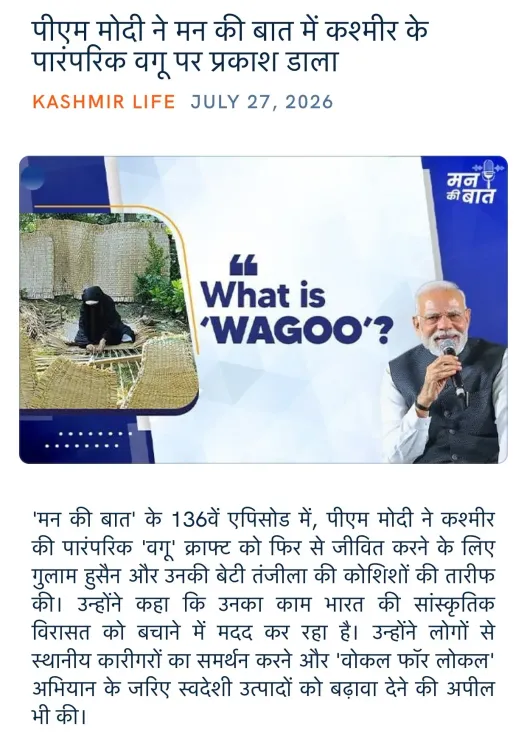
Union Textiles Minister Giriraj Singh on Monday, 27 July 2026 shared a report highlighting that Prime Minister Narendra Modi had spotlighted Kashmir's traditional Wagoov craft during his monthly radio programme Mann ki Baat, drawing national attention to the region's indigenous textile heritage.
Context
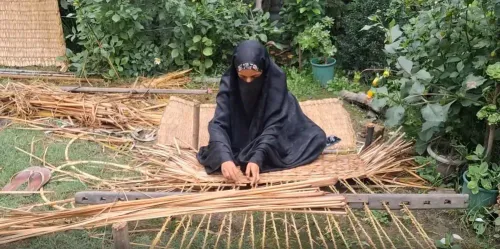
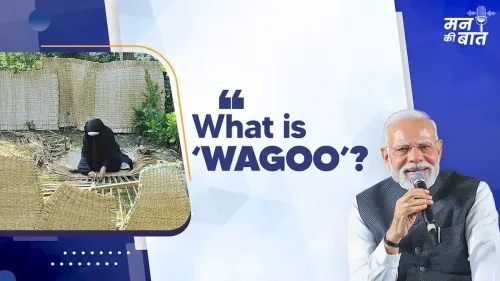
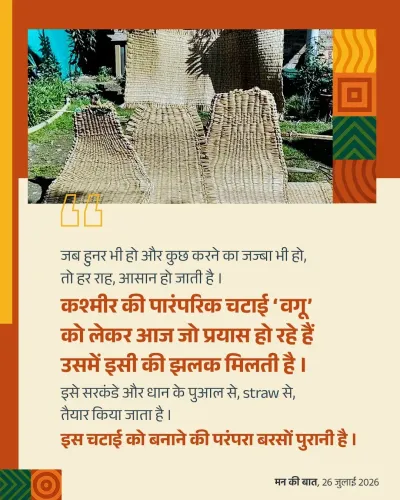
The minister's post — in Hindi, reading 'PM Modi ne Mann ki Baat mein Kashmir ke paramparik Wagoov par prakash dala' ('PM Modi highlighted Kashmir's traditional Wagoov in Mann ki Baat') — amplified coverage of the Prime Minister's remarks to a national audience. Wagoov is a traditional Kashmiri craft form associated with the valley's rich handloom and weaving traditions. By sharing the report through his official handle, Giriraj Singh signalled the Textiles Ministry's interest in the Prime Minister's cultural endorsement.
Policy Backdrop
Mann ki Baat, launched in October 2014, has consistently served as a platform for PM Modi to spotlight regional crafts, artisan communities, and cultural heritage from across India. The programme has previously featured GI-tagged products and handloom traditions as part of a broader push to integrate indigenous industries into the national economic narrative. Since 2019, the central government has placed particular emphasis on promoting Kashmiri handicrafts and traditional industries as part of Jammu and Kashmir's post-reorganisation development framework.
The Textiles Ministry, under Giriraj Singh, has been a key institutional driver of schemes supporting handloom weavers and artisans, including GI tag recognition efforts and market-linkage programmes for craft clusters across the country.
Stakeholders and Impact
The primary beneficiaries of this kind of national visibility are Kashmiri artisans and handloom weavers who depend on demand from outside the valley. A mention on Mann ki Baat — which commands a vast radio and digital listenership — can translate into heightened consumer awareness and commercial interest in traditional crafts. For the Wagoov community specifically, Prime Ministerial recognition represents a significant boost to both cultural prestige and potential market access.
The Textiles Minister's amplification of this moment through social media further extends the reach of the endorsement, signalling institutional alignment between the Prime Minister's Office and the Ministry on promoting Kashmir's craft economy.
What's Next
Observers will watch for any follow-up announcements from the Textiles Ministry regarding dedicated support schemes, GI tag applications, or market-linkage initiatives for Wagoov artisans in the coming weeks. Future episodes of Mann ki Baat may continue to feature regional craft traditions, sustaining momentum for handloom and handicraft promotion under the central government's cultural outreach agenda.
Point of View
Particularly for Jammu and Kashmir post-2019. For Kashmiri artisans, this dual amplification — from the Prime Minister's radio address and the Textiles Minister's social media — represents the kind of top-down visibility that can precede formal scheme announcements or GI tag drives. The broader arc points to an effort to weave cultural nationalism and economic development into a single, media-friendly narrative around India's craft heritage.
NationPress
25 Oct 2026
Frequently Asked Questions
What is Wagoov, the Kashmir craft mentioned in Mann ki Baat?
Wagoov is a traditional craft form from Kashmir associated with the valley's indigenous handloom and weaving heritage. PM Modi highlighted it during his Mann ki Baat radio programme, drawing national attention to the craft and its artisan community.
What did PM Modi say about Kashmir's Wagoov in Mann ki Baat?
PM Modi spotlighted Kashmir's traditional Wagoov craft during a Mann ki Baat episode, according to the report shared by Union Textiles Minister Giriraj Singh on 27 July 2026. Specific details of the episode could not be independently verified at the time of publication.
Why did Giriraj Singh share the Mann ki Baat Kashmir craft post?
As Union Textiles Minister, Giriraj Singh shared the report to amplify PM Modi's endorsement of Kashmir's traditional Wagoov craft, signalling the ministry's support for promoting indigenous handloom traditions and Kashmiri artisans at the national level.
What is Mann ki Baat and when did it start?
Mann ki Baat is a monthly radio address by Prime Minister Narendra Modi, launched in October 2014. It regularly features stories about regional crafts, citizen achievements, and cultural heritage from across India.
How does the government support Kashmiri handloom weavers?
The central government, through the Textiles Ministry, supports Kashmiri handloom weavers via GI tag recognition, market-linkage programmes, and craft cluster development schemes. Post-2019, there has been an increased focus on integrating Kashmiri handicrafts into national economic and cultural narratives.