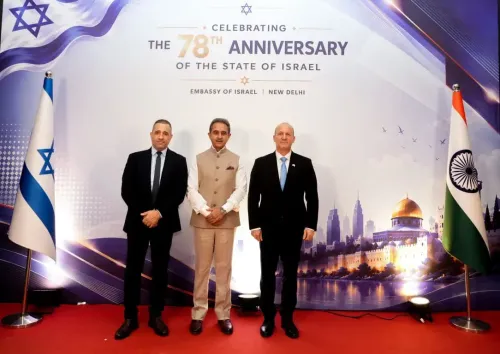
India-Israel ties rooted in 6 shared values, says Israeli envoy Reuven Azar

Synopsis
Israel’s Ambassador to India, Reuven Azar, went beyond diplomatic pleasantries to articulate a six-pillar framework for the India-Israel relationship — one that spans shared civilisational trauma, joint counter-terrorism work, and a notable absence of anti-Semitism in India’s history. The remarks, delivered via an X post, are a rare public attempt to give ideological architecture to one of Asia’s most strategically consequential bilateral partnerships.
Key Takeaways
Israeli Ambassador Reuven Azar identified six core values underpinning the India-Israel relationship in a video message on 26 May .
The six pillars are: civilisational resilience , counter-terrorism , democratic norms , innovation , religious tolerance , and inclusive development .
Azar noted that India has “never” had a history of anti-Semitism, citing millennia of Jewish comfort in the country.
He called India the “greatest democracy” in the world and said both nations have cooperated on counter-terrorism “for decades.” Azar urged investment in “putting content into the realisation of the values,” signalling a push for deeper programmatic cooperation.
Israeli Ambassador to India Reuven Azar on Tuesday, 26 May outlined six core values that he said form the bedrock of the India-Israel bilateral relationship, describing the partnership as “very special and very unique.” Speaking through a video message posted on X, Azar identified civilisational resilience, counter-terrorism cooperation, democratic norms, innovation, religious tolerance, and inclusive development as the pillars binding the two nations.
Civilisational Resilience and Shared History
Azar opened by drawing a direct parallel between the historical experiences of both civilisations. “For centuries, our civilisations were attacked by foreign powers, our identity was targeted, and there was, throughout history, an effort to try to strip us of our identity,” he said. Despite enduring those ordeals “for more than a millennia,” both nations survived with their identities intact — a commonality he described as foundational to the modern relationship.
Counter-Terrorism and the Fight Against Extremism
The second pillar, according to Azar, is the joint effort against terrorism, particularly the threat posed by radical extremism. “We are facing a wave of extremism around the world, especially coming from radical Islam, that is threatening our country and threatening the existence of our country,” he stated, adding that India and Israel have “worked together for decades” to develop the necessary capabilities to address this shared threat.
Democracy, Innovation, and Economic Competitiveness
Calling India the “greatest democracy” in the world, Azar cited freedom of speech and freedom of entrepreneurship as expressions of a shared democratic spirit. On the fourth pillar, he emphasised that both countries have been “a source of innovation,” and are working together to build a more competitive environment for shared prosperity. Notably, defence technology and agricultural innovation have historically been among the most active areas of India-Israel cooperation since the two countries established full diplomatic relations in 1992.
Religious Tolerance and Absence of Anti-Semitism
Azar highlighted India’s centuries-long tradition of accepting Jewish communities as a distinguishing feature of the relationship. “Jews have felt very comfortable in India for millennia. There was never antisemitism in this country,” he said, framing religious tolerance as the fifth core value. This comes amid a broader global conversation about rising anti-Semitism in several Western democracies, making India’s historical record on this front particularly significant.
Inclusive Development as the Sixth Pillar
The final value, Azar said, is a commitment to ensuring that economic growth reaches the underprivileged, those lacking opportunities, and those facing physical or mental challenges. He concluded by urging both sides to move beyond rhetoric: “This requires not only more thinking, but also investment in putting content into the realisation of the values.” The remarks signal a push to translate shared principles into concrete bilateral programmes and investment frameworks in the period ahead.
Point of View
Israel appears to be building a case for deeper Indian alignment. Whether New Delhi reciprocates with equal public enthusiasm — or continues its traditional balancing act between Israel and the Arab world — will be the real test of how far these shared values translate into shared strategy.
NationPress
15 Sept 2026
Frequently Asked Questions
What are the six core values Israeli Ambassador Reuven Azar cited for India-Israel ties?
Ambassador Reuven Azar identified civilisational resilience, counter-terrorism cooperation, democratic norms, innovation, religious tolerance, and inclusive development as the six core values binding India and Israel. He made these remarks in a video message posted on X on 26 May.
Why does Israel’s ambassador say India and Israel have a special relationship?
Azar argues the relationship is special because both nations share a history of civilisational survival under foreign pressure, face common threats from extremism, and hold democratic and tolerant values in common. He also noted that India has no history of anti-Semitism, which he described as a unique distinction.
When did India and Israel establish full diplomatic relations?
India and Israel established full diplomatic relations in 1992. Since then, cooperation has grown significantly across defence, agriculture, water technology, and innovation sectors.
What did Reuven Azar say about India and anti-Semitism?
Azar stated that ‘Jews have felt very comfortable in India for millennia’ and that there was ‘never antisemitism in this country.’ He cited this as the fifth core value — religious tolerance and spiritual heritage — that distinguishes the India-Israel bond.
What did the Israeli ambassador say needs to happen next for India-Israel ties?
Azar called for moving beyond shared values into concrete action, saying the partnership ‘requires not only more thinking, but also investment in putting content into the realisation of the values.’ This suggests a push for deeper bilateral programmes and structured cooperation frameworks.