India-Italy partnership making unprecedented headway, says envoy Bartoli
Synopsis
At the NDTV World Summit, Italian Ambassador Antonio Bartoli declared India-Italy ties are making 'unprecedented headway', backed by a USD 20 billion trade target, a joint Year of Culture and Tourism, and converging interests in connectivity and defence — while Australian High Commissioner Philip Green put on record his country's sharpest-yet public concerns about China's military build-up, including live-firing near New Zealand and ICBM tests near Pacific island states.
Key Takeaways
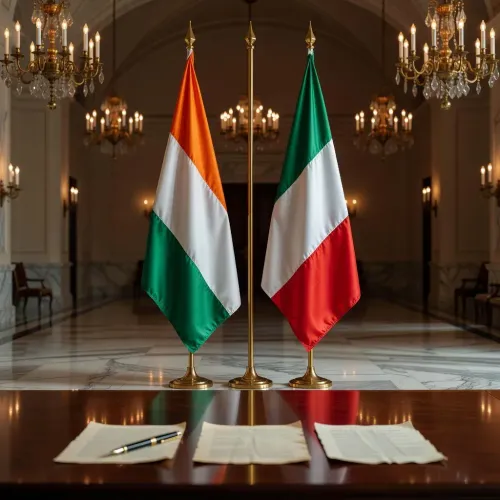
Italian Ambassador Antonio Bartoli called the India-Italy relationship a 'result-driven partnership' making 'unprecedented headway' at the NDTV World Summit on 22 October .
Bilateral trade target set at USD 20 billion by 2029 , with a roadmap covering defence, space, energy, security, and mobility.
The two prime ministers have agreed to designate next year as the Year of Culture and Tourism in both countries.
Bartoli described India's shift from non-alignment to multi-alignment , calling New Delhi 'no more a spectator' in global affairs.
Australian High Commissioner Philip Green flagged China's military build-up as the fastest since World War II and raised concerns over Chinese naval deployments in the Tasman Sea .
Green said 96 per cent of the USD 20 billion in Australia-China trade disrupted during economic tensions found alternative markets.
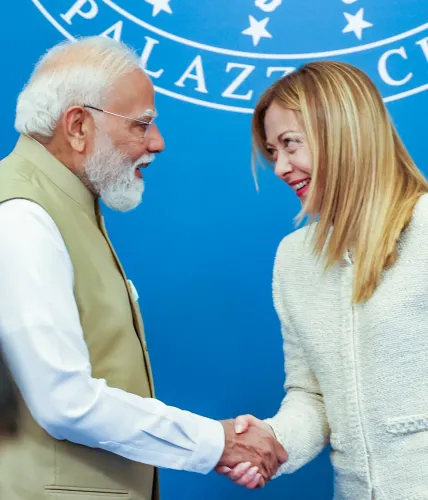
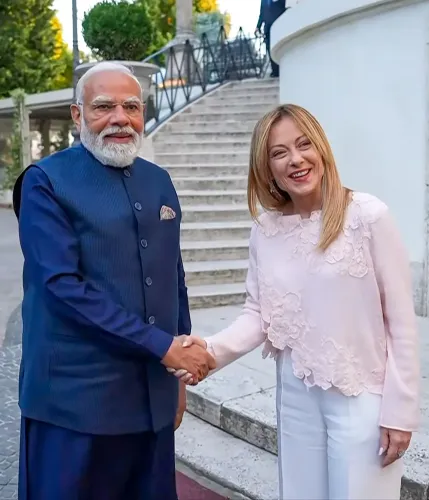
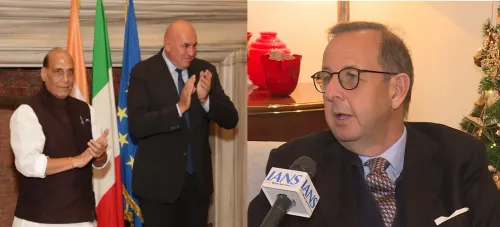
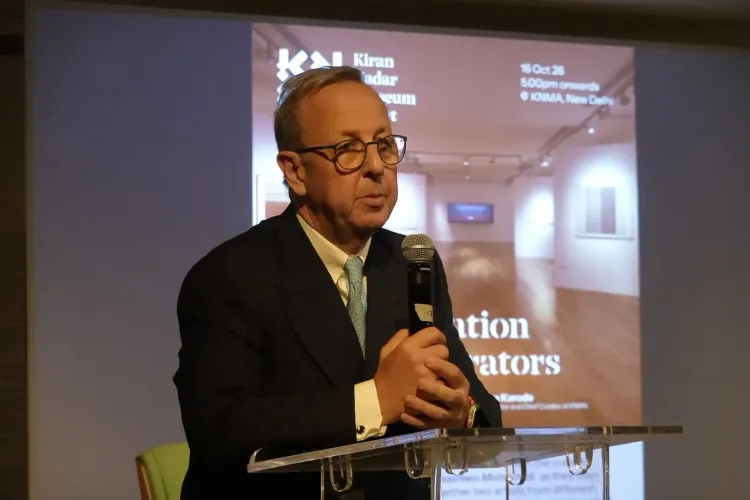
Italian Ambassador to India Antonio Bartoli on Thursday, 22 October described the India-Italy relationship as a 'result-driven partnership' that continues to make 'unprecedented headway', crediting the personal chemistry between Prime Minister Narendra Modi and Italian Prime Minister Giorgia Meloni as a key enabler. Bartoli made the remarks at the NDTV World Summit in New Delhi, in a session titled 'The West, Rewired: The New Transatlantic Order'.
What the Partnership Covers
Speaking on the evolution of the India-Italy Special Strategic Partnership, Bartoli outlined a wide-ranging roadmap spanning trade, defence, space, energy, security, mobility, and people-to-people ties. On trade, he cited a bilateral target of USD 20 billion by 2029, saying that 'things are moving' on both trade and investment fronts.
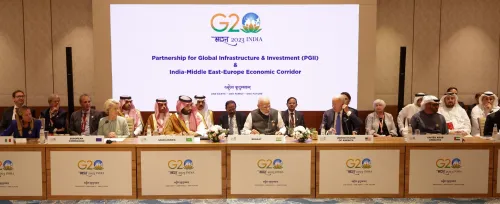
Bartoli underscored the geographic and economic logic of the partnership. 'We are two peninsulas and so we are interested in connecting the respective seas,' he said, pointing to Italy's position as 'the second industrial powerhouse in Europe' and India's ambitions to strengthen its manufacturing base. He noted that the two prime ministers have agreed to designate next year as the Year of Culture and Tourism in both countries.
India's Evolving Global Role
Bartoli highlighted what he described as India's transition from non-alignment to multi-alignment and from a passive to an active global player. 'New Delhi is no more a spectator,' he said, adding that India's higher diplomatic profile comes with greater responsibilities that Italy and its partners actively welcome.
On the question of India playing a larger peacemaking role, Bartoli was direct: 'We certainly assist to a growing role of India... that comes with a greater role, come also greater responsibilities.' He stressed that the effects of global conflicts are immediately globalised, meaning no country can treat distant wars as purely regional concerns.
Ukraine War and Global Interconnections
Bartoli argued that the Russia-Ukraine conflict cannot be dismissed as merely a European problem. He noted that the war has concrete consequences for consumers worldwide — including through rising fuel prices linked also to tensions involving Iran — and that choke points such as the Black Sea and Bab el-Mandeb strait have global food security implications. 'All this is interconnected and affects everyone,' he said.
Australia Flags China Military Build-Up
Also on the panel, Australian High Commissioner Philip Green voiced concern about China's military build-up, describing it as 'the fastest military build-up of any country anywhere in the world since the Second World War.' He said Australia is worried about Chinese naval deployments — including live-firing exercises in the Tasman Sea between Australia and New Zealand without adequate warning — and China's test-firing of intercontinental ballistic missiles landing near small island states of the southwest Pacific.
Green recounted how Australia weathered a period of economic pressure when approximately USD 20 billion worth of trade with China was disrupted, saying that roughly 96 per cent of that trade found alternative markets, making Australia 'more resilient and resolute.' He summarised Canberra's China policy as: 'We cooperate where we can, we disagree where we must, and we always act in our national interest.'
The session also featured European Union Ambassador Jean-Eric Paquet and German Ambassador Jasper Wieck, reflecting the broad Western interest in recalibrating partnerships with India at a moment of heightened global uncertainty. As India's diplomatic weight grows, the question of how it chooses to exercise that influence — particularly on conflicts like Ukraine — will increasingly define its relationships with partners in Europe and the Indo-Pacific.
Point of View
A monitoring mechanism, a roadmap — rather than the usual diplomatic boilerplate. That discipline matters, because India-Europe partnerships have historically been long on stated ambitions and short on delivery. The more revealing moment, however, was the implicit ask embedded in his remarks: as India transitions to an active global player, Western partners are not just applauding — they are calibrating expectations of reciprocity, particularly on Ukraine. Green's unusually candid language on China's military posture, delivered at a public forum in New Delhi, is also a signal: Australia is inviting India to share its threat calculus, not just its trade ledger.
NationPress
22 Oct 2026
Frequently Asked Questions
What did Italian Ambassador Antonio Bartoli say about India-Italy ties?
Bartoli described the India-Italy relationship as a 'result-driven partnership' making 'unprecedented headway', citing a bilateral trade target of USD 20 billion by 2029 and a roadmap covering trade, defence, space, energy, and people-to-people ties. He also highlighted the personal chemistry between PM Modi and Italian PM Giorgia Meloni as an important enabler.
What is the India-Italy trade target and timeline?
The two countries have set a bilateral trade target of USD 20 billion by 2029, with a monitoring mechanism in place to track progress across trade, investment, and other areas of the partnership.
What did Bartoli say about India's global role?
Bartoli said India has moved from non-alignment to multi-alignment and from a passive to an active global role, stating that New Delhi is 'no more a spectator.' He welcomed India's growing diplomatic profile but noted it comes with greater responsibilities, including on conflicts like the Russia-Ukraine war.
What concerns did Australian High Commissioner Philip Green raise about China?
Green said China's military build-up is the fastest of any country since World War II and flagged concerns about Chinese naval deployments — including live-firing exercises in the Tasman Sea without adequate warning — and ICBM tests landing near small island states in the southwest Pacific. He said Australia cooperates with China where it can, disagrees where it must, and always acts in its national interest.
Where were these remarks made and who else was on the panel?
The remarks were made at the NDTV World Summit in New Delhi on 22 October 2026, during a session titled 'The West, Rewired: The New Transatlantic Order.' The panel also included EU Ambassador Jean-Eric Paquet and German Ambassador Jasper Wieck.