India-Russia trade hits $60 billion as Jaishankar flags $50 billion imbalance in Moscow
Synopsis
India-Russia trade has quadrupled to $60 billion in five years — but the trade deficit has ballooned to over $50 billion, and Jaishankar is now calling it a 'foremost priority.' The scale of the imbalance, nearly matching total trade from just four years ago, is the number that defines where this partnership actually stands.
Key Takeaways
EAM S Jaishankar addressed the 27th IRIGC-TEC session in Moscow on 24 August .
India-Russia bilateral trade in goods grew more than fourfold , from USD 13 billion in 2021-22 to nearly USD 60 billion in 2025-26.
The trade imbalance widened from USD 6.6 billion to over USD 50 billion in the same period — flagged as a 'foremost priority'.
The 23rd India-Russia Annual Summit (December 2025) reaffirmed commitment to long-term economic cooperation.
Jaishankar called for outcome-oriented working groups and stronger business engagement, citing the upcoming INNOPROM exhibition in India.
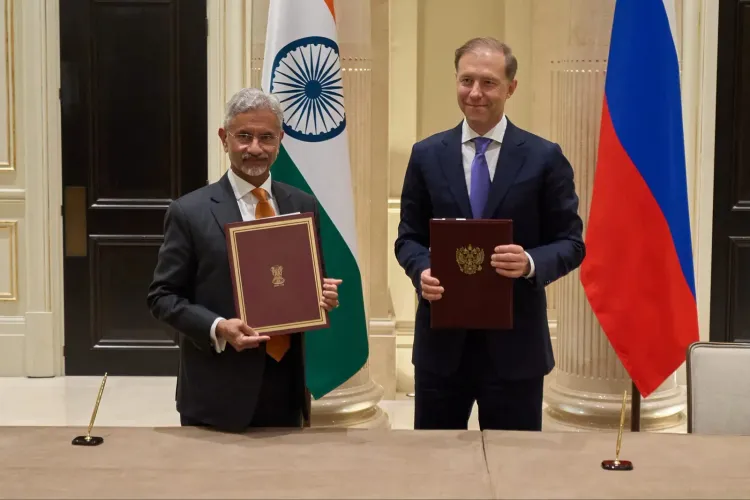
Post-meeting, Jaishankar described discussions with Denis Manturov as 'very productive', covering energy, nuclear, space, and connectivity.
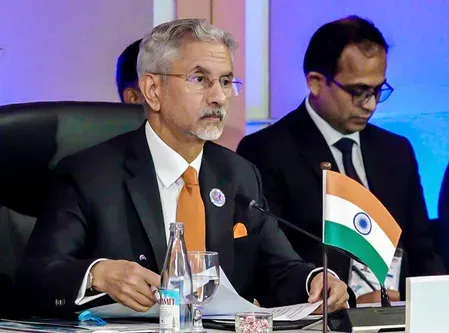
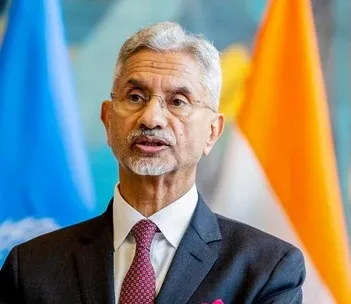
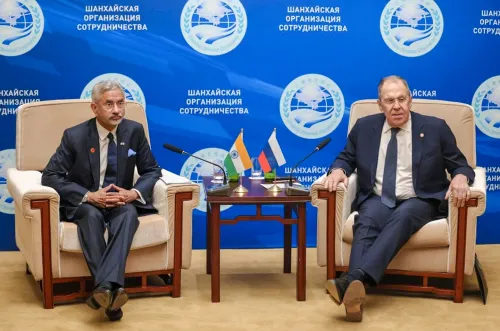
External Affairs Minister S Jaishankar on Monday, 24 August declared that the India-Russia partnership has consistently demonstrated resilience and adaptability even amid a complex international landscape, while flagging a sharply widening trade imbalance as one of New Delhi's foremost bilateral priorities. Jaishankar made the remarks at the 27th session of the India-Russia Inter-Governmental Commission on Trade, Economic, Scientific, Technological and Cultural Cooperation (IRIGC-TEC) in Moscow.
Trade Surge, But Imbalance Deepens
Bilateral trade in goods has grown more than fourfold over the last five years — from approximately USD 13 billion in 2021-22 to nearly USD 60 billion in 2025-26, Jaishankar noted. However, the trade imbalance has expanded in tandem, rising from USD 6.6 billion to over USD 50 billion in the same period. 'Addressing this imbalance is today one of our foremost priorities,' he said, signalling that the rapid volume growth has not translated into a balanced commercial relationship.
Strategic Direction and the Annual Summit
Jaishankar underlined that the 23rd India-Russia Annual Summit, held in December 2025, had reaffirmed both sides' commitment to deepening long-term economic cooperation. 'Our engagement has continued to deepen, reflecting the mutual interest and confidence that define our bilateral partnership,' he said. He described IRIGC-TEC as a comprehensive mechanism with an extensive network of working groups and subgroups, but called for a sharper focus on measurable outcomes rather than process.
Call for Outcome-Oriented Working Groups
'Each working group must prioritise deliverables to be achieved before the next session and actively engage in problem-solving,' Jaishankar stated. He stressed that institutional mechanisms should stay closely aligned with industry priorities, and called for regular interaction with businesses and industry associations to identify practical bottlenecks and improve policy responsiveness. He cited the upcoming INNOPROM exhibition in India as 'a very good signal' of strengthening business-to-business engagement.
Diversification Amid Global Uncertainty
Jaishankar acknowledged that the complicated international scenario continues to generate fresh opportunities, particularly around derisking and diversification. 'Our fundamental complementarity still remains underexplored, but even the last few years have seen progress in realising this potential, and we must take that forward,' he said. He called for constant updating of the view on opportunities and exploration of new domains including energy, fertilisers, nuclear cooperation, connectivity, technology, space, and mobility.
After the Meeting
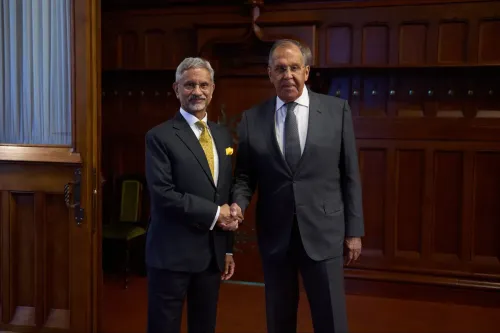
Following the session, Jaishankar thanked Denis Manturov, First Deputy Prime Minister of Russia, for co-chairing what he called a 'very productive' meeting. In a post on X, Jaishankar said discussions covered 'wide-ranging cooperation in trade, investments, energy, fertilisers, nuclear, connectivity, technology, space and mobility domains,' adding that he was 'confident that our meeting today will go a long way in deepening our practical cooperation across a range of domains.'
The IRIGC-TEC session comes at a moment when India's economic ties with Russia have deepened significantly, driven in part by energy trade, even as Western sanctions have complicated the broader geopolitical context.
Point of View
The deficit is now nearly as large as total bilateral trade was just four years ago, and it is overwhelmingly driven by Indian energy purchases from Russia. Jaishankar is right to call it a foremost priority, but the structural fix — getting Russia to buy more Indian goods and services — has proven elusive for years. The IRIGC-TEC mechanism has existed for decades; the real question is whether outcome-linked working groups can move the needle when the underlying asymmetry is energy-driven and, for now, strategically convenient for both sides.
NationPress
9 Oct 2026
Frequently Asked Questions
What did EAM Jaishankar say about India-Russia trade at the Moscow meeting?
Jaishankar said bilateral trade in goods has grown more than fourfold in five years, reaching nearly USD 60 billion in 2025-26, but warned that the trade imbalance has also surged from USD 6.6 billion to over USD 50 billion, calling it one of India's foremost bilateral priorities.
What is the IRIGC-TEC and why does it matter?
The India-Russia Inter-Governmental Commission on Trade, Economic, Scientific, Technological and Cultural Cooperation (IRIGC-TEC) is the primary institutional mechanism for managing bilateral economic ties. Its 27th session, held in Moscow on 24 August, set priorities for trade, investments, energy, nuclear cooperation, and technology.
What was discussed at the 27th IRIGC-TEC session?
Discussions covered trade, investments, energy, fertilisers, nuclear cooperation, connectivity, technology, space, and mobility. Jaishankar also pushed for working groups to focus on concrete deliverables and closer engagement with the business community.
What is the significance of INNOPROM being held in India?
Jaishankar cited the upcoming INNOPROM industrial exhibition in India as a strong signal of growing business-to-business engagement between the two countries. INNOPROM, one of Russia's flagship industrial trade fairs, holding an edition in India reflects the deepening of commercial ties.
Who co-chaired the IRIGC-TEC session with Jaishankar?
Denis Manturov, First Deputy Prime Minister of Russia, co-chaired the 27th IRIGC-TEC session. Jaishankar thanked him after the meeting and described the discussions as 'very productive'.