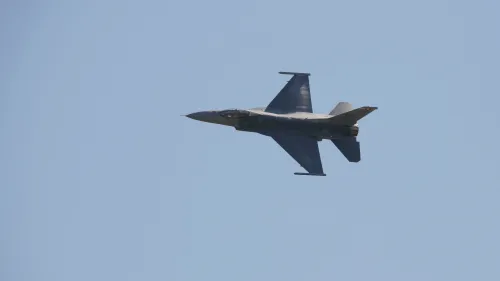
Did Japan Really Interfere with China's Naval Training?
Synopsis
In a recent diplomatic spat, Japan has firmly rejected China's claims of interference by its Self-Defence Forces during Chinese naval exercises. This tension highlights the fragile balance of military activities in the region, raising concerns about safety and potential conflicts. As both nations navigate this complex relationship, the implications for regional security are significant.
Key Takeaways
Japan rejects China's claims of interference by its Self-Defence Forces.
Japan maintains that its jets kept a safe distance during Chinese naval exercises.
Radar locks by Chinese jets are termed dangerous by Japan.
Diplomatic communication between the two nations is critical .
China insists its military activities are within international law .
Tokyo, Dec 8 (NationPress) On Monday, Japan dismissed China's assertion that the Self-Defence Forces (SDF) fighter jets interfered with Chinese naval training, causing radars to lock onto the aircraft.
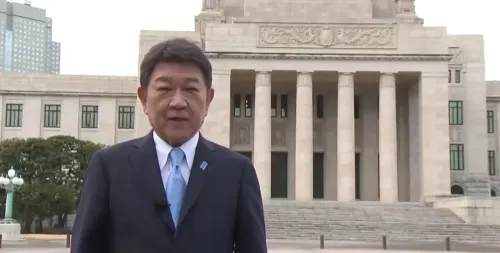
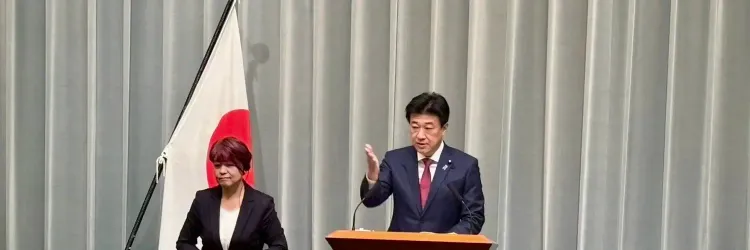
During a press briefing in Tokyo, Japan's Chief Cabinet Secretary Minoru Kihara stated that the Air Self-Defence Force jets maintained a "safe distance" from Chinese military aircraft near the southernmost prefecture of Okinawa on Saturday, as reported by Japan-based Kyodo News.
Kihara emphasized the significance of communication between Chinese and Japanese authorities, labeling it "extremely important", despite China's retaliatory actions following remarks made by Japanese Prime Minister Sanae Takaichi regarding potential Japanese involvement if Taiwan were to come under attack. In November, Takaichi suggested that Tokyo might respond if Taiwan faced aggression from China, which views the self-governing island as part of its territory.
Minoru Kihara described the radar locks as "dangerous acts beyond what was necessary for the safe flight of aircraft" and affirmed Japan's commitment to implementing all possible air and maritime surveillance measures while closely observing Chinese military maneuvers.
His comments followed a statement from the Japanese Defence Ministry indicating that Chinese J-15 aircraft from the carrier Liaoning had locked radars onto an ASDF F-15 at around 4:32 pm (local time) on Saturday, and again on another aircraft at approximately 6:37 pm (local time) over international waters southeast of Okinawa's main island.
During their Pacific exercises, Chinese aircraft including fighters, helicopters, and the Liaoning carried out nearly 100 training takeoffs and landings over the weekend, as reported by the Japanese Defence Ministry, raising concerns about a potentially volatile situation.
On Sunday, the Chinese navy claimed that Japanese aircraft had "repeatedly approached and disrupted" their naval training area and airspace, thereby "endangering flight safety".
On the afternoon of December 7, Japan's Vice-Minister for Foreign Affairs Takehiro Funakoshi summoned Chinese Ambassador to Japan Wu Jianghao to the Ministry of Foreign Affairs.
The Japanese Ministry of Foreign Affairs specified that the incident took place on December 6, over international waters southeast of Okinawa Island, when a J-15 fighter jet, taking off from the Chinese Navy's Liaoning aircraft carrier, intermittently illuminated an F-15 fighter jet of the Japan Air Self-Defence Force, which was conducting airspace violation measures against the J-15.
It was "extremely regrettable" that such a hazardous action occurred, and Takehiro Funakoshi conveyed a strong protest, demanding that it not happen again, as per the statement issued after their meeting.
Meanwhile, the Chinese government dismissed Tokyo's comments as "irresponsible hype" and "political manipulation".
We would like to reiterate that the facts are very clear: China's exercises and training activities in the relevant sea and air areas are in accordance with international law and practice, and the relevant operations are professional and beyond reproach. We strongly urge Japan to immediately cease its dangerous actions that interfere with China's normal exercises and training activities, and to stop all irresponsible hype and political manipulation,” stated Guo Jiakun, spokesperson for the Chinese Foreign Ministry, during a daily media briefing in Beijing on Monday.
Point of View
It is crucial to remain objective while reporting on international tensions. This incident between Japan and China serves as a reminder of the delicate balance of power in the Asia-Pacific region. Our commitment is to provide accurate reporting that reflects the nuances of these complex relationships while ensuring that we prioritize national interests and safety.
NationPress
2 Oct 2026
Frequently Asked Questions
What prompted Japan to reject China's claims?
Japan rejected China's claims due to assurances from its Chief Cabinet Secretary that the Self-Defence Forces maintained a safe distance from Chinese military aircraft during exercises.
What actions did Japan take in response to the radar locks?
Japan's Vice-Minister for Foreign Affairs summoned the Chinese Ambassador to express strong protests against the radar locks, calling them dangerous.
How did China respond to Japan's statements?
China dismissed Japan's remarks as irresponsible and reiterated that its military activities comply with international law.
What are the implications of this incident for regional security?
This incident raises concerns about safety in the airspace over the Pacific and highlights the fragile military balance between Japan and China.
What military activities were being conducted by China during the incident?
China was conducting naval training exercises that included nearly 100 training takeoffs and landings by various aircraft.