Is Japan Concerned About a Potential US-China 'Deal'?
Synopsis
As Japan and the US finalize a key minerals agreement, experts raise alarms about the implications of a potential shift in US-China relations. Concerns linger that the US President may soften his stance on China after a crucial meeting with Xi Jinping. What does this mean for the future of regional dynamics and supply chains?
Key Takeaways
US and Japan have signed a critical minerals agreement.
Concerns persist about US-China relations.
China's export controls on rare earths complicate matters.
Regional dynamics are at stake with upcoming high-level meetings.
Alliances with Southeast Asia are part of US strategy.
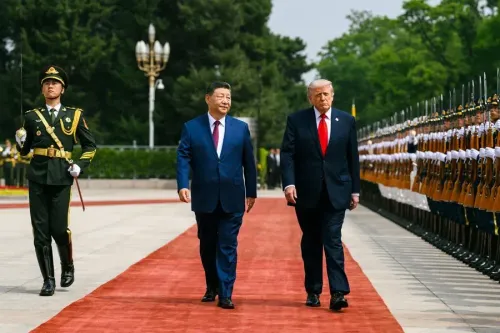
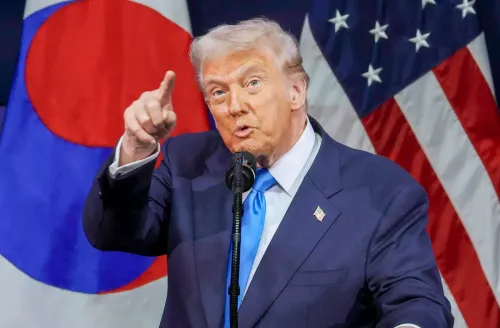
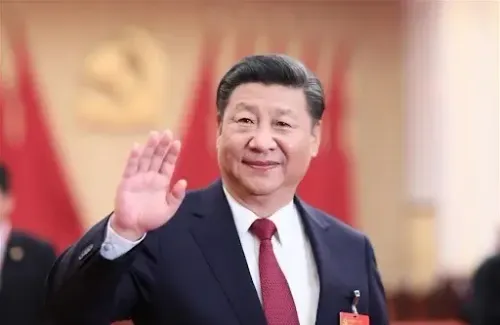
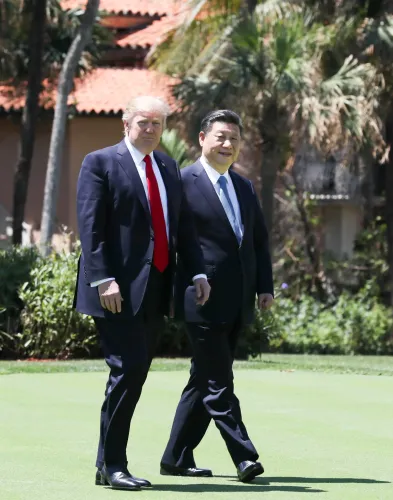
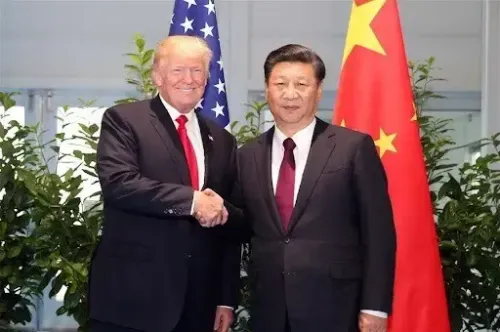
Washington, Oct 29 (NationPress) Following the signing of a vital minerals and rare earths agreement between Japan and the United States in Tokyo on Tuesday, analysts in Washington expressed that, despite this development, Tokyo remains concerned that the US President might “ease his position on China” during his upcoming meeting with Chinese President Xi Jinping in South Korea later this week.
In a media briefing in Washington, Sayuri Romei, a Senior Fellow at the German Marshall Fund (GMF), stated that “Tokyo's primary concern is that Trump might soften his approach towards China and potentially reach an agreement with Beijing that could disrupt the regional balance.”
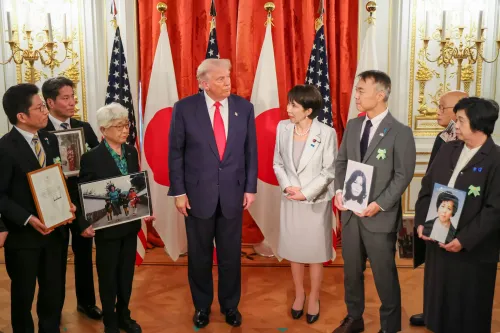
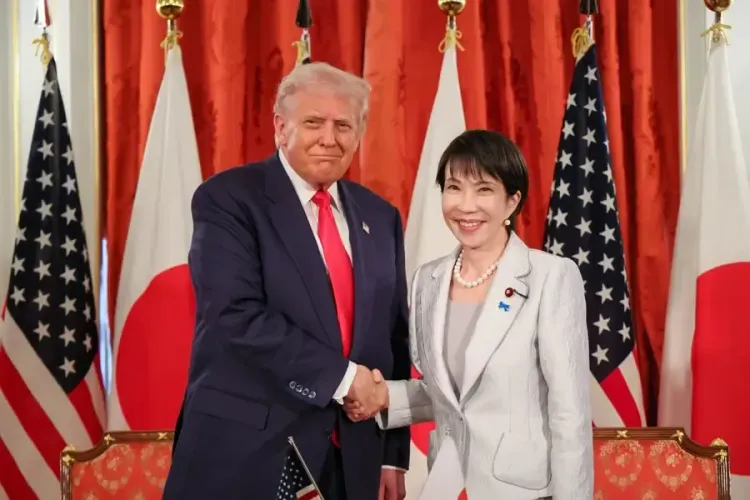
Trump met with Japan's newly appointed Prime Minister Sanae Takaichi in Tokyo on Monday, where they finalized several agreements, including one focused on critical minerals and rare earths.
Both parties committed to enhancing their “collaborative efforts” to secure mineral supply chains.
“Participants are amplifying their cooperative efforts to ensure the secure supply of critical minerals and rare earths essential for supporting domestic industries, including advanced technologies, by utilizing policy instruments such as financial support mechanisms, appropriate trade measures, and critical minerals stockpiling systems,”
stated a White House announcement.
The statement further indicated that both nations would bolster efforts to encourage dialogue between upstream and downstream companies to aid in diversifying supply chains.
The House Select Committee on China expressed its approval of the US-Japan minerals agreement on Tuesday. In a post on X, they remarked, “The new US-Japan trade and critical minerals agreements reinforce our shared supply chains and counter China's economic coercion. A resilient alliance serves as the best defense against the CCP’s attempts to gain dominance in key technologies and industries.”
Nonetheless, Romei cautioned that, regardless of the agreements, Tokyo is still apprehensive about the unpredictability linked to the US President.
“Trump seems to be influenced by the last person he speaks to. Therefore, it will be intriguing to observe how he approaches his conversation with Xi Jinping after considering Tokyo's viewpoint first,” she remarked.
The agreement with Japan follows shortly after the US established minerals deals with Thailand, Cambodia, and Malaysia.
The US's efforts to mitigate risks in critical minerals supply chains have gained traction after China imposed extensive export controls on rare earths and related technologies in early October.
The Trump administration opposed these measures and threatened to impose 100 percent tariffs on Chinese imports while striving to form a global coalition to counter China’s threats, including with India.
Last week, Treasury Secretary Scott Bessent and US Trade Representative Jamieson Greer met with China’s Vice Premier He Lifeng and trade negotiator Li Chenggang in Malaysia and agreed on a “framework” for a trade deal.
Bessent, during an interview with ABC News on Sunday, asserted that Beijing had consented to a “one-year delay” in rare earth export controls.
Bonnie Glaser, Managing Director of GMF's Indo-Pacific Program, highlighted that the Chinese perceive themselves as having an advantage in negotiations due to their dominance in the rare earths field.
“I believe the Chinese assume that Trump is eager to negotiate and may concede in several areas,” she added.
She also mentioned that Trump recognizes that China has “weaponized” its rare earths, and recent agreements with Southeast Asian nations reflect US concerns.
“Some provisions in these agreements suggest that countries have essentially committed to refrain from actions detrimental to the United States, in other words, not aligning with China,” she stated.
Glaser emphasized that the summit would not “fundamentally change the dynamics in the US-China relationship”, despite the potential for agreements on rare earths and other matters.
“The United States and China are engaged in fierce competition across various dimensions, including which nation leads in innovation and technology diffusion, which political and economic system prevails, and which country will shape the international order. I anticipate that this rivalry will persist,” she concluded.
Point of View
It's vital to note that the evolving relationship between the US and Japan, particularly in the context of critical minerals, reflects broader geopolitical dynamics. While agreements signify progress, the underlying tensions with China necessitate careful scrutiny. The potential for policy shifts following high-level discussions with Chinese leaders warrants our attention, emphasizing the importance of a steadfast approach to ensure regional stability.
NationPress
3 Oct 2026
Frequently Asked Questions
What is the significance of the US-Japan minerals agreement?
The agreement aims to enhance cooperation in securing supply chains for critical minerals and rare earths, vital for supporting advanced technologies and domestic industries.
What concerns does Japan have regarding US-China relations?
Japan fears that the US President may soften his stance on China, potentially impacting regional balance and security.
How has China reacted to recent developments?
China has imposed export controls on rare earths, and the US is working to counter these measures through international agreements.
What are the implications of Trump's upcoming meeting with Xi Jinping?
The meeting could influence US policy towards China, raising concerns in Tokyo about the stability of the regional balance.
How do recent agreements with Southeast Asian countries reflect US strategy?
These agreements indicate a strategic effort by the US to build alliances and counter China's influence in the region.