Should Governor Thawarchand Gehlot Reject the Karnataka Hate Speech Regulation Bill?
Click to start listening
Synopsis
Union Minister Shobha Karandlaje has raised serious concerns over the Karnataka Hate Speech Bill, urging the Governor to deny assent. She believes the bill infringes on free speech rights and could be misused to silence dissent. This bill's passage in the Assembly has sparked significant controversy and opposition.
Key Takeaways
- Union Minister Shobha Karandlaje opposes the Karnataka Hate Speech Bill.
- The bill is viewed as a tool to suppress dissent.
- Concerns about free speech rights are prominent.
- The bill was passed in the Assembly without debate.
- Potential misuse of the bill could target various social groups.
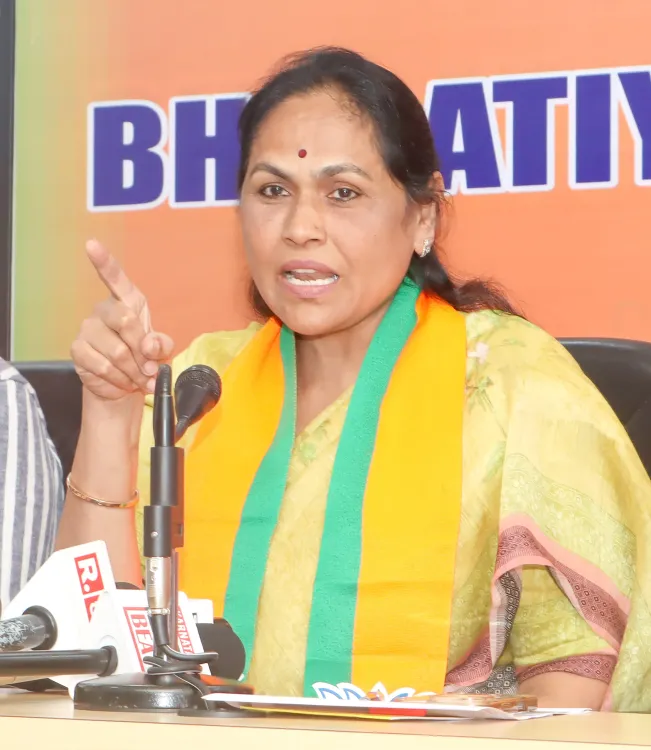
Bengaluru, Dec 19 (NationPress) Union Minister of State for Micro, Small and Medium Enterprises and Labour and Employment, Shobha Karandlaje, has formally requested Governor Thawarchand Gehlot to refrain from granting assent to the contentious Karnataka Hate Speech and Hate Crimes (Prevention and Control) Bill, 2025, highlighting multiple flaws within the proposed law.
In a post on social media platform X, Karandlaje expressed on Friday: "The Hate Speech and Hate Crimes (Prevention) Bill, 2025, provides the State with excessive powers to suppress dissenting opinions, restrict media freedom, and intimidate those defending Karnataka's culture, language, and Dharma."
She emphasized, "This legislation does not prevent hate speech; instead, it obstructs the fundamental right to free speech."
Karandlaje elaborated in her correspondence with the Hon'ble Governor, pointing out that certain provisions of the Karnataka Hate Speech and Hate Crimes (Prevention) Bill, 2025 are ambiguous, overly broad, and prone to misuse, urging for the bill to be held back and reserved for Presidential review under Article 200.
“We will not permit Congress to manipulate the law into a mechanism for stifling free speech and democratic opposition,” she asserted.
The letter further articulated, “While the Bill claims to target hate speech and hate crimes, a closer look reveals that it establishes a State-regulated framework for monitoring, evaluating, and penalizing speech, rather than specifically addressing expressions that present a clear and immediate danger to public order.”
“The Bill's structure grants executive authorities the power to decide what constitutes permissible expression, essentially transforming it into a tool for suppressing dissenting voices against the government,” she added.
“Article 19(1)(a) of the Constitution ensures every citizen's right to free speech and expression. Any limitations on this right must strictly adhere to the narrow criteria laid out in Article 19(2). However, the Bill deviates from these constitutional boundaries by utilizing broad, ambiguous, and subjective terms like ‘disharmony’, ‘ill-will’, and ‘prejudicial interest’, which lack clear definitions,” the letter asserts.
The expansive and unclear language of the law could be used to silence Kannada language advocates, women's groups, SC-ST communities, backward classes, minorities, journalists, student organizations, and civil society entities that address governance, social justice, or accountability issues, as stated in the minister’s letter.
On Thursday, the Karnataka Assembly passed the controversial Karnataka Hate Speech and Hate Crimes (Prevention and Control) Bill, 2025 amidst turmoil and without a proper debate from Opposition members.
Leader of the Opposition R. Ashoka expressed his strong disapproval of the way the Bill was addressed, tearing a copy on the Assembly floor.
In the face of uproar and strong objections from BJP and JD-S MLAs, Speaker U. T. Khader proceeded to put the Bill to a vote, announcing its passage.
BJP MLAs voiced their dissent, accusing the Assembly Speaker of misconduct and setting a poor example.
Point of View
I recognize the significance of Shobha Karandlaje's stance against the Karnataka Hate Speech Bill. It reflects a critical discourse on the balance between preventing hate speech and protecting free expression. This ongoing debate is vital for upholding democratic values in our society.
NationPress
22/12/2025
Frequently Asked Questions
What is the Karnataka Hate Speech Bill?
The Karnataka Hate Speech and Hate Crimes (Prevention and Control) Bill, 2025, aims to address hate speech and hate crimes, but has faced criticism for its vague and broad provisions.
Who is Shobha Karandlaje?
Shobha Karandlaje is the Union Minister of State for Micro, Small and Medium Enterprises and Labour and Employment in India.
What are the concerns raised about the bill?
Concerns include its potential to suppress free speech and its broad definitions that may lead to misuse against dissenting voices.
What action has Shobha Karandlaje taken regarding the bill?
She has written to Governor Thawarchand Gehlot, urging him to withhold assent to the bill due to its shortcomings.
What was the response of the Karnataka Assembly to the bill?
The Karnataka Assembly passed the bill amid uproar and without proper debate from opposition members, leading to significant controversy.